Suburbia has brainwashed Americans into being good capitalists, which brought about the economic crisis, according to neo-Marxist economic geographer David Harvey.


Fast Company's Greg Lindsay attends a recent discussion with Harvey to hear more about how cities and suburbia helped fuel the meltdown.
"On Tuesday night in Manhattan, Harvey made a rare American appearance to discuss 'experimental geography' and the role cities and suburbia played in the crisis. Starting from the idea of a 'geographic unconscious'--'the way we think of space and time as 'natural' when they're really constructed,'--Harvey blamed suburbia for brainwashing Americans into being good capitalists.
But the connections between urbanism and capitalism go deeper than that. In an essay published in New Left Review, he drew connections between Haussmann's Paris, postwar America, gentrification and China's instant cities. In each case, the construction efforts employed huge quantities of labor and required new forms of capital and credit, whether FHA mortgages or CDOs. In his estimation, China's breakneck urbanization and the appetite for raw materials this creates is the only thing propping global capitalism up."
Read the full story: David Harvey's Urban Manifesto: Down With Suburbia; Down With Bloomberg's New York

Richard Florida on the Importance of Place
Richard Florida, interviewed by blogger Dave Copeland, says that quality of place is going to be of growing importance in the coming era to keep cities vibrant and attracting talent and the "creative class."
Slow Growth in Cities May Have Lessened Foreclosures
Researchers found in their analysis of 300 California municipalities that the cities that had slow growth or anti-growth policies were less impacted by the housing crisis, writes Mark Bergen for Forbes.
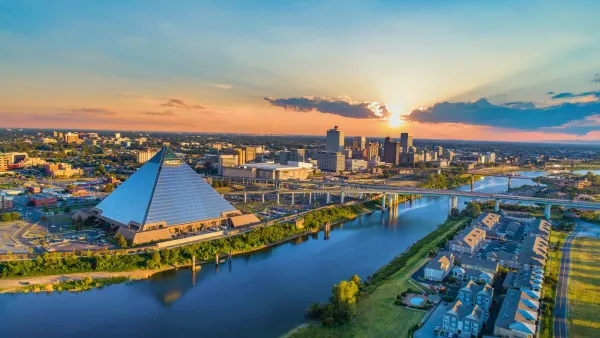
15 US cities and their global namesakes
Hundreds of cities around the United States are named after other places. We tour a few of them.

Planetizen Federal Action Tracker
A weekly monitor of how Trump’s orders and actions are impacting planners and planning in America.

The state-sanctioned urbicide of Austin
People don’t kill cities. Freeways do.

Colorado’s Largest Data Center Could Rise Next to Homes — Without a Public Hearing
The proposed campus would consume 11 times the power of Denver International Airport; as it has across the country, opposition mounts.
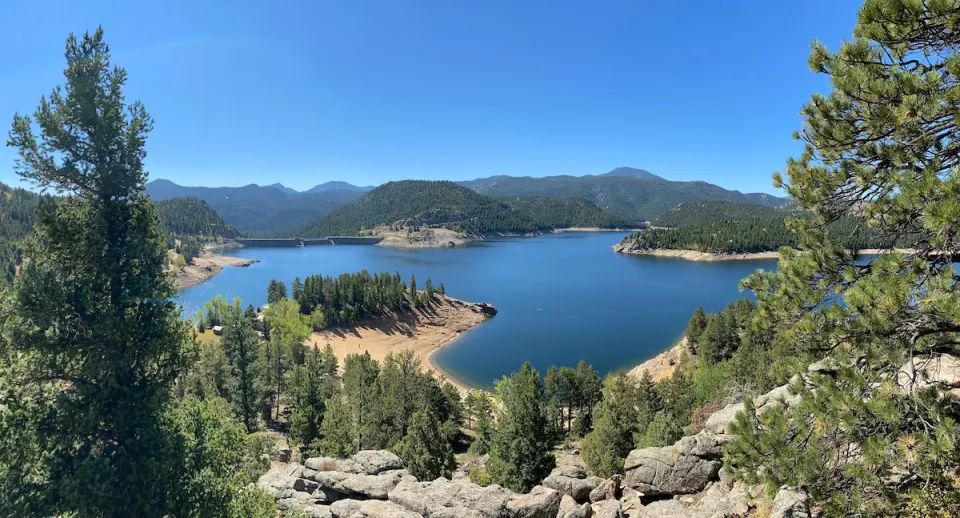
Judges permit Denver to divert 77,000 acre feet from the Colorado River for reservoir expansion
Overuse and climate change have caused the Colorado River’s water levels to plummet.

Amtrak, CN end decades-long dispute with eight-year agreement
The new operating agreement establishes an updated framework for the companies to work together, including processes to resolve disputes.
Raised interest rates may kill financially vulnerable construction projects
The chief economist at ConstructConnect warns that if construction project owners are negatively impacted by the raised rates, it could result in delayed payments to contractors.

FREE Course: Walkable City 1: Why Walkability?
After describing his path towards focusing on walkability as the essence of good planning, Jeff Speck marches through his five principal reasons for making more walkable places.
Reinventing Malls: Planning Alchemy—Turning Gray Fields Into Gold
The course focuses on the opportunities and imperatives that shape reinvention of mall sites.

Greater Baltimore Committee
Eagle County Government
Harvard University Graduate School of Design
The Architects Foundation
University of Cincinnati Online
The Pocatello Development Authority
The Urban Renewal Agency of the City of Pocatello
Journal of the American Planning Association