They litter almost every subway entrance - the ubiquitous, value-exhausted plastic MetroCards. Yet, MetroCards are refillable. Now MTA has devised a simple, revenue-producing measure that would reduce the litter by adding a $1 fee to new cards.


While the new MetroCard "tax", as the Post put it, is a revenue measure that has additional benefits, not so for many of the other schemes considered by the Metropolitan Transportation Authority to reduce the $400 million budget shortfall for 2010. Take the elimination of off-peak LIRR and MetroNorth commuter train ticket pricing that reduce crowding on peak-hour trains.
"Another major change under consideration is putting a cap on the number of trips using weekly and monthly "unlimited ride" cards." [Of course, they would then have to lose the 'unlimited' designation in that case.]
"Some of the MetroCard savings might not last for long. The MTA is hoping to have a credit- and debit-card-based SmartCard program in place by 2014 -- essentially eliminating the MetroCard."
From Crains New York: MTA eyes more fare hikes and fees: "While the base (transit) fare of $2.25 is not expected to change, officials are considering increasing unlimited $27 weekly and $89 monthly MetroCards by as much as 4% and 10%, respectively.
The proposed fare increases were first reported Friday by the New York Post and confirmed by transit officials. The MTA has already announced that it planned to increase fares overall by 7.5% this year and next."
Thanks to Crain's New York Business
Read the full story: $1 fee eyed on each new Metro pass

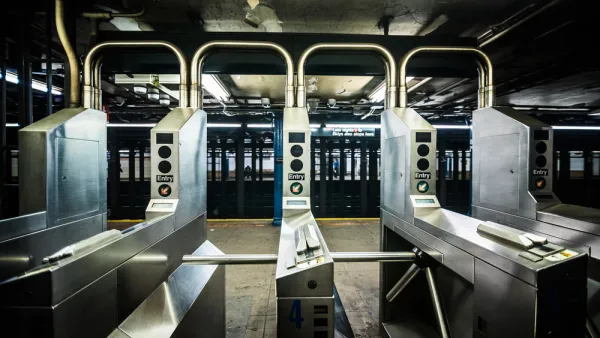
Means-Based, Transit-Fare Discounts Take a Leap Forward in the Big Apple
The 2019 New York City budget includes $106 million to subsidize half the transit fare for qualified residents for six months. The city joins the ranks of Seattle, Toronto, and the Bay Area that offer income-based discounts for transit fares.
New York Subway Fares Jump to $2.75 Today
The $2.50 subway fare is set to rise by a quarter, but will service improve? This New York Times article focuses on problems plaguing the 110-year-old New York subway (second oldest after Boston's), but fares are increasing for all MTA services.
New York MTA Increases Transit Fares to Fund Capital Investments
The latest fare increase for the Metropolitan Transportation Authority comes against the backdrop of record ridership and a $15 billion funding gap for the system's five-year capital plan.

Planetizen Federal Action Tracker
A weekly monitor of how Trump’s orders and actions are impacting planners and planning in America.

The state-sanctioned urbicide of Austin
People don’t kill cities. Freeways do.

Colorado’s Largest Data Center Could Rise Next to Homes — Without a Public Hearing
The proposed campus would consume 11 times the power of Denver International Airport; as it has across the country, opposition mounts.

Judges permit Denver to divert 77,000 acre feet from the Colorado River for reservoir expansion
Overuse and climate change have caused the Colorado River’s water levels to plummet.

Amtrak, CN end decades-long dispute with eight-year agreement
The new operating agreement establishes an updated framework for the companies to work together, including processes to resolve disputes.
Raised interest rates may kill financially vulnerable construction projects
The chief economist at ConstructConnect warns that if construction project owners are negatively impacted by the raised rates, it could result in delayed payments to contractors.

FREE Course: Walkable City 1: Why Walkability?
After describing his path towards focusing on walkability as the essence of good planning, Jeff Speck marches through his five principal reasons for making more walkable places.
Reinventing Malls: Planning Alchemy—Turning Gray Fields Into Gold
The course focuses on the opportunities and imperatives that shape reinvention of mall sites.

Greater Baltimore Committee
Eagle County Government
Harvard University Graduate School of Design
The Architects Foundation
University of Cincinnati Online
The Pocatello Development Authority
The Urban Renewal Agency of the City of Pocatello
Journal of the American Planning Association