The South eats up more resources than the rest of the U.S., says reporter Elizabeth Daigneau. With 36% of the U.S. population, the South uses 44% of the nation's energy consumption.


Daigneau blames it on historically cheaper electricity and gas in comparison with the rest of the country, but believes a growing population might inspire greater efficiency.
A recent study by the Georgia Institute of Technology and Duke University suggests a strategy:
"...the region can introduce aggressive efficiency measures to three sectors: residences, commercial buildings and industry. By doing so, the South could offset the expected growth in energy demand over the next 20 years; it also could reduce the need for new power plants, create jobs and reduce utility bills."
Read the full story: Southern Inefficiency

DC energy efficiency rule requires buildings to upgrade their infrastructure or face millions in fines
Building owners and condo co-op members say the upgrades are often prohibitively expensive.

Oregon Requires Energy-efficient Heat Pumps in New Housing
A new state law is expected to save residents an average of $125 per month on energy costs.
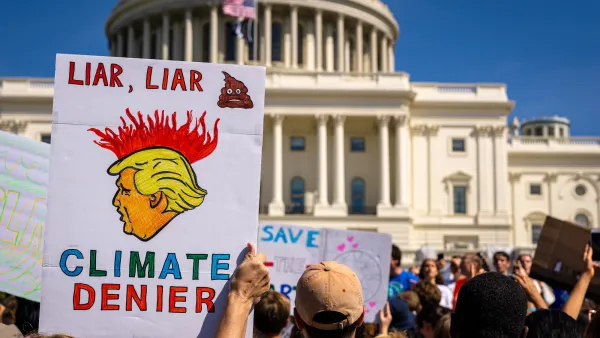
Dear Trump: the Future Belongs to the Efficient
Trump abandoned climate protection goals claiming that cheap fossil fuel helps consumers and the economy. A mobility-focused analysis shows that he is wrong: resource efficiency is the key to health, economic success and happiness.

Planetizen Federal Action Tracker
A weekly monitor of how Trump’s orders and actions are impacting planners and planning in America.

California plans to bury El Niño’s downpour
If the state plays its cards right, it may be able to store a billion acre-feet of El Niño’s water in aquifers.

Desperate measures: Advocates weigh draining Lake Powell to fill Colorado River
Draining the reservoir could reduce evaporation losses by a couple hundred thousand acre-feet.

Los Angeles just elected an urban planner as its mayor
Transportation analysts are optimistic that Raman will be more aggressive in addressing transit issues than Bass.

Mamdani’s pied-à-terre tax survives legal challenge
A panel of judges found that the plaintiffs failed to demonstrate injury as a result of New York City's implementation of the tax.

Eastern Nebraska is running out of electricity
Data centers and electrification are straining eastern Nebraska’s grid, throttling economic development.

FREE Course: Walkable City 1: Why Walkability?
After describing his path towards focusing on walkability as the essence of good planning, Jeff Speck marches through his five principal reasons for making more walkable places.
Reinventing Malls: Planning Alchemy—Turning Gray Fields Into Gold
The course focuses on the opportunities and imperatives that shape reinvention of mall sites.

City of Rosemead
Rutgers University, Edward J. Bloustein School of Planning and Public Policy
One Hundred Miles
University of Michigan School for Environment and Sustainability (SEAS)
Hunter College, City University of New York (CUNY)
The Architects Foundation
City of Cambridge
Montrose County
The Pocatello Development Authority