Known as PPPs, these consortiums combine the best of public and private sectors to finance, build and operate large projects quickly and efficiently. The 23-mile rail line from downtown's Union Station is expected to start soon and open in 2016.


The Regional Transportation District (RTD) board voted 13-0 to select a team called Denver Transit Partners, composed of "Fluor Enterprises Inc., Australia's Macquarie Capital Group and transit contractor Balfour Beatty Rail Inc. to build and operate a $2.1 billion portion of FasTracks". They will operate the line for 40 years.
"Other companies on the winning Denver Transit team include Ames Construction, transit operator Alternate Concepts Inc. and railcar supplier Hyundai-Rotem USA."
Denver Transit was selected over "a rival group called Mountain-Air Transit Partners, that included railcar and rail systems company Siemens and transit operator Veolia Transportation." However, that team will be eligible to be paid $2.5 million for work in preparing its bid in order to keep the bidding process competitive and for use by RTD of its designs.
Thanks to Annie Dawid
Read the full story: RTD picks team to be partner for DIA line
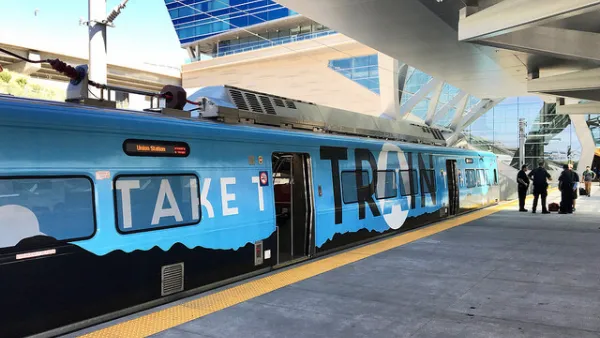
Denver's New Commuter Train to the Plane Achieves Record Ridership
Ridership on the electrified A Line, which opened to great fanfare on Earth Day, reached a weekday average of 16,910 as of June 5. The 23-mile line operates from Union Station to Denver International Airport. Not all is perfect though.
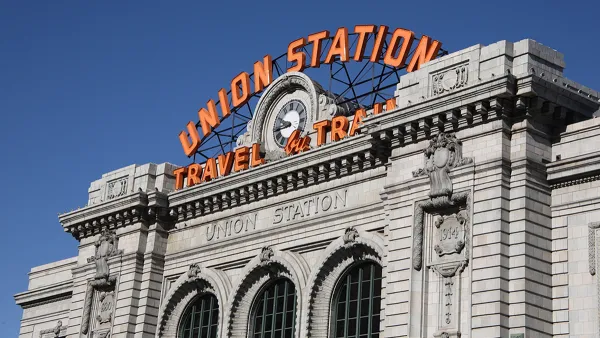
Denver's New Commuter Rail Line to Airport to Open in April
You will be forgiven for thinking you are looking at an East Coast commuter rail line: It's electrified with level boarding, mostly 15-minute headways, with bike and luggage racks, operating 22 hours a day from Denver's Union Station to the airport.
The Best and the Worst Airports to Access
If you want great access to an airport, go overseas—that's the main finding of a study by Golden Gateway Alliance, a Manhattan-based airport advocacy organization. Tied for dead-last in terms of access is Denver and a certain New York airport.

Planetizen Federal Action Tracker
A weekly monitor of how Trump’s orders and actions are impacting planners and planning in America.

California plans to bury El Niño’s downpour
If the state plays its cards right, it may be able to store a billion acre-feet of El Niño’s water in aquifers.

Desperate measures: Advocates weigh draining Lake Powell to fill Colorado River
Draining the reservoir could reduce evaporation losses by a couple hundred thousand acre-feet.

Mamdani’s pied-à-terre tax survives legal challenge
A panel of judges found that the plaintiffs failed to demonstrate injury as a result of New York City's implementation of the tax.

Eastern Nebraska is running out of electricity
Data centers and electrification are straining eastern Nebraska’s grid, throttling economic development.

Seattle passes record-breaking transit services expansion
Proposition 1 will double the city’s transit tax to add 95,000 more bus trips and preserve 180,000 bus trips annually.

FREE Course: Walkable City 1: Why Walkability?
After describing his path towards focusing on walkability as the essence of good planning, Jeff Speck marches through his five principal reasons for making more walkable places.
Reinventing Malls: Planning Alchemy—Turning Gray Fields Into Gold
The course focuses on the opportunities and imperatives that shape reinvention of mall sites.

City of Rosemead
Rutgers University, Edward J. Bloustein School of Planning and Public Policy
One Hundred Miles
University of Michigan School for Environment and Sustainability (SEAS)
Hunter College, City University of New York (CUNY)
The Architects Foundation
City of Cambridge
Montrose County
The Pocatello Development Authority