Honolulu, HI is an island paradise, but it also has big city traffic problems. Sam Staley of the Reason Foundation says relief could come in the form of privately-funded HOT lanes.


Staley gives a nice overview of the state of Honolulu development and transportation. He sees public/private partnerships as the way out of the traffic snarl, and gives a thumbs down to the elevated rail project.
Staley writes, "An excellent candidate project would be to add high occupancy toll lanes, or HOT lanes on the H1, to boost travel times and give travelers a meaningful alternative to congestion paralleling from the H1/H2 split to the University of Hawai'i. HOT Lanes let high occupancy vehicles-vans, transit buses, and passenger cars with three or more riders-use them for free. Single occupant vehicles pay a toll for the privilege of ride that is guaranteed at freeway speeds, 24/7.
These roads have fully paid for themselves in other cities, and this may well be the case for Honolulu. This suggests private capital can supplement local funds to build these facilities while shifting the risk away from taxpayers and onto private investors."
Read the full story: Land Use Key to Understanding Real Solutions to Honolulu Traffic Congestion

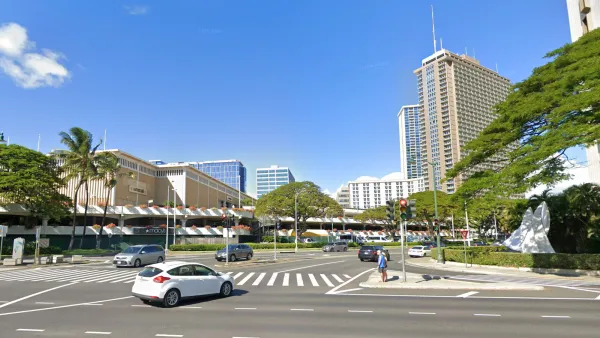
Hawaii DOT takes action after reporters call attention to dangerous crosswalk
The state made changes to a treacherous intersection after reporting revealed that traffic light timing was posting a threat to pedestrians.

Honolulu lowers speed limits near schools — but doesn't change the signs
A year and a half after changing the legal speed limit in school zones, the city has yet to update street signs — meaning police can't cite speeders.
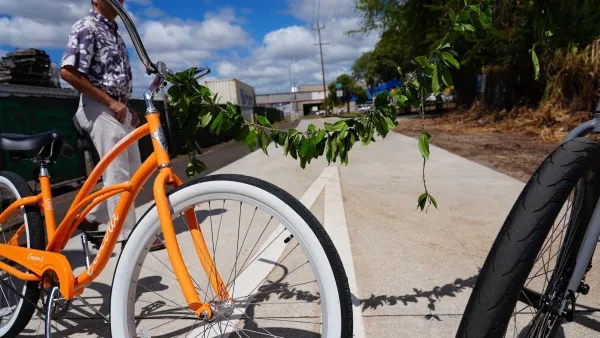
Hawaii’s Pearl Harbor Bike Path is Flooding More Often, Forcing Commuters Onto More Dangerous Roads
The 5-mile trail serves as a key bikeway for commuters connecting to local transit.

Amtrak, CN end decades-long dispute with eight-year agreement
The new operating agreement establishes an updated framework for the companies to work together, including processes to resolve disputes.

Judges permit Denver to divert 77,000 acre feet from the Colorado River for reservoir expansion
Overuse and climate change have caused the Colorado River’s water levels to plummet.
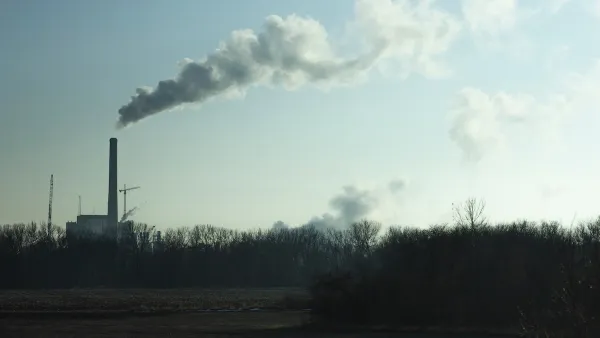
Nation's most wind-powered state turns to coal as data centers increase energy demand
For the first time in decades, Iowa has increased its generation of coal power.

Boston has spent millions making the Green Line more accessible — and there’s no end in sight
While the city has invested millions into expanding and adding platforms to the Green Line to make it more accessible, new train cars set to arrive next year will be too tall for disabled passengers to board without raising the current platforms.

Idaho may see an 18% drop in federal surface transit funding — the largest estimated cut in the US
Transit systems in rural communities are much more reliant on federal funding to provide their services.

How ‘post-disaster gentrification’ alters neighborhoods after natural calamities
After hurricanes, fires or other calamities, the original residents of a community are often replaced by younger, wealthier residents.

FREE Course: Walkable City 1: Why Walkability?
After describing his path towards focusing on walkability as the essence of good planning, Jeff Speck marches through his five principal reasons for making more walkable places.
Reinventing Malls: Planning Alchemy—Turning Gray Fields Into Gold
The course focuses on the opportunities and imperatives that shape reinvention of mall sites.

City of Wisconsin Rapids
Harvard University Graduate School of Design
KFH Group Inc.
The Architects Foundation
University of Cincinnati Online
The Pocatello Development Authority
The Urban Renewal Agency of the City of Pocatello