Cities around the world are trying to undo decades of car-oriented planning. Lester Brown takes a look at the trend and finds some models for other global cities to follow.


By expanding public transportation, emphasizing public spaces and rediscovering reasons to get people out of their cars, cities around the world are trying to redefine their urban realms, according to Brown.
"The world's cities are facing unprecedented challenges. In Mexico City, Tehran, Kolkata, Bangkok, Beijing, and hundreds of other cities, the air is no longer safe to breathe. In some cities the air is so polluted that breathing is equivalent to smoking two packs of cigarettes a day. Respiratory illnesses are rampant. In many places, the number of hours commuters spend sitting in traffic-congested streets and highways climbs higher each year, raising frustration levels.
In response to these conditions, we are seeing the emergence of a new urbanism, a planning philosophy that environmentalist Francesca Lyman says 'seeks to revive the traditional city planning of an era when cities were designed around human beings instead of automobiles.'"
Read the full story: Parking lots to parks: Designing livable cities
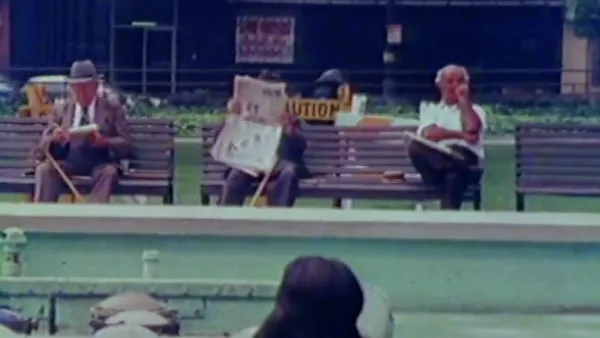
William Whyte’s Seminal Urban Film Restored
‘The Social Life of Small Urban Spaces’ changed the way planners view public space and ushered in a new way of understanding urban patterns.
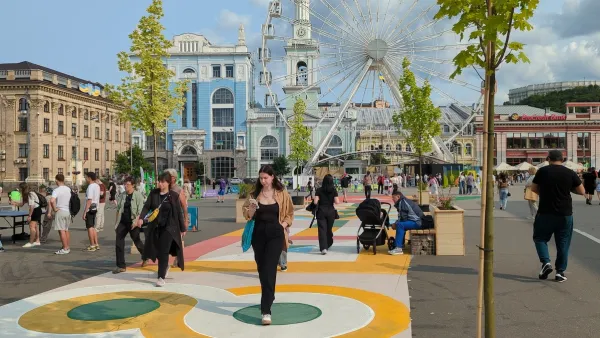
In Praise of Analog Cities: Futureproofing in a Time of Crisis
I didn’t need a pandemic or a war to teach me that smart cities weren’t the future — but it sure drove the message home.
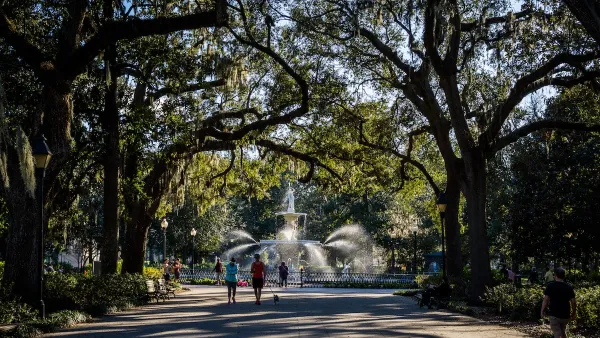
Survey: US Public Spaces Not Meeting Community Needs
A lack of funding prevents many U.S. parks and public spaces from playing a more significant role in helping residents meet daily needs.

Planetizen Federal Action Tracker
A weekly monitor of how Trump’s orders and actions are impacting planners and planning in America.

Eastern Nebraska is running out of electricity
Data centers and electrification are straining eastern Nebraska’s grid, throttling economic development.

Washington state to charge fee to drivers with fuel-efficient cars
Revenue from the fee will go towards supporting the state’s highways.

Instead of building new housing, LA developers are turning mansions into mega-mansions
In the richest areas, the number of houses valued at $30 million with demolition permits has skyrocketed since 2018.

Illinois considers spending $1 billion in taxpayer money on data center
A quantum computing campus and data center are currently under construction in Chicago.

As development costs rise, Boston moves to lessen affordable housing requirements
The Boston Zoning Commission and the City Council still need to approve Boston Mayor Michelle Wu’s proposed changes

FREE Course: Walkable City 1: Why Walkability?
After describing his path towards focusing on walkability as the essence of good planning, Jeff Speck marches through his five principal reasons for making more walkable places.
Reinventing Malls: Planning Alchemy—Turning Gray Fields Into Gold
The course focuses on the opportunities and imperatives that shape reinvention of mall sites.

City of Charlotte
City of Rosemead
Rutgers University, Edward J. Bloustein School of Planning and Public Policy
University of Michigan School for Environment and Sustainability (SEAS)
Hunter College, City University of New York (CUNY)
The Architects Foundation
University District Partnership
City of Cambridge
The Pocatello Development Authority