Planners take a prescriptive approach to urbanism, while people have their own ideas about what makes good places that don't fit the standard orthodoxy. Drew Austin says both extremes need attention, and synthesis.


Austin compares the two approaches to theories of language, Prescriptivism and Descriptivism:
"Prescriptivists are those who believe in objective, fixed rules to guide the usage of language; Descriptivists, on the other hand, seek to define a language by how people actually use it."
Planners have a tendency to develop a prescriptivist set of beliefs and approaches:
"Density, mixed-use development, and transit become components of an urbanist orthodoxy; a freeway through a vibrant neighborhood troubles the urban Prescriptivist in the same way an 'ain't' irks the English teacher."
FULL STORY: Drew Austin: Brief Interviews with Hideous Cities

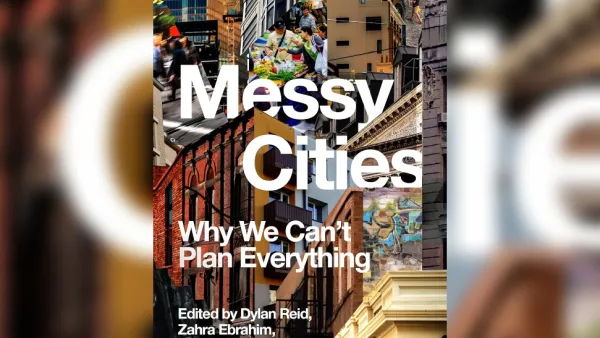
Mess Might Just be the Secret Weapon That Planners Forgot
In “Messy Cities: Why We Can’t Plan Everything” 43 writers from around the world sing the praises the gentle chaos that exemplifies a thriving metropolis.

How California Planning has Changed—and How it Hasn't
In the newest edition of his classic book Guide to California Planning, Bill Fulton says there is still tension between the state's suburban planning system and its urban reality.

Embedded Planning Movement Gains Traction
Jonathan Pacheco Bell chronicles the growth of a movement he created.

Planetizen Federal Action Tracker
A weekly monitor of how Trump’s orders and actions are impacting planners and planning in America.

The state-sanctioned urbicide of Austin
People don’t kill cities. Freeways do.

US to reduce Colorado River water deliveries to Mexico
A new Colorado Treaty amendment reduces Mexico’s Colorado River water allocation by 250,000 acre feet.

5 New England states march closer to 800 megawatt wind energy project
Securing federal approval for the project may be complicated under the Trump administration, which has historically been hostile towards domestic wind power.

Baltimore to break ground on $50 million Transit Priority Project
The project will bring faster bus trips, safer streets and better bike connections to Baltimore.

Airbnb launches $250 million 'last-dollar financing' housing accelerator, makes first investment in Austin
The company will put $6.4 million towards affordable housing development in Texas’ capital.

FREE Course: Walkable City 1: Why Walkability?
After describing his path towards focusing on walkability as the essence of good planning, Jeff Speck marches through his five principal reasons for making more walkable places.
Reinventing Malls: Planning Alchemy—Turning Gray Fields Into Gold
The course focuses on the opportunities and imperatives that shape reinvention of mall sites.

Eagle County Government
Harvard University Graduate School of Design
Nashville Planning Department
The Architects Foundation
University of Cincinnati Online
The Pocatello Development Authority
The Urban Renewal Agency of the City of Pocatello
Journal of the American Planning Association