Thanks in part to federal grants, wheelchair-accessible taxi service is available in most major American cities - San Francisco, L.A., Chicago, New York, Washington, D.C., but not in Philadelphia, where the issue is stalled in the statehouse.


Paratransit is not available 24 hours a day in most cities. Wheelchair users in Philadelphia are lobbying for accessible taxi service to fill the gaps. A new bill making the rounds in the state legislature would make that happen, but its bogged down by a requirement for taxi-medallion owners to provide workers'-comp insurance for their drivers.
The squabble has led to other concerns over disabled access to transit in Philly. Damon Martin has cerebral palsy and gets around in a motorized wheelchair. He tells the Philadelphia Daily News "I'm glad we have access to public transportation, but the rudeness that a disabled person has to cope with on a daily basis while getting on the bus is unconscionable - not only from passengers but from drivers as well." That rudeness, he added, can translate into denied access, depending on the riders' and the driver's mood.
Read the full story: Philly wheelchair users' lament: No taxis
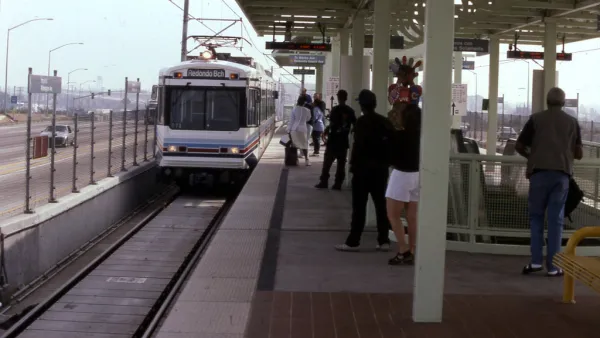
For the Coronavirus Pandemic, Public Transit Is the Move
Now is the time to invest in public transit as the correct coronavirus pandemic transportation solution.
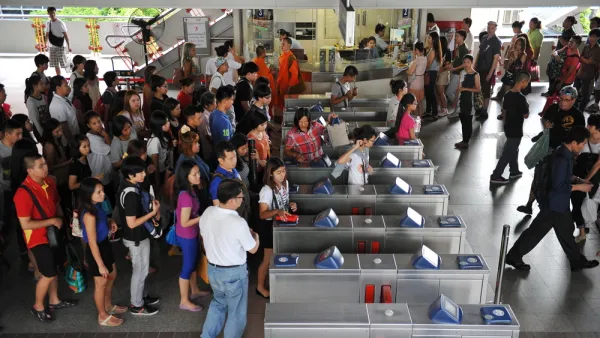
Strategies for Maximizing Transit Ridership
Jarrett Walker outlines the conditions under which transit serves the greatest number of travelers. Maximizing ridership, he argues, requires thinking like a business and catering to demand.
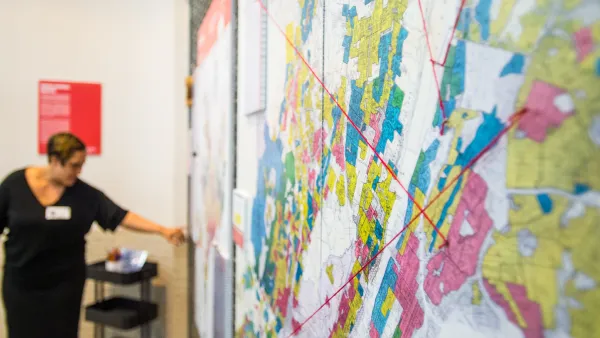
How HUD is dismantling fair housing enforcement
Fair housing law has never been easy to enforce. But HUD's proposal to eliminate the use of disparate impact analysis will remove another crucial tool for doing so.

Planetizen Federal Action Tracker
A weekly monitor of how Trump’s orders and actions are impacting planners and planning in America.

California plans to bury El Niño’s downpour
If the state plays its cards right, it may be able to store a billion acre-feet of El Niño’s water in aquifers.

Desperate measures: Advocates weigh draining Lake Powell to fill Colorado River
Draining the reservoir could reduce evaporation losses by a couple hundred thousand acre-feet.

Chicago voters approve permanent festival grounds, penalty for vacant property owners
Currently, major summer and fall festivals take over public parks for weeks at a time, drawing criticism from nearby residents

NYC votes to cut outdoor dining red tape, speed up permitting
New York City also voted to allow the Department of Transportation to begin work on urgent projects before notifying elected officials.

California appears to reject Prop. 45
The proposition would have expanded the projects that qualify for a streamlined environmental review, effectively paring down the California Environmental Quality Act.

FREE Course: Walkable City 1: Why Walkability?
After describing his path towards focusing on walkability as the essence of good planning, Jeff Speck marches through his five principal reasons for making more walkable places.
Reinventing Malls: Planning Alchemy—Turning Gray Fields Into Gold
The course focuses on the opportunities and imperatives that shape reinvention of mall sites.

City of Rosemead
Rutgers University, Edward J. Bloustein School of Planning and Public Policy
One Hundred Miles
Hunter College, City University of New York (CUNY)
The Architects Foundation
University of Cincinnati Online
City of Cambridge
Montrose County
The Pocatello Development Authority