Transportation Secretary Ray LaHood recently wrote on his blog that bicyclists would no longer be overlooked by federal transportation policy. National Journal asks its panel of experts whether cars and bikes should be treated equally.


"LaHood called the new policy a 'sea change,' but is it a good one? Should non-motorized modes of transportation be treated as equal to other modes, particularly when modes like driving and mass transit are at least partially, if not primarily, self-funded? Or is it the essence of DOT's evolving 21st-century mission to give people more mobility options that, according to LaHood, are relatively fast and inexpensive to build, are environmentally sustainable, reduce travel costs, improve safety and public health, and 'reconnect citizens with their communities'?"
Responses from National Journal's panel of transportation experts include Andy Clarke, President of the League of American Bicyclists, Bill Graves, President and CEO of the American Trucking Associations, and Greg Cohen, President and CEO of the American Highway Users Alliance.
FULL STORY: Should Bikes And Cars Be Treated Equally?

Cyclists, Pedestrians, and Drivers Clash
With over 8 million people sharing the streets and sidewalks of New York City, there is bound to be a clash between transportation modes. Who's to blame? Lyndsey Scofield says that there is bad behavior on all sides.
Bike Production Dwarfs Car Production
Production of bicycles is more than double the production of cars worldwide -- and the gap between the two vehicles is widening. Many see this as an indicator of the global shift towards encouraging bicycle use as a viable transportation option.
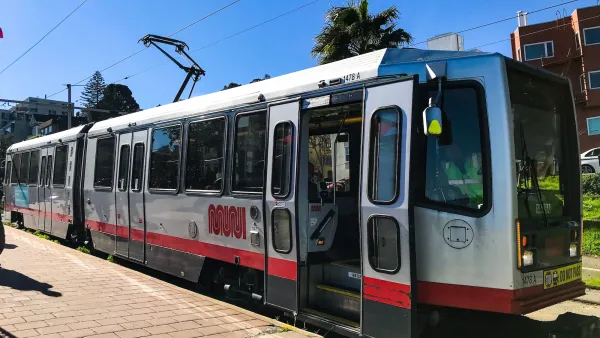
San Francisco cyclists push to allow bikes on Muni trains
The agency is one of few that bans bikes from its trains due to space constraints.

The state-sanctioned urbicide of Austin
People don’t kill cities. Freeways do.

US to reduce Colorado River water deliveries to Mexico
A new Colorado Treaty amendment reduces Mexico’s Colorado River water allocation by 250,000 acre feet.

New Jersey’s second-largest city bans standalone data centers
Jersey City will continue to allow co-location facilities, such as those meant for research institutions that store their own data.

Amtrak not solely to blame for New Jersey commuter rail's unreliability, report finds
A new study from the Garden State Initiative found that NJ Transit’s budget grew 20% across a 4 year period, but reliability declined significantly over the same period.

EPA erases limits on planet-warming pollution from power plants
Under Monday’s plan, power plants would still have some limits on how much mercury, arsenic and other contaminants they can emit.

Phoenix announces new on-demand transit service, more frequent RAPID buses
Both new services will launch in October, and are part of Phoenix's Project Effective Access Solutions for Easing Congestion.

FREE Course: Walkable City 1: Why Walkability?
After describing his path towards focusing on walkability as the essence of good planning, Jeff Speck marches through his five principal reasons for making more walkable places.
Reinventing Malls: Planning Alchemy—Turning Gray Fields Into Gold
The course focuses on the opportunities and imperatives that shape reinvention of mall sites.

Eagle County Government
Harvard University Graduate School of Design
Nashville Planning Department
The Architects Foundation
University of Cincinnati Online
The Pocatello Development Authority
The Urban Renewal Agency of the City of Pocatello
Journal of the American Planning Association