The Center for Public Integrity continues its investigation into who is influencing transportation policy at the federal level. They found that lack of governmental focus has left the door open for developers to point the way.


In addition to donating directly to PACs, developers hire federal lobbyists for transportation funding.
Matthew Lewis writes, "Last year, they hoped the payoff would be a $500 billion multiyear bill proposed by House Transportation Committee Chairman James Oberstar, a Minnesota Democrat. But congressional leaders have yet to agree how to pay for such legislation. In the meantime, the transportation community is focused on annual appropriations bills, the economic stimulus money still being spent in the states, and congressional jobs packages as the main federal funding sources for transportation.
For earmarks in particular, the appropriations route can be the fastest way to win money for pet projects."
Read the full story: Developers in the Driver's Seat on Transportation

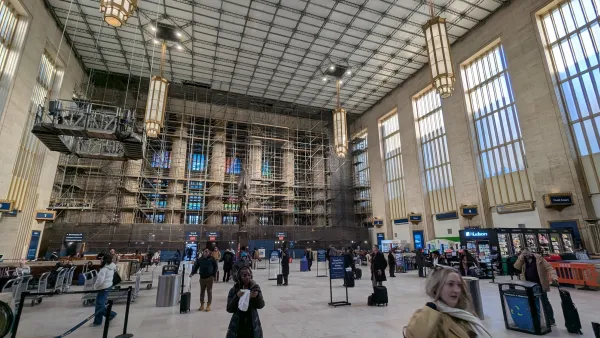
Pennsylvania 12-year transportation plan commits $13B for transit
The state's new mid-range transportation strategy includes nearly $17 billion for roads and bridges and $367 million for multimodal projects.
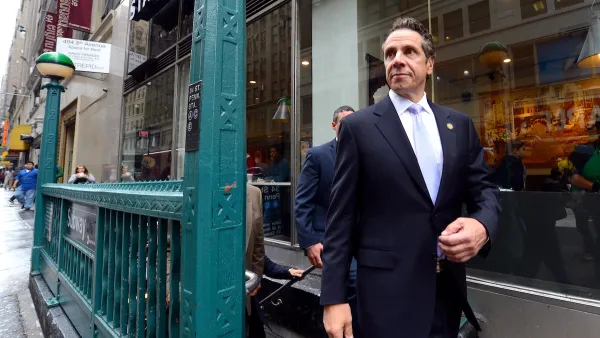
Cuomo Is the Candidate of Both NIMBYs and Developers. What Gives?
In the New York City mayoral race, odd bedfellows align to preserve the housing status quo.

The Philadelphia Loan Program Transforming the Demographics of Development
The Jumpstart loan program is helping Black and female residents become developers.

Planetizen Federal Action Tracker
A weekly monitor of how Trump’s orders and actions are impacting planners and planning in America.

Northwest rail fans eager for Sept. 30 debut of Amtrak’s Airo fleet
Get ready for that new train smell and more seats. But they won’t go faster or run more frequently on the Cascades route in Washington and Oregon.

Trump is considering data centers on 6 states' public land — some state officials say they had no idea
If the administration approves the proposed projects, data center and data center-related developments will cover 17,600 acres of public land.

California may destroy its beaches trying to save homes from El Niño
Boulders and seawalls can protect homes from waves, but ultimately destroy sandy beaches.

California high-speed rail accomplishes only one legislative goal in 2026
The majority of the agency's failed pitches were never developed into written proposals.

Sharp cuts to federal passenger rail, public transit funding arrive today
The American Public Transportation Associations estimates the stopgap bill will result in an over 80% cut to federal passenger rail investment and 20% cut to public transit investment.

FREE Course: Walkable City 1: Why Walkability?
After describing his path towards focusing on walkability as the essence of good planning, Jeff Speck marches through his five principal reasons for making more walkable places.
Reinventing Malls: Planning Alchemy—Turning Gray Fields Into Gold
The course focuses on the opportunities and imperatives that shape reinvention of mall sites.

City of Thousand Oaks
City of Wisconsin Rapids
Harvard University Graduate School of Design
The Architects Foundation
University of Cincinnati Online
Northern Illinois Transit Authority (NITA)
The Pocatello Development Authority
The Urban Renewal Agency of the City of Pocatello