The first new international airport in America in more than a decade is taking form in Florida panhandle. It's part of a broad effort to turn the region into a destination -- and a valuable real estate development.


"Northwest Florida Beaches International, is also noteworthy because it is perhaps more of a real estate project than an effort to address a pressing transportation problem. Backed by a major Florida landowner, it is part of a plan to create 'a new national and international destination,' as one investor presentation proclaims, in a relatively sleepy region of beaches, barrier islands and wetlands.
'Silicon Valley at one point was out in the middle of nowhere,' said Britt Greene, president and chief executive of the St. Joe Company, the Florida developer that donated the land for the new airport and is the driving force behind the project. 'We think we can do the same.'"
The project is costing more than $300 million for what some say is an airport nobody needed. But its developers hope the new facilities will increase air traffic and visitors to the region.
Read the full story: Airport Built, It’s Time to See if the Traffic Comes
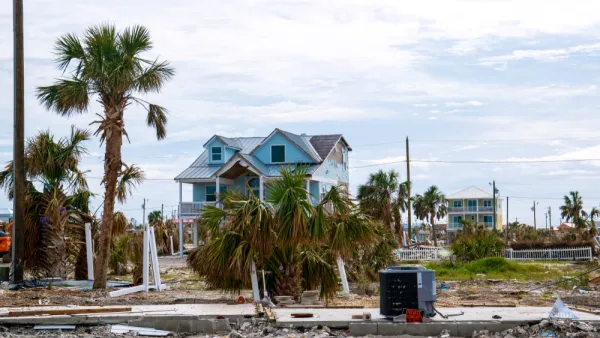
Op-Ed: FEMA Failing to Respond to Housing Displacement After Disasters
With President Trump in Florida, Diane Yentel writes about the many people there still living without shelter after Hurricane Michael last year.
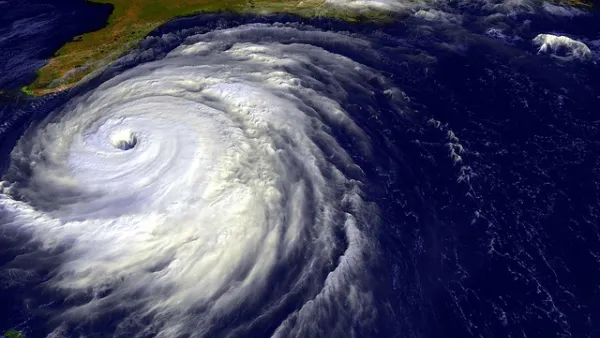
After Michael: Updating Florida's Building Code to Better Weather Future Storms
Code requirements for wind resistance vary substantially across Florida, with less stringent building requirements in areas of the Panhandle hit hard by Hurricane Michael.
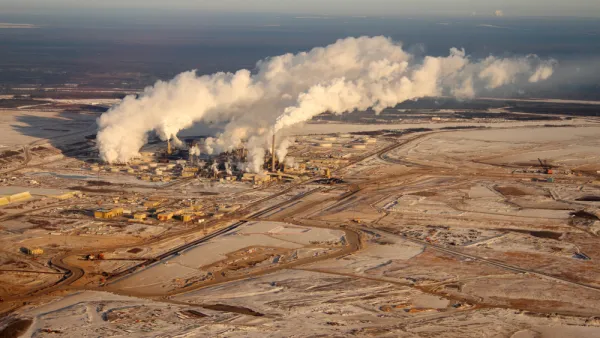
ExxonMobil's $1 Million Gift to Fight Climate Change Through Carbon Pricing
Two days after a Nobel prize was awarded to William Nordhaus for his work on carbon taxes to address climate change, the largest American oil and gas company announced a $1 million contribution to a group promoting a carbon fee and dividend plan.

Planetizen Federal Action Tracker
A weekly monitor of how Trump’s orders and actions are impacting planners and planning in America.

California plans to bury El Niño’s downpour
If the state plays its cards right, it may be able to store a billion acre-feet of El Niño’s water in aquifers.

Desperate measures: Advocates weigh draining Lake Powell to fill Colorado River
Draining the reservoir could reduce evaporation losses by a couple hundred thousand acre-feet.

Mamdani’s pied-à-terre tax survives legal challenge
A panel of judges found that the plaintiffs failed to demonstrate injury as a result of New York City's implementation of the tax.

Eastern Nebraska is running out of electricity
Data centers and electrification are straining eastern Nebraska’s grid, throttling economic development.

Seattle passes record-breaking transit services expansion
Proposition 1 will double the city’s transit tax to add 95,000 more bus trips and preserve 180,000 bus trips annually.

FREE Course: Walkable City 1: Why Walkability?
After describing his path towards focusing on walkability as the essence of good planning, Jeff Speck marches through his five principal reasons for making more walkable places.
Reinventing Malls: Planning Alchemy—Turning Gray Fields Into Gold
The course focuses on the opportunities and imperatives that shape reinvention of mall sites.

City of Rosemead
Rutgers University, Edward J. Bloustein School of Planning and Public Policy
One Hundred Miles
University of Michigan School for Environment and Sustainability (SEAS)
Hunter College, City University of New York (CUNY)
The Architects Foundation
City of Cambridge
Montrose County
The Pocatello Development Authority