The short-term focus of the first year's worth of stimulus package spending could be creating long-term problem's for America's already troubled infrastructure, according to this review from the Chicago Tribune's Blair Kamin.


"In a bid to preserve or create much-needed jobs, most of the stimulus spending for infrastructure is pushing short-term fixes, like repaved roads. Such projects have undeniable added value, allowing traffic to flow more smoothly and preventing crater-sized potholes from blowing out tires. Yet the roads will simply have to be repaved a few years down the line. In the long run, whether the stimulus helps bring down unemployment or not, little will have changed.
'Few of the [stimulus] projects are transformative,' said Joseph Schofer, professor of civil and environmental engineering at Northwestern University.
Not all of them were supposed to be, of course."
But despite the early focus on creating jobs and taking care of shorter-term problems, Kamin says the stimulus package is not necessarily a wasted investment in terms of infrastructure.
Thanks to ArchNewsNow
FULL STORY: Obama's stimulus package, one year later: Too much quick fix; too little long-term infrastructure

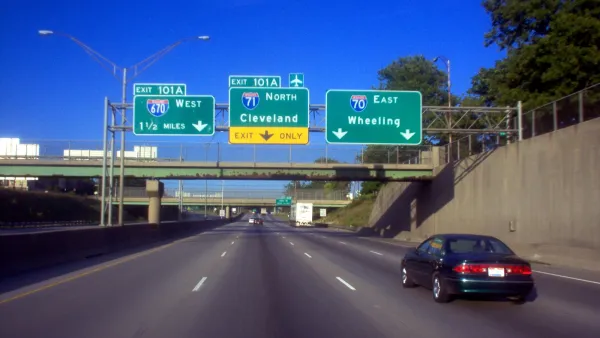
The 'INVEST in America Act' Would Help States Kick the Highway Habit
While Congress debates its bipartisan infrastructure deal, a House-approved bill, the INVEST in America Act, waits in the wings with the potential to alter the direction of transportation planning in the United States.
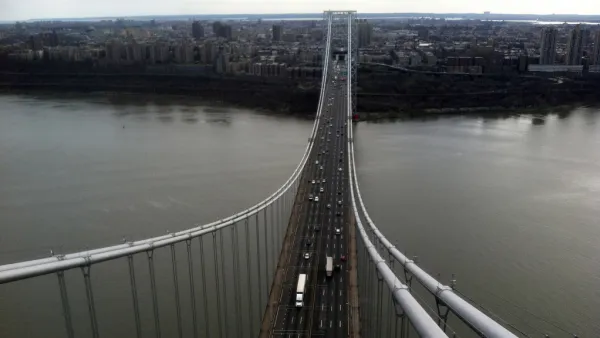
Updated: Strong Towns: Bipartisan Infrastructure Bill Would 'Make our Infrastructure Crisis Worse'
To some, the agreement promises too much funding for traditional infrastructure programs rather than 'adaptations and innovations.'
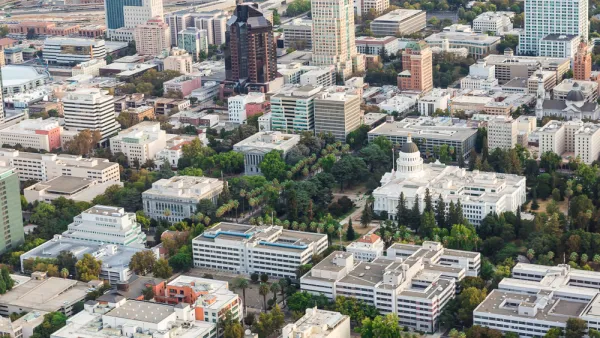
Direct Payment, Rent Relief, Homelessness Funding in Expanded 'California Comeback Plan'
Nearly 6 million Californians will receive $600 in economic stimulus checks as the state makes a plan to spend its surprise, massive budget surplus. $2.6 million for rent relief and $2 billion to pay utility bills are also planned.

The state-sanctioned urbicide of Austin
People don’t kill cities. Freeways do.

US to reduce Colorado River water deliveries to Mexico
A new Colorado Treaty amendment reduces Mexico’s Colorado River water allocation by 250,000 acre feet.

New Jersey’s second-largest city bans standalone data centers
Jersey City will continue to allow co-location facilities, such as those meant for research institutions that store their own data.

Amtrak not solely to blame for New Jersey commuter rail's unreliability, report finds
A new study from the Garden State Initiative found that NJ Transit’s budget grew 20% across a 4 year period, but reliability declined significantly over the same period.

EPA erases limits on planet-warming pollution from power plants
Under Monday’s plan, power plants would still have some limits on how much mercury, arsenic and other contaminants they can emit.

Phoenix announces new on-demand transit service, more frequent RAPID buses
Both new services will launch in October, and are part of Phoenix's Project Effective Access Solutions for Easing Congestion.

FREE Course: Walkable City 1: Why Walkability?
After describing his path towards focusing on walkability as the essence of good planning, Jeff Speck marches through his five principal reasons for making more walkable places.
Reinventing Malls: Planning Alchemy—Turning Gray Fields Into Gold
The course focuses on the opportunities and imperatives that shape reinvention of mall sites.

Eagle County Government
Harvard University Graduate School of Design
Nashville Planning Department
The Architects Foundation
University of Cincinnati Online
The Pocatello Development Authority
The Urban Renewal Agency of the City of Pocatello
Journal of the American Planning Association