The projects receiving funding through the federal government's roughly $8 billion high speed rail investment travel through more than 40% of congressional districts. Analysts predict this will encourage more legislators to push for related funds.


"According to an E&E analysis, the passenger rail lines that received stimulus cash go through more than 40 percent of all congressional districts, including those represented by a number of powerful lawmakers that will play a key role in finding the tens of billions of additional dollars thought to be needed to complete the work.
When looked at as a whole, the grants can be seen as an attempt to entice lawmakers to continue to spend on a massive public works project that is still very much in its infancy, even at a time when Washington has one eye firmly focused on the growing national deficit."
Congressional districts located nearby high speed rail corridors are expected to see benefits from the system, according to the analysis. Representatives in those places may be more likely to support legislation to provide additional funding for high speed rail projects.
Thanks to The Infrastructurist
FULL STORY: High-Speed Rail Cash Lays Congressional Track for Billions More to Follow

High Speed Rail Gradually Develops, But Critics Remain Vocal
As high speed rail projects begin to take shape across America, commuters are anticipating eased travel but skeptics remain critical.
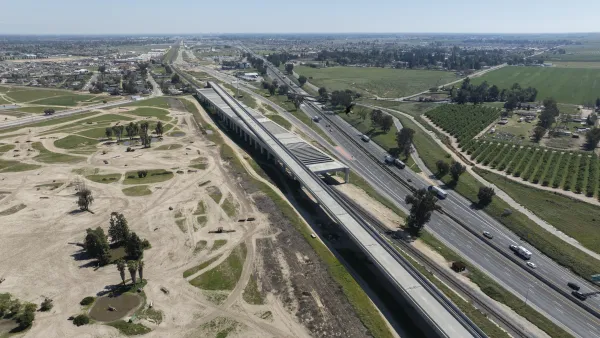
California High-Speed Rail Authority could be broke by the end of 2027
A report from the Office of Inspector General says the authority must borrow against state infusions to stay afloat.
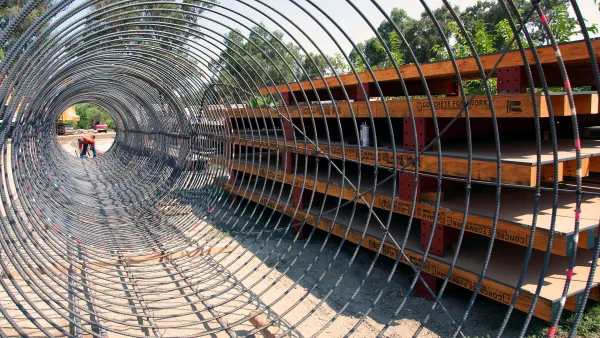
California High Speed Rail to lay first tracks
High Speed Rail Authority officials describe the milestone as "the moment this project truly begins to become a railroad."

Planetizen Federal Action Tracker
A weekly monitor of how Trump’s orders and actions are impacting planners and planning in America.

The state-sanctioned urbicide of Austin
People don’t kill cities. Freeways do.

US to reduce Colorado River water deliveries to Mexico
A new Colorado Treaty amendment reduces Mexico’s Colorado River water allocation by 250,000 acre feet.

Mamdani overhauls NYC's Vision Zero plan with 100 new policy goals
The overhaul aims to reduce traffic deaths and make streets safer for pedestrians, cyclists and drivers through lower speed limits, new safety infrastructure and more.

Amtrak not solely to blame for New Jersey commuter rail's unreliability, report finds
A new study from the Garden State Initiative found that NJ Transit’s budget grew 20% across a 4 year period, but reliability declined significantly over the same period.

EPA erases limits on planet-warming pollution from power plants
Under Monday’s plan, power plants would still have some limits on how much mercury, arsenic and other contaminants they can emit.

FREE Course: Walkable City 1: Why Walkability?
After describing his path towards focusing on walkability as the essence of good planning, Jeff Speck marches through his five principal reasons for making more walkable places.
Reinventing Malls: Planning Alchemy—Turning Gray Fields Into Gold
The course focuses on the opportunities and imperatives that shape reinvention of mall sites.

Eagle County Government
Harvard University Graduate School of Design
Nashville Planning Department
The Architects Foundation
University of Cincinnati Online
The Pocatello Development Authority
The Urban Renewal Agency of the City of Pocatello
Journal of the American Planning Association