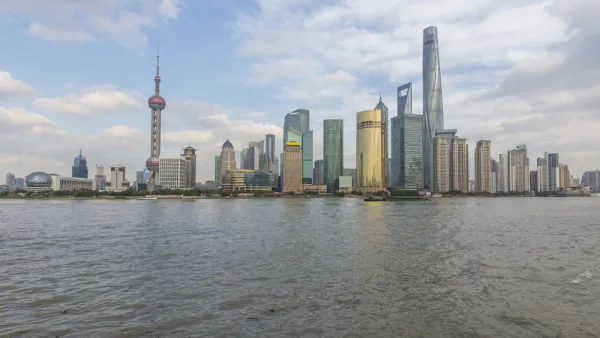
With a rapidly growing urban core and a slew of skyscrapers, Shanghai today is what New York was to the world in the 1930s, according to this piece.


"[I]n recent years, the pace of change in Shanghai has accelerated at such a blistering rate-400 skyscrapers rising in the historic core alone since 1990-that holding on to a coherent impression of the contemporary city is almost impossible. The relentless escalation seems daunting, even a little scary. A visit to "China Prophecy: Shanghai," now at the Skyscraper Museum through April, is a handy way to get a better grip on the changes under way in this clamoring, glamorous city.
Built around the plausible conceit that Shanghai today is experiencing the explosive urban creativity and convulsive growth last seen during the skyscraper age of New York in the '30s, the show sets out to 'juxtapose a retrospective of American visions of the skyscraper city of the future from the early 20th century with an exploration of Chinese cities today, pursuing the parallel conditions of rapid modernization and urbanization."
Much of the growth in the Chinese city since 1990 has been at the hands of American architects.
Read the full story: The City of the Future Echoes the Past
Ten of the Best New Skyscrapers From Around the World
Dezeen presents a not-so-humble list of the ten best skyscrapers opened to the public in 2016.
A Tale of Two Tall Towers
Josh Leon reports on his time "around two instructive pieces of vertical architecture that could presumably be competitors in a transoceanic race between the US and China for economic hegemony."
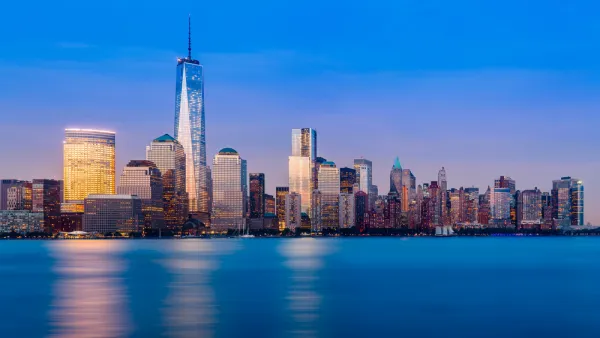
20 Years After 9/11: The 'Age of Skyscrapers' Is Nowhere Near Over
Despite predictions that the events of September 11, 2001 would be the end of skyscrapers, U.S. cities are building more tall buildings than ever.

Planetizen Federal Action Tracker
A weekly monitor of how Trump’s orders and actions are impacting planners and planning in America.

California plans to bury El Niño’s downpour
If the state plays its cards right, it may be able to store a billion acre-feet of El Niño’s water in aquifers.

Desperate measures: Advocates weigh draining Lake Powell to fill Colorado River
Draining the reservoir could reduce evaporation losses by a couple hundred thousand acre-feet.

In Texas, data centers are swallowing promised parkland
Residents who moved to Taylor, Texas for a rural community now have to contend with three data centers in their backyard.

How a Chicago-sized wind farm beat the odds and powered on
The project spanned five presidential administrations and a standoff with a U.S. military base.

MTA gives itself 30 days to transform pit into basketball court
The site has been under construction since 2022; the city originally estimated it would finish the court in 2024.

FREE Course: Walkable City 1: Why Walkability?
After describing his path towards focusing on walkability as the essence of good planning, Jeff Speck marches through his five principal reasons for making more walkable places.
Reinventing Malls: Planning Alchemy—Turning Gray Fields Into Gold
The course focuses on the opportunities and imperatives that shape reinvention of mall sites.

City of Rosemead
Rutgers University, Edward J. Bloustein School of Planning and Public Policy
One Hundred Miles
Hunter College, City University of New York (CUNY)
The Architects Foundation
University of Cincinnati Online
City of Cambridge
Montrose County
The Pocatello Development Authority