Earlier this week, the Obama Administration announced a significant investment in smart grid infrastructure like improved transmission lines and smart meters in homes.


From the press release: "One-hundred private companies, utilities, manufacturers, cities and other partners received awards today, including FPL which will use its $200 million in funding to install 2.6 million smart meters and other technology that will cut energy costs for its customers. In the coming days, Cabinet Members and other Administration officials will fan out to awardee sites across the country to discuss how this investment will create jobs, improve the reliability and efficiency of the electrical grid, and help bring clean energy sources from high-production states to those with less renewable generating capacity. The awards announced today represent the largest group of Recovery Act awards ever made in a single day and the largest batch of Recovery Act clean energy grant awards to-date."
Read the full story: President Obama Announces $3.4 Billion Investment to Spur Transition to Smart Energy Grid


Improved Electrical Grids Cut Greenhouse Gas Emissions
Preventing electricity losses makes power generation more efficient. Those efficiencies translate into lower emissions.
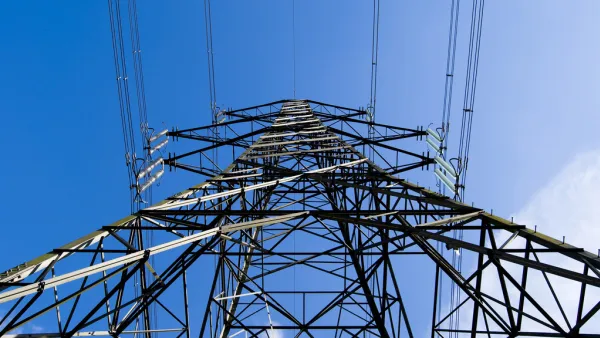
A New Commitment to an Efficient, Smart Grid in Arizona
Arizona's largest electric utility is proposing a set of next-gen energy conservation tools for its customers, as well as an accompanying educational component.

Smart Cities: High Costs, High Potential
Over the next two decades, bold estimates have local governments around the world spending over $41 trillion on "smart cities." But what are smart cities, and how do we measure return on investment?

Planetizen Federal Action Tracker
A weekly monitor of how Trump’s orders and actions are impacting planners and planning in America.

California plans to bury El Niño’s downpour
If the state plays its cards right, it may be able to store a billion acre-feet of El Niño’s water in aquifers.

Chicago breaks ground on $3 billion megadevelopment
The new neighborhood, titled Foundry Park, will one day host 3,700 residences.

California High-Speed Rail Authority CEO resigns after $600,000 scandal
Under Ian Choudri, the authority used taxpayer dollars to fund first class flights and trips to nightclubs.

Want to study the Missouri River? Soon, you may need unanimous approval from 10 states
Legislation would require 10 governors’ permission to study or build projects moving water outside the basin.

Desperate measures: Advocates weigh draining Lake Powell to fill Colorado River
Draining the reservoir could reduce evaporation losses by a couple hundred thousand acre-feet.

FREE Course: Walkable City 1: Why Walkability?
After describing his path towards focusing on walkability as the essence of good planning, Jeff Speck marches through his five principal reasons for making more walkable places.
Reinventing Malls: Planning Alchemy—Turning Gray Fields Into Gold
The course focuses on the opportunities and imperatives that shape reinvention of mall sites.

City of Rosemead
Rutgers University, Edward J. Bloustein School of Planning and Public Policy
One Hundred Miles
Hunter College, City University of New York (CUNY)
The Architects Foundation
University of Cincinnati Online
City of Cambridge
Montrose County
The Pocatello Development Authority