Failing malls didn’t get into trouble overnight: most began their descent long before the tough climate.


"The enclosed shopping mall, an uniquely American retail innovation, was the 'future of retail' in the 1950s and 60s. Shopping centers became an icon of suburban living in the 1970s and 80s, before beginning their slowly accelerating decline in the 1990s. Today, the growing number of dead or dying shopping malls and centers are seen as symbols of the downside of 'suburban sprawl.'
Finding new uses for old shopping centers will likely be a significant challenge for planners and real estate developers over the next decade. While revitalized downtown areas are making use of 19th Century buildings and neighborhoods to generate new businesses and profits, the iconic, post-World War II shopping mall design of the 20th Century too often fails to offer the same flexibility."
Thanks to Rodney C. Nanney, AICP
Read the full story: Dead Malls: Suburban Planning Nightmare or Opportunity?

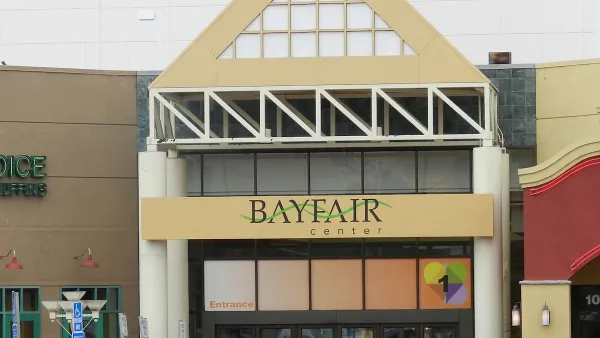
Mall Redevelopment in Silicon Valley
Dead malls across the Bay Area are being transformed into R&D centers, housing, and transportation hubs.
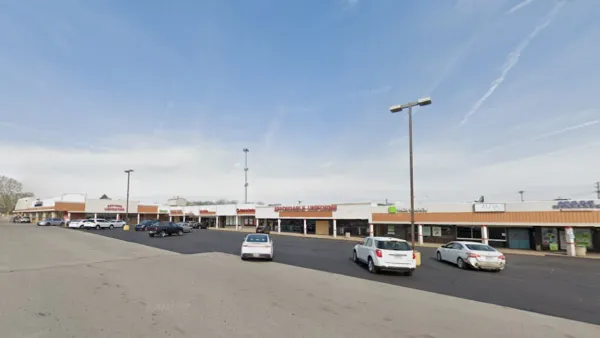
Ohio Suburb Reenvisions Car-Oriented Shopping Center
Garfield Heights wants to transform a 1960s complex nestled in a sea of surface parking into a walkable, mixed-use development.
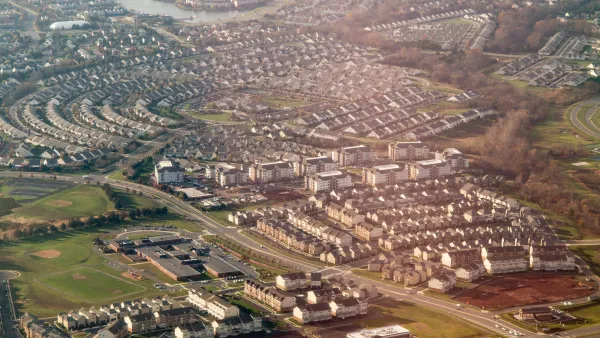
Retrofitting D.C.’s Suburbs for a New Era
How to equip suburban sprawl for a different future.

Planetizen Federal Action Tracker
A weekly monitor of how Trump’s orders and actions are impacting planners and planning in America.

Amtrak, CN end decades-long dispute with eight-year agreement
The new operating agreement establishes an updated framework for the companies to work together, including processes to resolve disputes.

Judges permit Denver to divert 77,000 acre feet from the Colorado River for reservoir expansion
Overuse and climate change have caused the Colorado River’s water levels to plummet.

Northwest rail fans eager for Sept. 30 debut of Amtrak’s Airo fleet
Get ready for that new train smell and more seats. But they won’t go faster or run more frequently on the Cascades route in Washington and Oregon.

NYC DOT wants faster, more permanent street upgrades
The city is examining ways to build more concrete infrastructure without getting entangled in 'decades-long' projects.

'Something we’ve never seen before:' rising utility rates could strain city finances nationwide
Data centers, climate change and other factors have caused utility rates in the United States to increase by 38% since 2020.

FREE Course: Walkable City 1: Why Walkability?
After describing his path towards focusing on walkability as the essence of good planning, Jeff Speck marches through his five principal reasons for making more walkable places.
Reinventing Malls: Planning Alchemy—Turning Gray Fields Into Gold
The course focuses on the opportunities and imperatives that shape reinvention of mall sites.

Harvard University Graduate School of Design
KFH Group Inc.
Greater Baltimore Committee
The Architects Foundation
University of Cincinnati Online
The Pocatello Development Authority
The Urban Renewal Agency of the City of Pocatello