Urban sounds can have an effect on people -- both physically and mentally. This sonic tour through New York City examines how sounds affect urbanites.


From the shock of the alarm clock first thing in the morning to the rattle of the subway to the city's quietest room, the noises of urban places have been shown to impact human brains in interesting ways.
"The surrounding bath of urban sound has mental as well as physical effects, according to environmental psychologist Arline Bronzaft, who has spent more than 30 years studying how people perceive and respond to noise. Currently with the Council on the Environment of New York City, she has addressed noise problems as diverse as a neighbor's too-loud TV, the banging of a bed during sex, and a mysterious whistling in the middle of the night that disturbed Brooklynites in the 1990s. (It turned out to be a signal used by a ring of drug dealers.) I stopped by Bronzaft's home on the Upper East Side to learn more about why noise matters. As we sat among bookcases filled with decades of research, she explained that not everyone reacts to noise the same way, but the negative effects of unwanted sounds on health are real and measurable."
FULL STORY: What Do Urban Sounds Do to Your Brain?

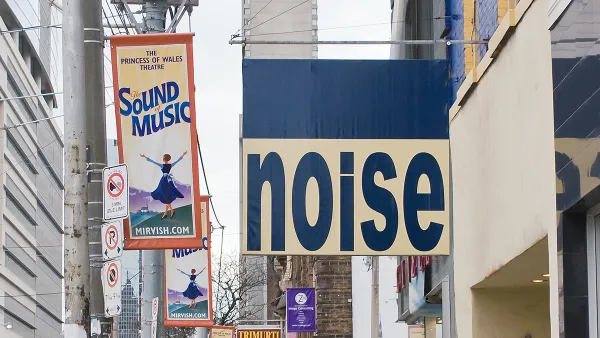
Using Tech to Control Noise Pollution
Several cities are piloting programs that use machine learning to identify and understand urban noise patterns and enforce noise ordinances.
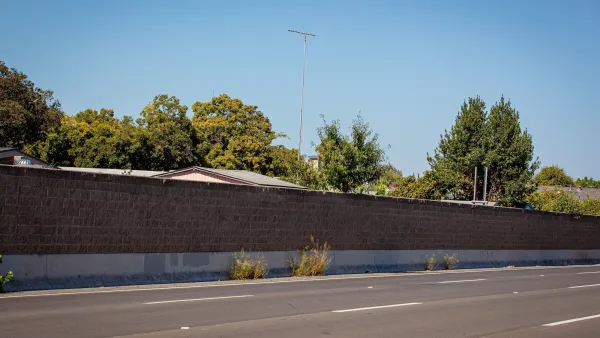
Study: Silence Raises Property Values
A Florida study found homes near recently built sound walls saw a rise in value.
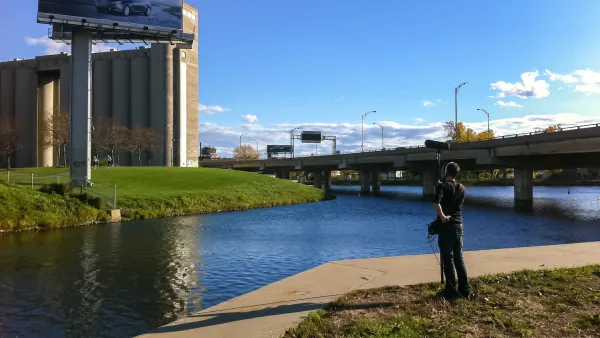
Montreal Artist Envisions What Cities Would Sound Like if we Deprioritized Cars
What would a city sound like without the noise of vehicles?

Planetizen Federal Action Tracker
A weekly monitor of how Trump’s orders and actions are impacting planners and planning in America.

The state-sanctioned urbicide of Austin
People don’t kill cities. Freeways do.

US to reduce Colorado River water deliveries to Mexico
A new Colorado Treaty amendment reduces Mexico’s Colorado River water allocation by 250,000 acre feet.

5 New England states march closer to 800 megawatt wind energy project
Securing federal approval for the project may be complicated under the Trump administration, which has historically been hostile towards domestic wind power.

Baltimore to break ground on $50 million Transit Priority Project
The project will bring faster bus trips, safer streets and better bike connections to Baltimore.

Airbnb launches $250 million 'last-dollar financing' housing accelerator, makes first investment in Austin
The company will put $6.4 million towards affordable housing development in Texas’ capital.

FREE Course: Walkable City 1: Why Walkability?
After describing his path towards focusing on walkability as the essence of good planning, Jeff Speck marches through his five principal reasons for making more walkable places.
Reinventing Malls: Planning Alchemy—Turning Gray Fields Into Gold
The course focuses on the opportunities and imperatives that shape reinvention of mall sites.

Eagle County Government
Harvard University Graduate School of Design
Nashville Planning Department
The Architects Foundation
University of Cincinnati Online
The Pocatello Development Authority
The Urban Renewal Agency of the City of Pocatello
Journal of the American Planning Association