Economic improvement projects funded by the stimulus are moving full steam ahead -- in France.


French officials are fast at work on implementing the nation's $37 billion economic stimulus plan, with many projects currently underway.
"All told, Paris has set aside 100 million euros in stimulus funds earmarked for what the French like to call their cultural patrimony. It is a French twist on how to overcome the global downturn, spending borrowed money avidly to beautify the nation even as it also races ahead of the United States in more classic Keynesian ways: fixing potholes, upgrading railroads and pursuing other 'shovel ready' projects.
'America is six months behind; it has wasted a lot of time,' said Patrick Devedjian, the minister in charge of the French relance, or stimulus. By the time Washington gets around to doling out most of its money, Mr. Devedjian sniffed, 'the crisis could be over.'"
Read the full story: France, Unlike U.S., Is Deep Into Stimulus Projects

For Coronavirus Aid, Air France Must Stop Competing With Rail
France is proposing a momentous step toward clean transportation.
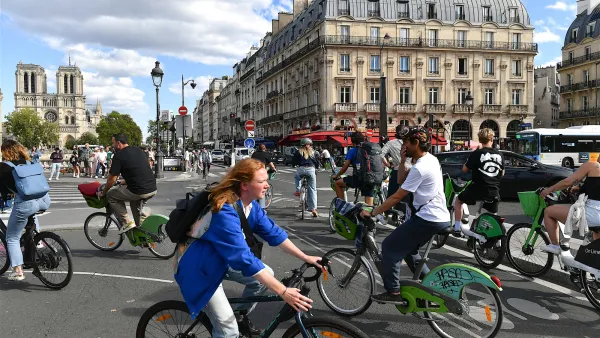
Biking in Paris grew by 240% in 5 years
The city saw a significant rise in bike use thanks to data-driven policy changes.
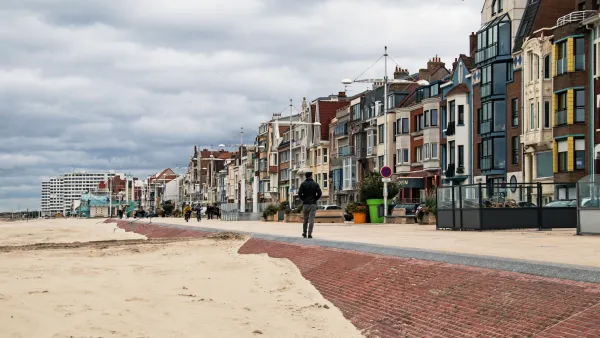
The City Where Free Buses Changed Everything
New York’s new mayor Zohran Mamdani has said he’ll make every bus free to ride. This French city did just that — and is reaping the rewards.

Planetizen Federal Action Tracker
A weekly monitor of how Trump’s orders and actions are impacting planners and planning in America.

California plans to bury El Niño’s downpour
If the state plays its cards right, it may be able to store a billion acre-feet of El Niño’s water in aquifers.

Desperate measures: Advocates weigh draining Lake Powell to fill Colorado River
Draining the reservoir could reduce evaporation losses by a couple hundred thousand acre-feet.

Chicago voters approve permanent festival grounds, penalty for vacant property owners
Currently, major summer and fall festivals take over public parks for weeks at a time, drawing criticism from nearby residents

NYC votes to cut outdoor dining red tape, speed up permitting
New York City also voted to allow the Department of Transportation to begin work on urgent projects before notifying elected officials.

California appears to reject Prop. 45
The proposition would have expanded the projects that qualify for a streamlined environmental review, effectively paring down the California Environmental Quality Act.

FREE Course: Walkable City 1: Why Walkability?
After describing his path towards focusing on walkability as the essence of good planning, Jeff Speck marches through his five principal reasons for making more walkable places.
Reinventing Malls: Planning Alchemy—Turning Gray Fields Into Gold
The course focuses on the opportunities and imperatives that shape reinvention of mall sites.

City of Rosemead
Rutgers University, Edward J. Bloustein School of Planning and Public Policy
One Hundred Miles
Hunter College, City University of New York (CUNY)
The Architects Foundation
University of Cincinnati Online
City of Cambridge
Montrose County
The Pocatello Development Authority