The Environmental Protection Agency has reversed a decision by the Bush Administration that will allow California to create its own set of vehicle emissions standards.


The new standards won't be able to take effect until 2017, according to an agreement between the state and the EPA.
"Today's decision sets the stage for the proposed national vehicle emissions standards that President Obama announced in May: New cars and trucks sold in the U.S. will be required to improve their fuel efficiency gradually over the next seven years, reaching an average of 35.5 miles per gallon by 2016 -- a 40% improvement over the current 25 mpg level. The federal government agrees to adopt California's standards as its own, and the state agrees not to toughen the standards before 2017. Automakers agree to drop lawsuits against California's standards."
Read the full story: EPA gives California emissions waiver
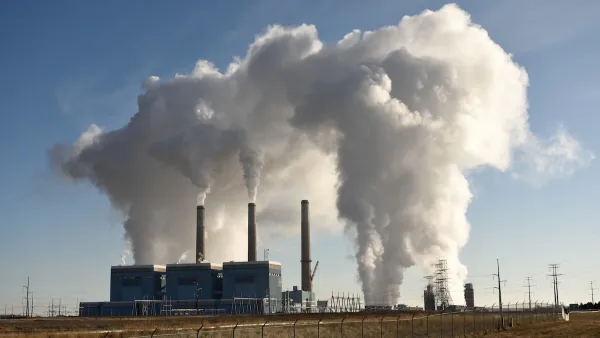
25 states, cities sue the EPA over erased power plant emissions limits
The coalition also intends to sue the EPA for not regulating emissions from gas-fired power plants.
EPA Plans “Largest Deregulatory Action” in History
The agency plans to repeal a key 2009 rule that underpins the government’s authority to regulate greenhouse gas emissions.
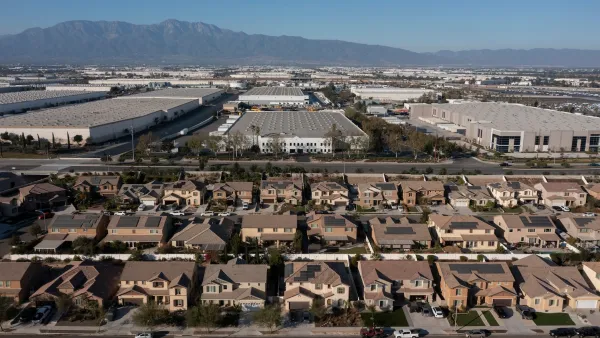
New California Law Regulates Warehouse Pollution
A new law tightens building and emissions regulations for large distribution warehouses to mitigate air pollution and traffic in surrounding communities.

Desperate measures: Advocates weigh draining Lake Powell to fill Colorado River
Draining the reservoir could reduce evaporation losses by a couple hundred thousand acre-feet.

Eastern Nebraska is running out of electricity
Data centers and electrification are straining eastern Nebraska’s grid, throttling economic development.

Malls are becoming the midtowns of the future
Mall and office park redevelopments are a generational opportunity to create new nodes of urbanity.

NYC breaks ground on anti-flooding infrastructure project
New York City's new system will reduce stormwater flows to local sewers by 90%.

One Kentucky town’s secret to affordable housing
The Smoketown Community Land Trust has already built seven affordable homes for community members.

Houston gains petal-shaped cooling infrastructure to make streets more ‘delightful’
The city has installed the pavilions along 15 blocks in Houston.

FREE Course: Walkable City 1: Why Walkability?
After describing his path towards focusing on walkability as the essence of good planning, Jeff Speck marches through his five principal reasons for making more walkable places.
Reinventing Malls: Planning Alchemy—Turning Gray Fields Into Gold
The course focuses on the opportunities and imperatives that shape reinvention of mall sites.

City of Rosemead
Rutgers University, Edward J. Bloustein School of Planning and Public Policy
One Hundred Miles
University of Michigan School for Environment and Sustainability (SEAS)
Hunter College, City University of New York (CUNY)
The Architects Foundation
City of Cambridge
Montrose County
The Pocatello Development Authority