Families who have income will now be charged a small rent to stay in public housing shelters in New York City, part of a 1997 state law that had up until now gone unenforced.


"The new policy is based on a 1997 state law that was not enforced until last week, when shelter operators across the city began requiring residents to pay a certain portion of their income. The amount varies based on factors that include family size and what shelter is being used, but should not exceed 50 percent of a family's income, a state official said."
"..City officials said the new rent requirement had been in the works since a 2007 state audit that forced them to pay back $2.4 million in state housing aid that should have been covered by homeless families with income. They argued that homeless people with income should be expected to pay for a portion of their shelter costs, a model that echoes the federal Section 8 housing voucher program.
"I think it's hard to argue that families that can contribute to their shelter cost shouldn't," Robert V. Hess, the city's commissioner of homeless services, said in a telephone interview Friday. "I don't see this playing out in an adverse way. Our objective is not for families to remain in shelter. Our objective is to move families back into their own homes and into the community."
It is unclear why the state law has not been enforced until now. New York's situation is unusual, with far more working homeless families than elsewhere in the state, and higher housing costs than virtually anywhere in the country."
Read the full story: New York Charges Rent for Working Homeless
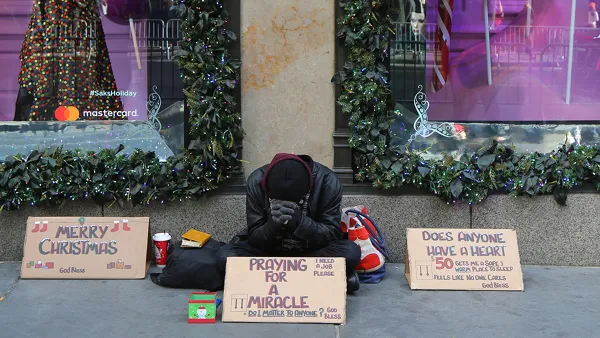
New York City Relying on Hotels to House the Homeless
Throughout 2016, New York City has expanded the practice of renting hotel rooms to house homeless people. Now the city is looking for a vendor to shoulder some of the work of finding rooms for those in need.
Exporting the Impoverished
The City of New York has been spending thousands of dollars to send people out of the city -- opting to pay for one-way plane tickets instead of providing social services.
New York Suspends Land Use Reviews for Shelters
The Adams administration in New York City will relax the review process for homeless shelters to create new space for arriving asylum seekers.

Desperate measures: Advocates weigh draining Lake Powell to fill Colorado River
Draining the reservoir could reduce evaporation losses by a couple hundred thousand acre-feet.

Eastern Nebraska is running out of electricity
Data centers and electrification are straining eastern Nebraska’s grid, throttling economic development.

Malls are becoming the midtowns of the future
Mall and office park redevelopments are a generational opportunity to create new nodes of urbanity.

NYC breaks ground on anti-flooding infrastructure project
New York City's new system will reduce stormwater flows to local sewers by 90%.

One Kentucky town’s secret to affordable housing
The Smoketown Community Land Trust has already built seven affordable homes for community members.

Houston gains petal-shaped cooling infrastructure to make streets more ‘delightful’
The city has installed the pavilions along 15 blocks in Houston.

FREE Course: Walkable City 1: Why Walkability?
After describing his path towards focusing on walkability as the essence of good planning, Jeff Speck marches through his five principal reasons for making more walkable places.
Reinventing Malls: Planning Alchemy—Turning Gray Fields Into Gold
The course focuses on the opportunities and imperatives that shape reinvention of mall sites.

City of Rosemead
Rutgers University, Edward J. Bloustein School of Planning and Public Policy
One Hundred Miles
University of Michigan School for Environment and Sustainability (SEAS)
Hunter College, City University of New York (CUNY)
The Architects Foundation
City of Cambridge
Montrose County
The Pocatello Development Authority