Anaheim, home of Disneyland, is the latest suburban enclave in California to become majority Latino. According to one expert, the shift is due to "two things: Latinos moving in and non-Latinos moving out."


"Anaheim's transition from a mostly white suburb to a majority Latino city parallels the dramatic changes Southern California cities have experienced as immigration surged and communities diversified.
Now, as immigration slows, demographers envision places like Anaheim emerging as stable settling grounds for Latinos rather than depots for immigrants.
In Anaheim, fewer than half of Latinos are now foreign-born. Though housing figures are not broken down by ethnicity, about half the residents own their own homes and the median annual income is a healthy $58,000.
"It's the dream of having a single-family house and a white picket fence and a dog," said Harry Pachon, president of the Tomas Rivera Policy Institute at USC.
An increase in home ownership probably was one factor propelling the rise of Latinos in Anaheim. During the housing boom earlier this decade, upwardly mobile Latinos bought homes in record numbers, freeing up space for more recent immigrants in apartments."
Read the full story: In Disneyland's shadow, a rising new demographic
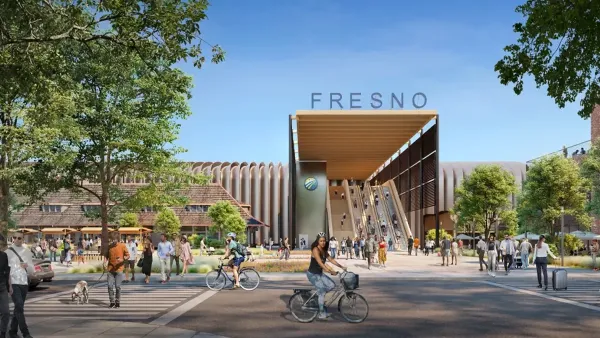
California High-Speed Rail Authority picks trainset manufacturer
The California High-Speed Rail Authority aims to start servicing passengers by 2033.

Disneyland's Autopia finally goes electric (sort of)
Today, the 'futuristic' ride still spews out gas fumes. Disney says it is testing new electric prototypes.
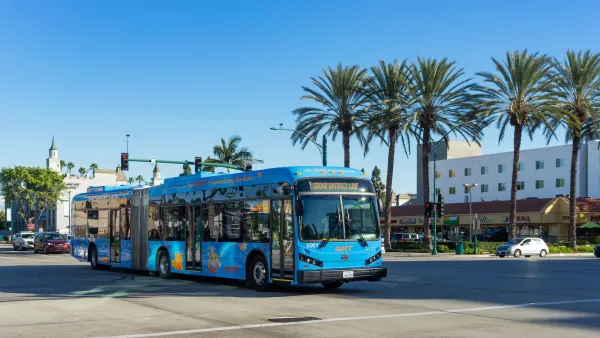
Anaheim Transit to Shut Down March 31 After City Declines to Take Over
The service offered free rides to residents employed by local businesses, serving key destinations like Disneyland.

Planetizen Federal Action Tracker
A weekly monitor of how Trump’s orders and actions are impacting planners and planning in America.

Eastern Nebraska is running out of electricity
Data centers and electrification are straining eastern Nebraska’s grid, throttling economic development.

Move over, LA: St. Louis gears up for Olympics, invests millions in downtown redevelopment
The Missouri city will host the 2028 Olympic soccer group stage and knockout matches.

Dallas releases zoning code overhaul to officials
The drafted overhaul is over 400 pages long.

NYC renovations for dangerous, ‘mercilessly crammed’ street delayed until 2027
Construction was supposed to begin this fall.

San Diego’s Midway Rising project gets greenlight from city council
The project looks to become the largest affordable housing development in California's history.

FREE Course: Walkable City 1: Why Walkability?
After describing his path towards focusing on walkability as the essence of good planning, Jeff Speck marches through his five principal reasons for making more walkable places.
Reinventing Malls: Planning Alchemy—Turning Gray Fields Into Gold
The course focuses on the opportunities and imperatives that shape reinvention of mall sites.

City of Rosemead
Rutgers University, Edward J. Bloustein School of Planning and Public Policy
One Hundred Miles
University of Michigan School for Environment and Sustainability (SEAS)
Hunter College, City University of New York (CUNY)
The Architects Foundation
City of Cambridge
The Pocatello Development Authority
The Urban Renewal Agency of the City of Pocatello