A senior executive at Navistar, a manufacturer of medium and heavy trucks, says the industry is heading for significant changes, including a shift away from long hauling to regional distribution.


"After reflecting on his 38-year career, [James] Hebe launched into a detailed dissection of the truck manufacturing industry, connecting trends in data and concluding that truck-making will change profoundly in response to new freight patterns, changed labor relations and permanently higher fuel prices.
Starting with his trucking company customers, he emphasized the shift from longhaul irregular routes to regional hauling and dedicated contract carriage for distribution. The availability of truck-rail intermodal for many linehaul movements of more than 1,000 miles and the shock of $4.75-a-gallon fuel last year mean 'fuel prices have changed the world.'
Carrier managers, he said, are ever more selective about the freight they haul. Furthermore, he said, there might be fewer loads to haul.
Hebe predicted higher federal taxes will cut consumers' discretionary spending, resulting in slow growth or no growth in demand for trucking services. However, his forecast contradicted numerous freight projections by American Trucking Associations and other groups that predict steady, long-term growth in freight volumes."
Read the full story: Trucking Faces Core Changes, Hebe Says
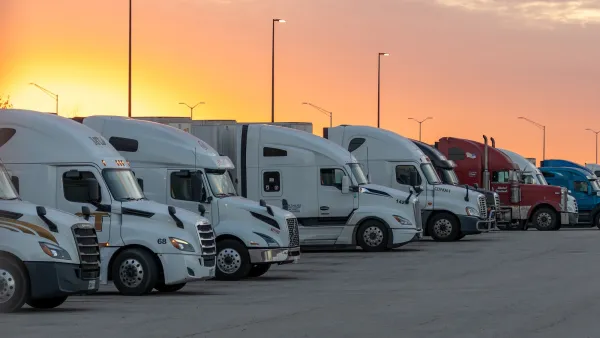
New Federal Rules Require Comprehensive State Plans for Truck Parking
States will now have to inventory and account for truck parking facilities on freight corridors.
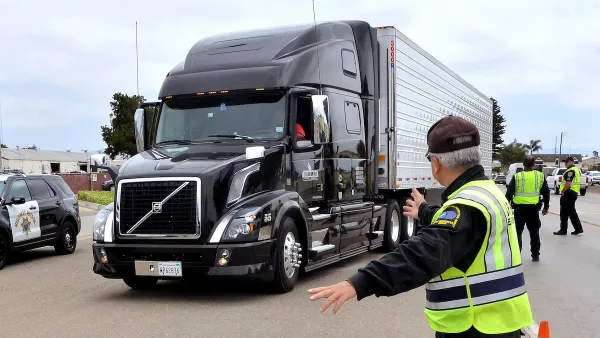
USDOT Threatens to Bar California From Issuing Trucking Licenses
In the wake of three fatal crashes involving immigrant truck drivers, Transportation Secretary Duffy says the department could pull $160 million in funding and bar the state from issuing new licenses.
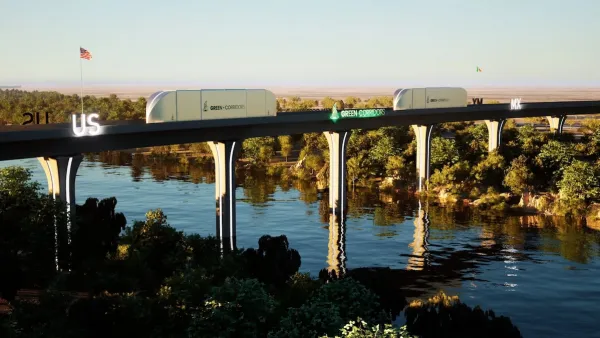
Trump Approves Futuristic Automated Texas-Mexico Cargo Corridor
The project could remove tens of thousands of commercial trucks from roadways.

Desperate measures: Advocates weigh draining Lake Powell to fill Colorado River
Draining the reservoir could reduce evaporation losses by a couple hundred thousand acre-feet.

Eastern Nebraska is running out of electricity
Data centers and electrification are straining eastern Nebraska’s grid, throttling economic development.

Malls are becoming the midtowns of the future
Mall and office park redevelopments are a generational opportunity to create new nodes of urbanity.

Officials claim feds 'rushed' Amtrak environmental review
Amtrak plans to move their Chicago maintenance facility from an industrial area to a residential one.

NYC breaks ground on anti-flooding infrastructure project
New York City's new system will reduce stormwater flows to local sewers by 90%.

One Kentucky town’s secret to affordable housing
The Smoketown Community Land Trust has already built seven affordable homes for community members.

FREE Course: Walkable City 1: Why Walkability?
After describing his path towards focusing on walkability as the essence of good planning, Jeff Speck marches through his five principal reasons for making more walkable places.
Reinventing Malls: Planning Alchemy—Turning Gray Fields Into Gold
The course focuses on the opportunities and imperatives that shape reinvention of mall sites.

City of Rosemead
Rutgers University, Edward J. Bloustein School of Planning and Public Policy
One Hundred Miles
University of Michigan School for Environment and Sustainability (SEAS)
Hunter College, City University of New York (CUNY)
The Architects Foundation
City of Cambridge
Montrose County
The Pocatello Development Authority