This piece offers seven misconceptions about architecture in San Francisco. The first: "This is a liberal city where anything goes."


"This is a liberal city where anything goes. True in terms of sidewalk etiquette, lifestyle choices and the placement of tattoos - but not when planning a neighborhood or getting a building approved. Everyone in this city of 800,000 represents an interest group or wants the final say, from the Board of Supervisors to the neighbor down the block simmering with resentment at every change to the landscape since he or she arrived in 1968. And even someone with five lip piercings will swoon at the sight of a restored Victorian.
Everything new looks old. Still the case in more settled districts, but unapologetic modern architecture has made inroads in the blocks south of Market Street where the convention takes place. A few blocks farther south in Mission Bay, meanwhile, a 300-acre neighborhood is taking shape as a procession of flat boxes of varying quality, not a curved bay window in sight."
Read the full story: S.F. architecture myths debunked


SF residents can no longer use potential shadows to block housing developments
The SHADE act also halves the allotted time for certain appeals before projects can progress.
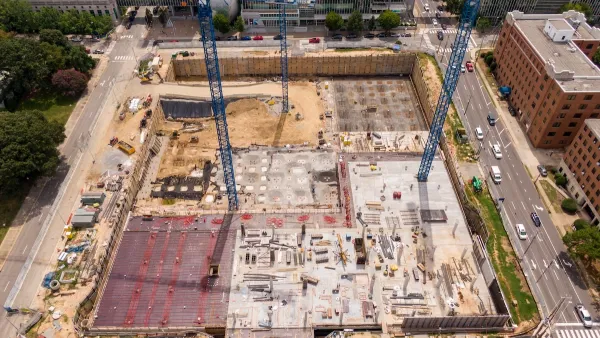
Novel study finds extreme state-by-state disparity in housing construction timelines
The first comprehensive working paper on U.S. construction timelines also found that the permitting process for multi-family projects has slowed nationwide.

Caltrain may slash over one-third of its stations
If Bay Area voters reject two transit tax measures, Caltrain, BART and AC Transit will see steep service cuts.

Planetizen Federal Action Tracker
A weekly monitor of how Trump’s orders and actions are impacting planners and planning in America.

Data reveals that NYC’s bet on congestion pricing has paid off
After almost two years of the program, reports show positive impacts on traffic and air quality and no disruptions to parking.

HUD modernizes 50-year-old manufactured housing framework
The Next Generation Manufactured Housing Action Plan establishes new energy-efficiency standards for manufactured homes, and new guidelines for anchoring them.

Small single-family homes are illegal in most of MA. Voters can change that
Most land zoned for single-family housing in Massachusetts requires at least 40,000 square feet of land per house.

Public steps inside U.S.’s first battery-powered train
Metra’s groundbreaking train feature modern seats and a futuristic battery car.

Companies show off AI technology, new innovation hubs at APTA Expo
Nearly 700 companies attended the American Public Transportation Association’s Expo last week, which happens once every three years.

FREE Course: Walkable City 1: Why Walkability?
After describing his path towards focusing on walkability as the essence of good planning, Jeff Speck marches through his five principal reasons for making more walkable places.
Reinventing Malls: Planning Alchemy—Turning Gray Fields Into Gold
The course focuses on the opportunities and imperatives that shape reinvention of mall sites.

One Hundred Miles
County of Mendocino
planning NEXT
The Architects Foundation
University of Cincinnati Online
Montrose County
Northern Illinois Transit Authority (NITA)
The Pocatello Development Authority