Posted today on CNN, optimistically under “SPECIAL REPORT – Detroit’s Downfall”, was a brief about GM and personal transport company Segway collaborating on a project called “Personal Urban Mobility and Accessibility” (P.U.M.A.). Along with some future-thinking gush about vehicle interconnectivity are eye candy photos of the traditional Seqway chassis redesigned as a side-by-side two-seater with a degree of weather protection and other accommodations to make the vehicle a tad more practical than the original stand-up version. For those who find the Smart car a tad dumb on the bang:buck ratio but are not about to don a helmet and go the scooter route, the P.U.M.A. may offer a new market segment.



Posted today on CNN, optimistically under "SPECIAL REPORT – Detroit's Downfall", was a brief about GM and personal transport company Segway collaborating on a project called "Personal Urban Mobility and Accessibility" (P.U.M.A.). Along with some future-thinking gush about vehicle interconnectivity are eye candy photos of the traditional Seqway chassis redesigned as a side-by-side two-seater with a degree of weather protection and other accommodations to make the vehicle a tad more practical than the original stand-up version. For those who find the Smart car a tad dumb on the bang:buck ratio but are not about to don a helmet and go the scooter route, the P.U.M.A. may offer a new market segment.

This vehicle is not the first contemporary venture into the weird space between scooters and cars. Earlier this decade BMW prototyped a quirky in-line two-wheeler with wrap-over windshield and climate control. The ZEM (Zero Emissions Machine) is a four-seater bicycle that can get over 20mph if everyone chips in. Golf carts are king in many warmer climate American communities, particularly in Arizona and Florida where revitalized cities ask for "exclusive golf cart parking spaces" worked into their downtown circulation studies. In Manhattan, I regularly see a happy couple zipping about in a golf cart on even the coldest winter mornings. American bicycle shops usually offer at least one dusty model of electric-assist bikes made in, and seen whisking along the wide city sidewalks of, China. In 2007, Vespa debuted a three-wheeled scooter (two wheels up front) that didn't require riders to put their feet down at stops. Even the original Seqway itself was lauded as the savior of personal mobility with such fanfare at its release that the random encounter with these vehicles carting police officers or guided tours smacks with irony. While professionals in both the engineering and marketing departments understand the potential for these vehicles to fill a gap in urban environments where trips are short, the general public has not yet become similarly smitten.
One must wonder why. Is a two-seater vehicle lacking too much in versatility? Do they cost too much? Fear of theft/vandalism? Are they seen as toys and not taken seriously? Do more Hollywood stars need to use them? Surely it's a combination of these and other reasons, but the possibility still exists that someday, someone is going to figure out the right formula for this kind of transport and city streets will swarm with a smaller, tamer, more rational form of motorized transport. Of course, if public perception of the bicycle could be shifted from that of a recreational toy to a practical commuter vehicle, this segment may not be necessary at all. But for now our craving is apparently for something a little less scooter and a little more car.
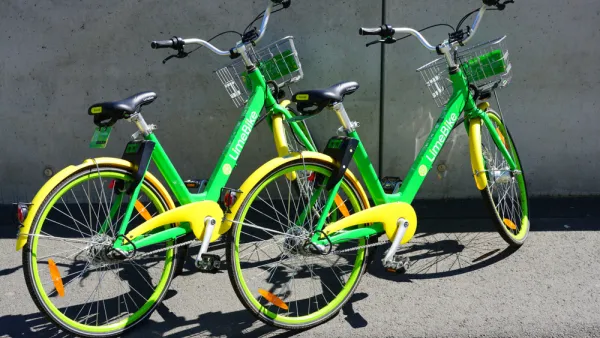
Dockless Pedal Bikeshare Loses Traction
Once a darling of investors and urbanists alike, pedal-driven dockless bikeshare is getting eclipsed by e-scooters and e-bikes.
15 Companies Adopt 'Shared Mobility Principles for Livable Cities'
Uber, Lyft, and other major transportation technology companies have defined the role they aspire to play in the future of mobility.
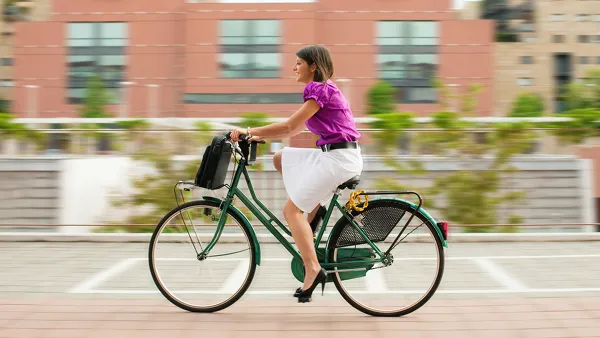
Can a Bike Commute Cause More Harm Than Good?
Researchers at Columbia University are investigating pollution intake among cyclists to determine if cycling really is a healthy way to commute.

Planetizen Federal Action Tracker
A weekly monitor of how Trump’s orders and actions are impacting planners and planning in America.

California plans to bury El Niño’s downpour
If the state plays its cards right, it may be able to store a billion acre-feet of El Niño’s water in aquifers.

Desperate measures: Advocates weigh draining Lake Powell to fill Colorado River
Draining the reservoir could reduce evaporation losses by a couple hundred thousand acre-feet.

Los Angeles just elected an urban planner as its mayor
Transportation analysts are optimistic that Raman will be more aggressive in addressing transit issues than Bass.

Mamdani’s pied-à-terre tax survives legal challenge
A panel of judges found that the plaintiffs failed to demonstrate injury as a result of New York City's implementation of the tax.

Eastern Nebraska is running out of electricity
Data centers and electrification are straining eastern Nebraska’s grid, throttling economic development.

FREE Course: Walkable City 1: Why Walkability?
After describing his path towards focusing on walkability as the essence of good planning, Jeff Speck marches through his five principal reasons for making more walkable places.
Reinventing Malls: Planning Alchemy—Turning Gray Fields Into Gold
The course focuses on the opportunities and imperatives that shape reinvention of mall sites.

City of Rosemead
Rutgers University, Edward J. Bloustein School of Planning and Public Policy
One Hundred Miles
University of Michigan School for Environment and Sustainability (SEAS)
Hunter College, City University of New York (CUNY)
The Architects Foundation
City of Cambridge
Montrose County
The Pocatello Development Authority

