This piece from Robert E. Lang and Lawrence Levy calls for President Barack Obama to include suburban voices in his administration's policy discussions about urban issues.


"Suburban voters provide the decisive margins in congressional and presidential elections, including for Obama, who won big in the formerly Republican-leaning suburbs outside Denver, Minneapolis, Detroit, Orlando and Washington, DC. And suburban lawmakers, like their constituents, will be the "swing vote" in shaping his national agenda. If he cannot sell it just beyond the city lines, then he cannot sell it, period.
But we should not view the suburbs in political opposition but as part of a larger metropolitan area. That means treating cities and suburbs as seamless, synergistic wholes. As the Brookings Institution has documented in its Blueprint for American Prosperity, focusing more federal resources on metro regions and their considerable assets is essential to the nation's ability to compete in a global economy.
That is why Obama should ensure that his urban advisors adopt a broader metro focus by creating an advisory council that includes suburban members as partners."
Read the full story: Message to President Obama: Do Not Forget the Suburbs
Tough Road For Office of Urban Affairs
Neal Peirce looks at the daunting challenges facing the new White House Office of Urban Affairs.
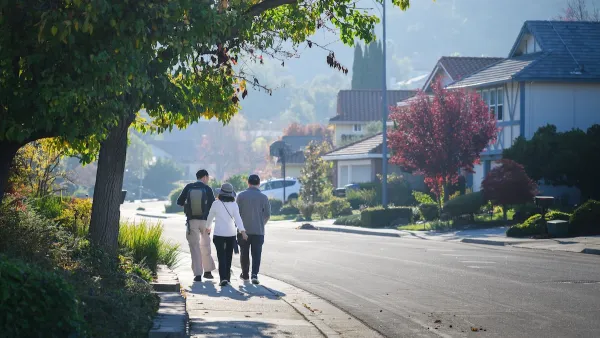
Will sprawl save California?
California residents will vote on Proposition 45 in November, which would make it easier to build large housing developments on the outskirts of the state’s cities.
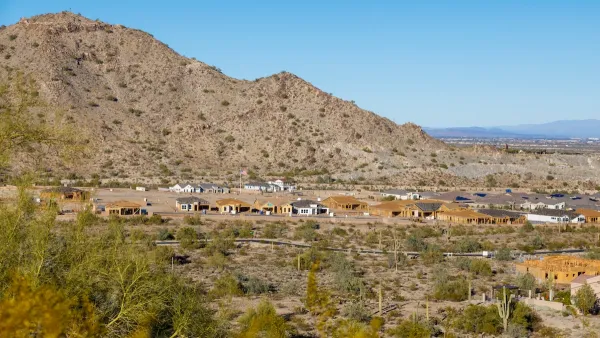
Arizona Overrides Moratorium Imposed due to Water Crisis, Approves up to 60K New Homes
A newly created legal process allows development to proceed if builders agree to bring in renewable water sources and reduce their groundwater use by 25%.

Planetizen Federal Action Tracker
A weekly monitor of how Trump’s orders and actions are impacting planners and planning in America.

Eastern Nebraska is running out of electricity
Data centers and electrification are straining eastern Nebraska’s grid, throttling economic development.

Study reveals best places in the U.S. for cycling, walking
New research from Streetlight Data examines bicycle and pedestrian miles per capita in the 100 largest U.S. cities by population.

DSA members accuse Mamdani of 'abandoning values' over housing redevelopment
New York City's mayor plans to replace about 2,000 units of public housing with private, mixed-income housing.

All sides of BRT debate unhappy with CDOT’s most recent move
The Colorado Department of Transportation is no longer considering center-running bus lanes for Colorado Boulevard.

Massachusetts bogs generate both power, and cranberries
Putting solar panels above farmland is one way Massachusetts is advancing toward its goal of net-zero carbon emissions by 2050.

FREE Course: Walkable City 1: Why Walkability?
After describing his path towards focusing on walkability as the essence of good planning, Jeff Speck marches through his five principal reasons for making more walkable places.
Reinventing Malls: Planning Alchemy—Turning Gray Fields Into Gold
The course focuses on the opportunities and imperatives that shape reinvention of mall sites.

City of Rosemead
Rutgers University, Edward J. Bloustein School of Planning and Public Policy
One Hundred Miles
University of Michigan School for Environment and Sustainability (SEAS)
Hunter College, City University of New York (CUNY)
The Architects Foundation
City of Cambridge
The Pocatello Development Authority
The Urban Renewal Agency of the City of Pocatello