Colorado law prohibits the collection of rainwater, but urban farmers, environmentally-conscious homeowners, and even developers are catching on to its benefits and building momentum for the legalization of rainwater harvesting.


"Collected rainwater is generally considered 'gray water,' or water that is not reliably pure enough to drink but can be used to water yards, flush toilets and power heaters. In some states, developers try to include a network of cisterns and catchment pools in every subdivision, but in others, those who catch the rain tend to do so covertly.
In Colorado, rights to bodies of water are held by entities who get preference based on the dates of their claims. Like many other Western states, Colorado has more claims than available water, and even those who hold rights dating back to the late 19th century sometimes find they do not get all of the water they should.
'If I decide to [take rainwater] in 2009, somewhere, maybe 100 miles downstream, there's a water right that outdates me by 100 years' that's losing water, said Kevin Rein, assistant state engineer."
Read the full story: Who owns Colorado's rainwater?

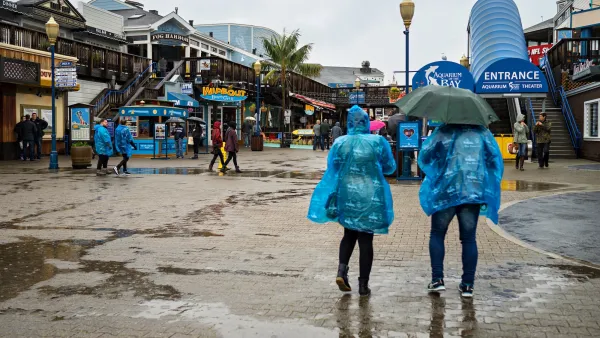
Rain gardens keep up to 99% of pollutants out of San Francisco Bay
The city's roadside rain gardens soak up stormwater and filter out dozens of harmful micropollutants.
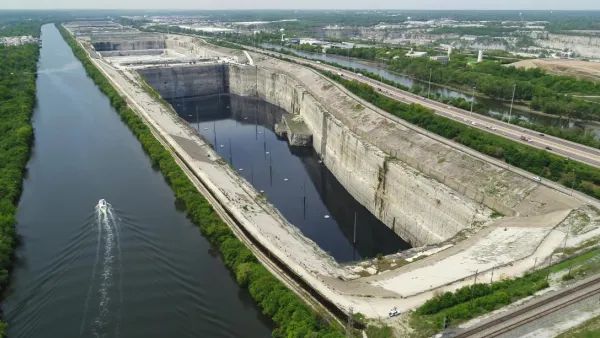
Chicago's underground flood control system is almost full
The system known as Deep Tunnel has never filled much more than halfway, but the cumulative effect of recent rains is putting suburban communities at risk of flooding.
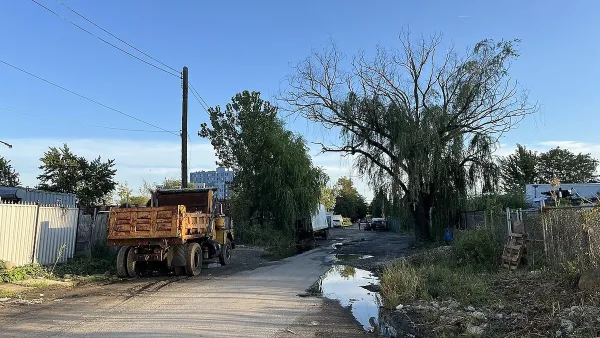
NYC Will Finally Bring Sewer System to Flood-Prone Brooklyn Neighborhood
A 12-block area known as ‘The Hole’ straddling Brooklyn and Queens has struggled with flooding and sewage contamination for decades.

Planetizen Federal Action Tracker
A weekly monitor of how Trump’s orders and actions are impacting planners and planning in America.

‘Going backwards:’ Baltimore mayor, students rally against state's transit funding plan
Maryland's proposed six-year plan provides no funding for Baltimore’s BMORE bus program and reduces its road maintenance funding.
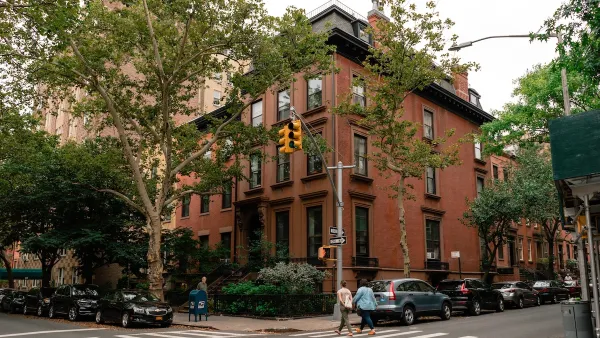
Mamdani sent nearly 6,000 pied-à-terre tax warnings to homes that didn’t qualify
A judge has ordered the administration to cancel thousands of pied-à-terre tax notices after it sent 35% of them erroneously.

Mamdani sent nearly 6,000 pied-à-terre tax warnings to homes that didn’t qualify
A judge has ordered the administration to cancel thousands of pied-à-terre tax notices after it sent 35% of them erroneously.

Detroit to transform waterfront with $2.2 billion investment
Developers will convert about 18 acres of unused parking lot space into civic spaces.

‘Going backwards:’ Baltimore mayor, students rally against state's transit funding plan
Maryland's proposed six-year plan provides no funding for Baltimore’s BMORE bus program and reduces its road maintenance funding.

FREE Course: Walkable City 1: Why Walkability?
After describing his path towards focusing on walkability as the essence of good planning, Jeff Speck marches through his five principal reasons for making more walkable places.
Reinventing Malls: Planning Alchemy—Turning Gray Fields Into Gold
The course focuses on the opportunities and imperatives that shape reinvention of mall sites.

City of Thousand Oaks
City of Wisconsin Rapids
Harvard University Graduate School of Design
The Architects Foundation
University of Cincinnati Online
Northern Illinois Transit Authority (NITA)
The Pocatello Development Authority
The Urban Renewal Agency of the City of Pocatello