Another victim of the economic downturn is historic preservation. In New York, a number of churches slated for preservation can't find the funds to keep the bulldozers away.


"A ruddy sandstone bell tower interrupts the march of gray apartment buildings along Manhattan's West 86th Street. The muscular tower rises above the West Park Presbyterian Church, a beefy beauty erected in 1890, when houses of worship were well-wrought civic ornaments rather than tricked-out TV studios inside beige boxes near a freeway.
In February, it seemed, West Park was a candidate for demolition.
The church, in stark contrast to its well-heeled neighborhood, stands abandoned and neglected, with its delicate rose window obscured by a filthy plastic panel to ward off vandals. A scaffolding over the trash-covered sidewalk prevents intricate foliage carved into stone from falling on passersby.
When workers started hauling out debris, activists feared a prelude to bulldozing, though actually the mess had been made by a burst pipe. The possibility of demolition (or a ruinous accident) at last ended dithering at the city's Landmarks Preservation Commission. The commission has scheduled West Park for a hearing that could lead to landmark designation."
"Now the fear is 'demolition by neglect,' as Kate Wood, who heads the advocacy group Landmark West, put it."
Read the full story: Landmark Churches Rot With Deals Drying Up
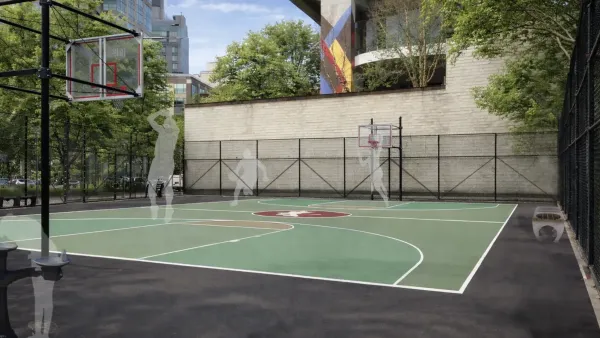
MTA gives itself 30 days to transform pit into basketball court
The site has been under construction since 2022; the city originally estimated it would finish the court in 2024.
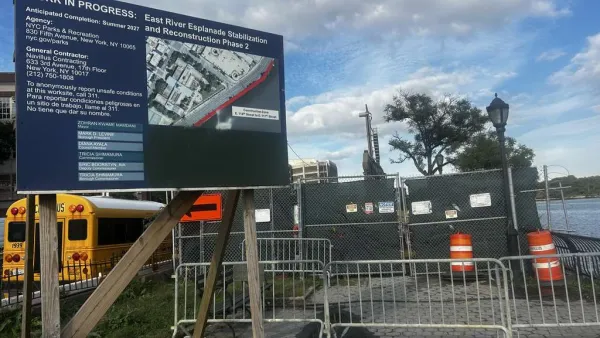
Ballooning costs delay NYC green space restoration after six years of planning
“There’s a stark inequity in how the city prioritizes infrastructure projects across different Manhattan neighborhoods," said Maria Kessler, executive director for Friends of the East River Esplanade. “Why is this neighborhood the last and unserved?”
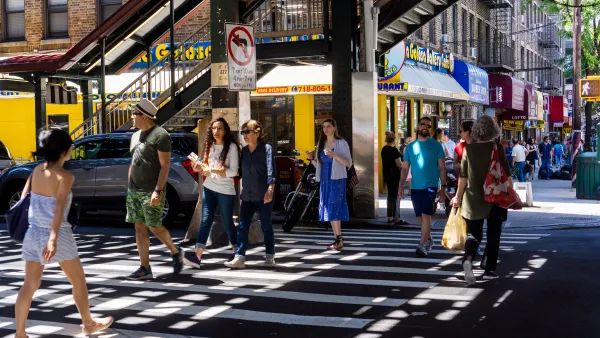
NYC needs 700,000 new homes to resolve housing crisis, report states
The report gave every neighborhood a non-binding development target.

Planetizen Federal Action Tracker
A weekly monitor of how Trump’s orders and actions are impacting planners and planning in America.

California plans to bury El Niño’s downpour
If the state plays its cards right, it may be able to store a billion acre-feet of El Niño’s water in aquifers.

Desperate measures: Advocates weigh draining Lake Powell to fill Colorado River
Draining the reservoir could reduce evaporation losses by a couple hundred thousand acre-feet.

Los Angeles just elected an urban planner as its mayor
Transportation analysts are optimistic that Raman will be more aggressive in addressing transit issues than Bass.

Mamdani’s pied-à-terre tax survives legal challenge
A panel of judges found that the plaintiffs failed to demonstrate injury as a result of New York City's implementation of the tax.

Eastern Nebraska is running out of electricity
Data centers and electrification are straining eastern Nebraska’s grid, throttling economic development.

FREE Course: Walkable City 1: Why Walkability?
After describing his path towards focusing on walkability as the essence of good planning, Jeff Speck marches through his five principal reasons for making more walkable places.
Reinventing Malls: Planning Alchemy—Turning Gray Fields Into Gold
The course focuses on the opportunities and imperatives that shape reinvention of mall sites.

City of Rosemead
Rutgers University, Edward J. Bloustein School of Planning and Public Policy
One Hundred Miles
University of Michigan School for Environment and Sustainability (SEAS)
Hunter College, City University of New York (CUNY)
The Architects Foundation
City of Cambridge
Montrose County
The Pocatello Development Authority