San Pedro, CA is the scene of a battle between developers and locals, and local neighborhood councils are using increasingly sophisticated organizing tools to bring residents to the table.


"The boarded-up duplexes line a stretch of Western Avenue in San Pedro -- decaying relics of an era when the Navy needed housing for its Long Beach shipyard workers. A decade after the yard closed, the property is now home only to a handful of goats brought in to keep down the weeds.
The inactivity masks a heated battle over the massive Ponte Vista development planned for the site, one that proponents say would bring much-needed housing and jobs to the area but also, critics maintain, an unacceptable level of traffic congestion and a drain on services.
In 2005, developer Bob Bisno bought the property, which offers views of the Vincent Thomas Bridge, and proposed squeezing 2,300 condos onto its 61.5 acres.
In proposing what officials say would have been San Pedro's largest residential development ever, Bisno unwittingly galvanized potent opposition from within the community's increasingly sophisticated neighborhood councils."
Read the full story: San Pedro residents organize to oppose Ponte Vista development
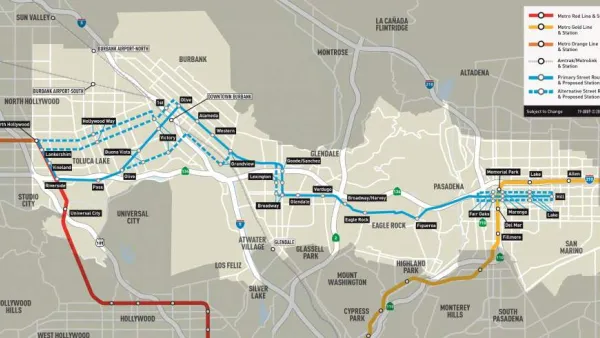
Public Outcry Greets Plan to Connect L.A. to Pasadena via Bus Rapid Transit
Voters might have approved transit funding multiple measures by wide margins in Los Angeles County in recent years, but actual project proposals still have trouble appealing at the hyper-local level.
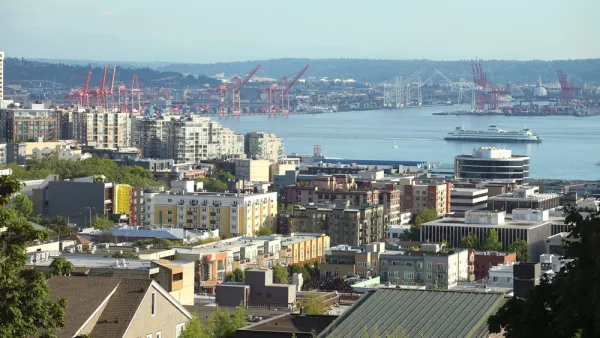
How Seattle Is Curbing the Power of Neighborhood Groups
In Seattle, City Hall wants to open the neighborhood planning process to new demographics. The changes have rattled traditional neighborhood councils.
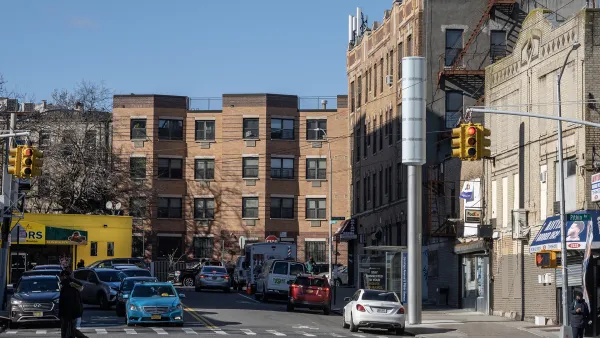
NYC's Link5G Towers Face Neighborhood Opposition
More than 2,000 32-foot towers are coming to New York City street corners to improve 5G connectivity throughout the city, and residents aren’t happy, citing incompatible design and visual distraction as a threat to safety.

Planetizen Federal Action Tracker
A weekly monitor of how Trump’s orders and actions are impacting planners and planning in America.

Eastern Nebraska is running out of electricity
Data centers and electrification are straining eastern Nebraska’s grid, throttling economic development.

Washington state to charge fee to drivers with fuel-efficient cars
Revenue from the fee will go towards supporting the state’s highways.

Instead of building new housing, LA developers are turning mansions into mega-mansions
In the richest areas, the number of houses valued at $30 million with demolition permits has skyrocketed since 2018.

Illinois considers spending $1 billion in taxpayer money on data center
A quantum computing campus and data center are currently under construction in Chicago.

As development costs rise, Boston moves to lessen affordable housing requirements
The Boston Zoning Commission and the City Council still need to approve Boston Mayor Michelle Wu’s proposed changes

FREE Course: Walkable City 1: Why Walkability?
After describing his path towards focusing on walkability as the essence of good planning, Jeff Speck marches through his five principal reasons for making more walkable places.
Reinventing Malls: Planning Alchemy—Turning Gray Fields Into Gold
The course focuses on the opportunities and imperatives that shape reinvention of mall sites.

City of Charlotte
City of Rosemead
Rutgers University, Edward J. Bloustein School of Planning and Public Policy
University of Michigan School for Environment and Sustainability (SEAS)
Hunter College, City University of New York (CUNY)
The Architects Foundation
University District Partnership
City of Cambridge
The Pocatello Development Authority