The Olympic Forest Park in Beijing is standing out as one of the rare Olympics-related projects to remain in use after the 2008 event. Hu Jie, the park's designer, talks about its planning and the role of public space in Beijing.


"For residents of Beijing, the legacy of those games are still being felt in the form of the Olympic Forest Park - a green area located to the north of the city. The park was opened last July and has become popular among Beijing residents. The park also served as sport stadiums for tennis and hockey competitions during the Olympic Games."
"As the park was to be used as a civilian space and public park after the games, the Beijing government earmarked 2.2 billion Chinese yuan, or 11.6 billion baht for the project. Such an amount of money for a public park seems staggering. But Beijing - the ancient city with breathtaking gardens like the Summer Palace or Beihai Park near the Forbidden City - has a soft spot for parks and gardens."
"For Hu Jie, the trend of landscape design and public space will become famous in the future as more people move to live in the city. Public space is an essential tool to enhance the quality of life of the people, he said."
Thanks to ArchNewsNow
Read the full story: URBAN GREEN

Exposition Park’s $351.5 Million Transformation
This revitalization will create vital green spaces, improve accessibility, and enhance connections with community, making Exposition Park a central hub for recreation and culture in Los Angeles.
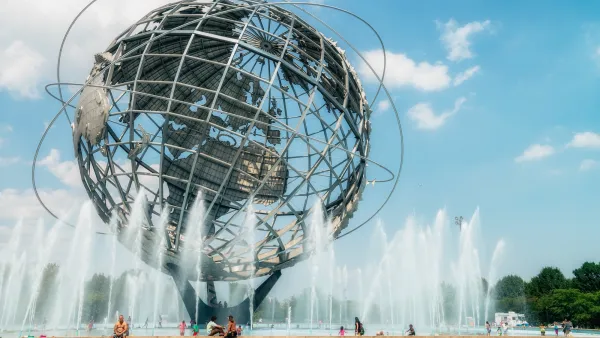
Historic Queens park is getting a $120M upgrade
The borough's largest park will undergo significant upgrades for accessibility, flood mitigation and historic preservation.
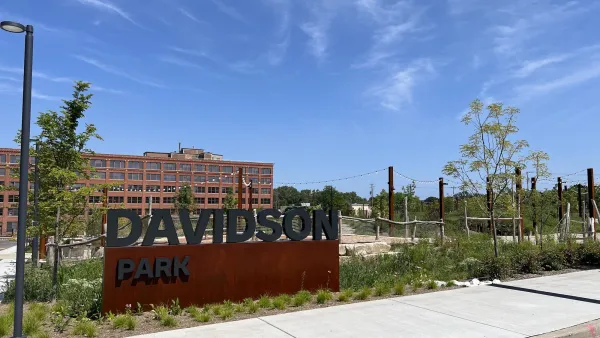
Harley-Davidson turned a Milwaukee parking lot into a green oasis
The park, adjacent to Harley-Davidson headquarters, doubles as stormwater retention infrastructure.

Planetizen Federal Action Tracker
A weekly monitor of how Trump’s orders and actions are impacting planners and planning in America.

California plans to bury El Niño’s downpour
If the state plays its cards right, it may be able to store a billion acre-feet of El Niño’s water in aquifers.

Desperate measures: Advocates weigh draining Lake Powell to fill Colorado River
Draining the reservoir could reduce evaporation losses by a couple hundred thousand acre-feet.

Study reveals best places in the U.S. for cycling, walking
New research from Streetlight Data examines bicycle and pedestrian miles per capita in the 100 largest U.S. cities by population.

Los Angeles just elected an urban planner as its mayor
Transportation analysts are optimistic that Raman will be more aggressive in addressing transit issues than Bass.

Mamdani’s pied-à-terre tax survives legal challenge
A panel of judges found that the plaintiffs failed to demonstrate injury as a result of New York City's implementation of the tax.

FREE Course: Walkable City 1: Why Walkability?
After describing his path towards focusing on walkability as the essence of good planning, Jeff Speck marches through his five principal reasons for making more walkable places.
Reinventing Malls: Planning Alchemy—Turning Gray Fields Into Gold
The course focuses on the opportunities and imperatives that shape reinvention of mall sites.

City of Rosemead
Rutgers University, Edward J. Bloustein School of Planning and Public Policy
One Hundred Miles
University of Michigan School for Environment and Sustainability (SEAS)
Hunter College, City University of New York (CUNY)
The Architects Foundation
City of Cambridge
Montrose County
The Pocatello Development Authority