Three authors in the French Newspaper Le Monde pose possible futures for the car and the automobile industry.


"Nothing will arrest the fall of the automobile sector if we don't think about the 'mobile' contained in the auto, and the services it's supposed to provide, in another way. The disenchantment with the car does not prevent its use, as long as that is reconsidered.
In short, whether they are clean or not, too many cars kill the car. To get out of that situation, two paths must be explored head-on: sharing and urban integration. One self-service public car eliminates between five and ten cars from the road. A structured route between the car and public transport is a promising track, as are the regulations distributing traffic flows over time.
Should these perspectives come to fruition, then the car will orient itself to a completely new usage and business model no longer dominated by the object itself, but by automobile services."
Read the full story: Sharing, Temperance and Intelligence Pave the Way to the Future


Planetizen Federal Action Tracker
A weekly monitor of how Trump’s orders and actions are impacting planners and planning in America.

‘Going backwards:’ Baltimore mayor, students rally against state's transit funding plan
Maryland's proposed six-year plan provides no funding for Baltimore’s BMORE bus program and reduces its road maintenance funding.
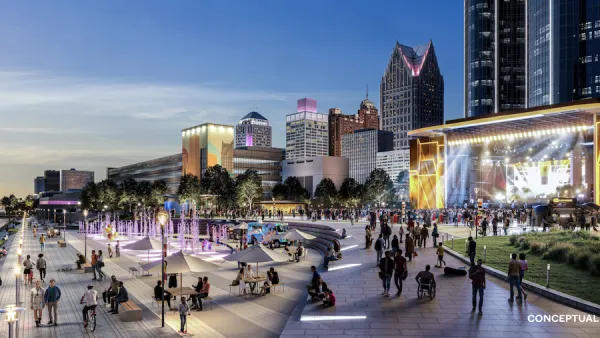
Detroit to transform waterfront with $2.2 billion investment
Developers will convert about 18 acres of unused parking lot space into civic spaces.

HUD modernizes 50-year-old manufactured housing framework
The Next Generation Manufactured Housing Action Plan establishes new energy-efficiency standards for manufactured homes, and new guidelines for anchoring them.

New CA housing laws tear down development red tape
Recently-signed legislation makes building starter homes and ADUs cheaper and faster in California.

Metrolink finishes first expansion in 20 years
The transit agency is now one of very few in the United States to connect two major airports.

FREE Course: Walkable City 1: Why Walkability?
After describing his path towards focusing on walkability as the essence of good planning, Jeff Speck marches through his five principal reasons for making more walkable places.
Reinventing Malls: Planning Alchemy—Turning Gray Fields Into Gold
The course focuses on the opportunities and imperatives that shape reinvention of mall sites.

One Hundred Miles
County of Mendocino
planning NEXT
The Architects Foundation
University of Cincinnati Online
Montrose County
Northern Illinois Transit Authority (NITA)
The Pocatello Development Authority