Population centers the world around are caught in the grips of devastating droughts. Though temporary conditions, their increasing frequency should be a call to water-saving action, writes Tom Englehardt.


"It turns out that you don't want to be a former city dweller in rural parts of southernmost Australia, a stalk of wheat in China or Iraq, a soybean in Argentina, an almond or grape in northern California, a cow in Texas, or almost anything in parts of east Africa right now. Let me explain."
"As anyone who has turned on the prime-time TV news these last weeks knows, southeastern Australia has been burning up. It's already dry climate has been growing ever hotter. "The great drying," Australian environmental scientist Tim Flannery calls it. At its epicenter, Melbourne recorded its hottest day ever this month at a sweltering 115.5 degrees, while temperatures soared even higher in the surrounding countryside. After more than a decade of drought, followed by the lowest rainfall on record, the eucalyptus forests are now burning. To be exact, they are now pouring vast quantities of stored carbon dioxide, the greenhouse gas considered largely responsible for global warming, into the atmosphere."
"Meanwhile, central China is experiencing the worst drought in half a century."
"Globe-jumping to the Middle East, Iraq, which makes the news these days mainly for spectacular suicide bombings or the politics of American withdrawal, turns out to be another country in severe drought."
FULL STORY: Burning Questions

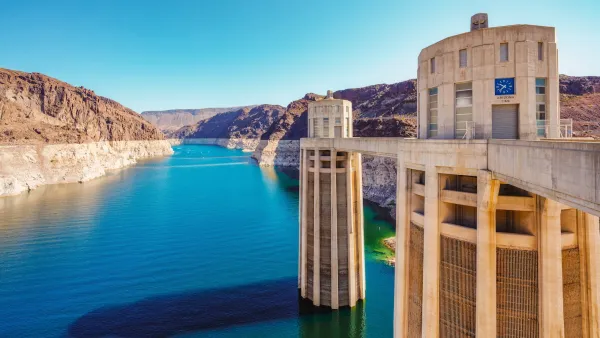
Federal proposal calls for mandatory water cuts to Arizona, California and Nevada
The Bureau of Reclamation stepped in after states failed to come to an agreement over Colorado River water use reductions.
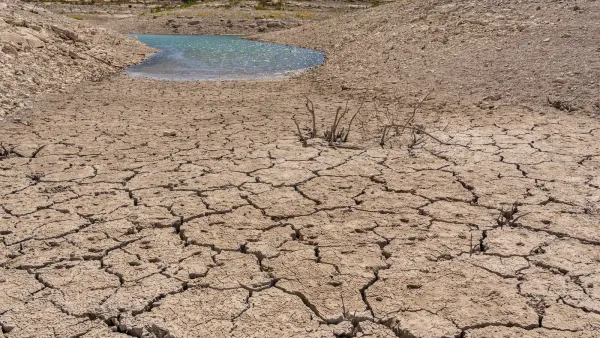
Drought is affecting all but 5 US states
Almost all of the United States faces moderate to severe drought at the start of an El Niño summer.
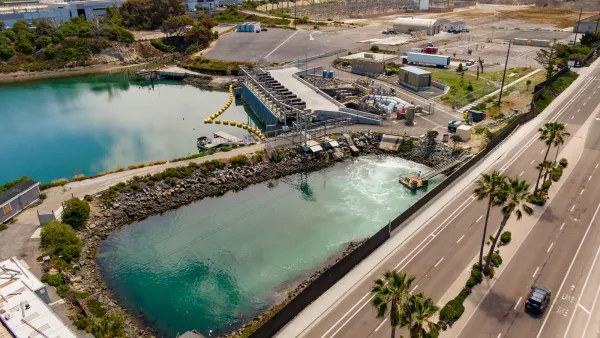
New agreement would let Arizona, Nevada use water from California desalination plant
The plan will help reduce strain on Lake Mead during extreme drought periods.

Planetizen Federal Action Tracker
A weekly monitor of how Trump’s orders and actions are impacting planners and planning in America.

The state-sanctioned urbicide of Austin
People don’t kill cities. Freeways do.

US to reduce Colorado River water deliveries to Mexico
A new Colorado Treaty amendment reduces Mexico’s Colorado River water allocation by 250,000 acre feet.

5 New England states march closer to 800 megawatt wind energy project
Securing federal approval for the project may be complicated under the Trump administration, which has historically been hostile towards domestic wind power.

Baltimore to break ground on $50 million Transit Priority Project
The project will bring faster bus trips, safer streets and better bike connections to Baltimore.

Airbnb launches $250 million 'last-dollar financing' housing accelerator, makes first investment in Austin
The company will put $6.4 million towards affordable housing development in Texas’ capital.

FREE Course: Walkable City 1: Why Walkability?
After describing his path towards focusing on walkability as the essence of good planning, Jeff Speck marches through his five principal reasons for making more walkable places.
Reinventing Malls: Planning Alchemy—Turning Gray Fields Into Gold
The course focuses on the opportunities and imperatives that shape reinvention of mall sites.

Eagle County Government
Harvard University Graduate School of Design
Nashville Planning Department
The Architects Foundation
University of Cincinnati Online
The Pocatello Development Authority
The Urban Renewal Agency of the City of Pocatello
Journal of the American Planning Association