Over a hundred boxcars have sat for about a year in an Indiana hamlet, proving to be the biggest nuisance to those who, live, and play near them. Of no use to railroad companies with nothing to ship, such rail cars now sit idle all over the country.


"Before February 2008, boxcars were a fleeting sight in this hamlet of 17,500 people 50 miles east of Indianapolis. For decades, no more than one or two trains a day traveled down the sleepy short-haul line that cuts through town.
Then rail cars -- 20-foot-tall yellow behemoths covered with the sort of spray-painted artwork once associated with New York City subway cars -- started rolling in by the dozens and grinding to a halt.
Now an elementary-school playground sits only feet from a line of rail cars covered with curse words. Someone with a paintball gun opened fire on one of the cars but missed, pelting a house instead. The looming cars have been blamed for casting shadows over homes that sit as close as 10 feet from the tracks. One woman says the lack of sunlight has turned her backyard into a mud pit.
One of the more visible manifestations of the global recession is the idling of vehicles used to move everything from scrap metal produced in the U.S. to sneakers made in China. Ocean-shipping companies have taken scores of ships out of service, anchoring them in or near ports around the world. The parking lots of trucking companies are clogged with trailers that in better times were rolling on highways."
Read the full story: Miles of Idled Boxcars Leave Towns Singing the Freight-Train Blues
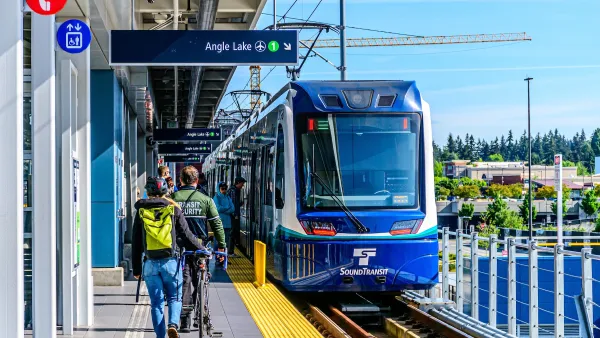
Sound Transit says train to Ballard is still coming
Agency officials say reports of the line's demise are exaggerated and that it remains in its plans.
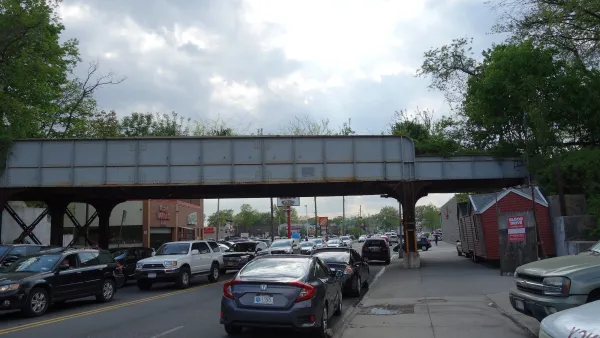
Mamdani Budget Funds Queensway, Dimming Hope for Reactivated Long Island Rail
Supporters of a proposed rail extension say building the elevated park as proposed would make it harder to bring trains back to this part of Queens.
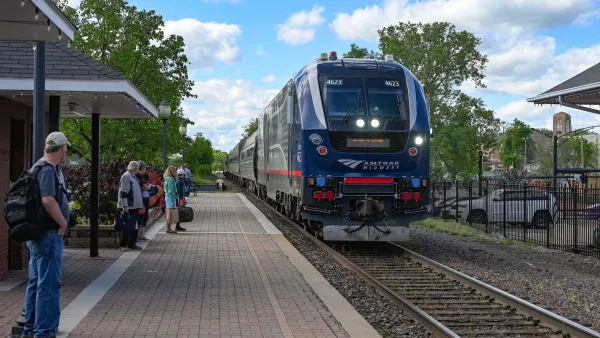
FRA Wants to Split Amtrak in 3, Sparking Privatization Fears
A proposal to restructure the rail agency could streamline accountability — or add more bureaucracy.

Planetizen Federal Action Tracker
A weekly monitor of how Trump’s orders and actions are impacting planners and planning in America.

California plans to bury El Niño’s downpour
If the state plays its cards right, it may be able to store a billion acre-feet of El Niño’s water in aquifers.

Desperate measures: Advocates weigh draining Lake Powell to fill Colorado River
Draining the reservoir could reduce evaporation losses by a couple hundred thousand acre-feet.

Mamdani’s pied-à-terre tax survives legal challenge
A panel of judges found that the plaintiffs failed to demonstrate injury as a result of New York City's implementation of the tax.

Eastern Nebraska is running out of electricity
Data centers and electrification are straining eastern Nebraska’s grid, throttling economic development.

Seattle passes record-breaking transit services expansion
Proposition 1 will double the city’s transit tax to add 95,000 more bus trips and preserve 180,000 bus trips annually.

FREE Course: Walkable City 1: Why Walkability?
After describing his path towards focusing on walkability as the essence of good planning, Jeff Speck marches through his five principal reasons for making more walkable places.
Reinventing Malls: Planning Alchemy—Turning Gray Fields Into Gold
The course focuses on the opportunities and imperatives that shape reinvention of mall sites.

City of Rosemead
Rutgers University, Edward J. Bloustein School of Planning and Public Policy
One Hundred Miles
University of Michigan School for Environment and Sustainability (SEAS)
Hunter College, City University of New York (CUNY)
The Architects Foundation
City of Cambridge
Montrose County
The Pocatello Development Authority