California's Central Valley is one of the top agricultural sites in the world, but with low rainfall and cut-off irrigation supplies, farming towns and their citizens may face at least one tough year ahead.


"Across the valley, towns are already seeing some of the worst unemployment in the country, with rates three and four times the national average, as well as reported increases in all manner of social ills: drug use, excessive drinking and rises in hunger and domestic violence."
"With fewer checks to cash, even check-cashing businesses have failed, as have thrift stores, ice cream parlors and hardware shops. The state has put the 2008 drought losses at more than $300 million, and economists predict that this year's losses could swell past $2 billion, with as many as 80,000 jobs lost."
"The situation is particularly acute in towns along the valley's western side, where farmers learned on Friday that federal officials anticipate a "zero allocation" of water from the Central Valley Project, the huge New Deal system of canals and reservoirs that irrigates three million acres of farmland. If the estimate holds and springtime remains dry, it would be first time ever that farmers faced a season-long cutoff from federal waters."
Read the full story: Drought Adds to Hardships in California
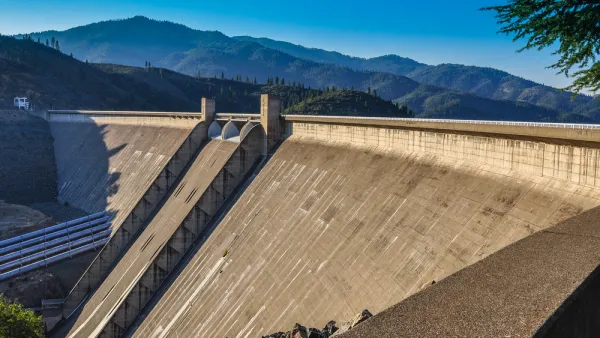
Why Are the Feds Suddenly in Favor of Raising the Shasta Dam?
Despite state opposition and potential violations of California law, the Trump Administration has revived a project that was deemed impracticable only a few years ago.
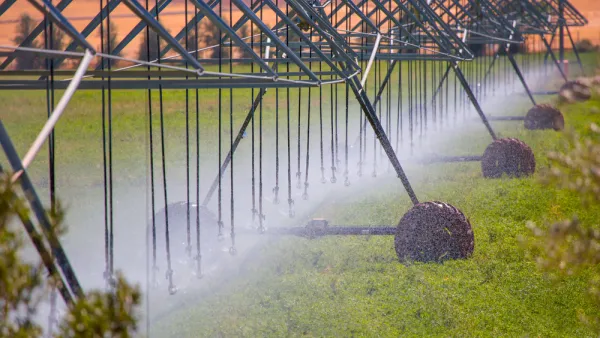
There Are Some Major Irrigation Problems We Need to Talk About
We can all do better when it comes to water.
Troubles Persist in California's Delta
The process of re-designing California's Delta to protect endangered species, feed the state's farms and serve freshwater to its residents has become further complicated.

Planetizen Federal Action Tracker
A weekly monitor of how Trump’s orders and actions are impacting planners and planning in America.

Eastern Nebraska is running out of electricity
Data centers and electrification are straining eastern Nebraska’s grid, throttling economic development.

Move over, LA: St. Louis gears up for Olympics, invests millions in downtown redevelopment
The Missouri city will host the 2028 Olympic soccer group stage and knockout matches.

Dallas releases zoning code overhaul to officials
The drafted overhaul is over 400 pages long.

NYC renovations for dangerous, ‘mercilessly crammed’ street delayed until 2027
Construction was supposed to begin this fall.

San Diego’s Midway Rising project gets greenlight from city council
The project looks to become the largest affordable housing development in California's history.

FREE Course: Walkable City 1: Why Walkability?
After describing his path towards focusing on walkability as the essence of good planning, Jeff Speck marches through his five principal reasons for making more walkable places.
Reinventing Malls: Planning Alchemy—Turning Gray Fields Into Gold
The course focuses on the opportunities and imperatives that shape reinvention of mall sites.

City of Rosemead
Rutgers University, Edward J. Bloustein School of Planning and Public Policy
One Hundred Miles
University of Michigan School for Environment and Sustainability (SEAS)
Hunter College, City University of New York (CUNY)
The Architects Foundation
City of Cambridge
The Pocatello Development Authority
The Urban Renewal Agency of the City of Pocatello