Peter DeFazio and others on Capital Hill are concerned that the funding going towards highway construction and transit in the stimulus package may mean delays or worse for the upcoming $600 billion surface transportation bill.


"'I'm very worried about it,' said Peter A. DeFazio , D-Ore., chairman of the House Transportation and Infrastructure Subcommittee on Highways and Transit.
'I think a lot of people are going to sober up a bit and they'll look at how much we've borrowed and it will be fiscal conservatism time,' DeFazio said.
The House version of the stimulus (HR 1) provides $30 billion for highways and bridges and $12 billion for transit, about equal to a year's worth of federal spending for surface transportation under current law (PL 109-59). The Senate's version is slightly less.
Some transportation advocates also fear that lawmakers will use the stimulus as an excuse not to rush completion of a highway bill, which could cost as much as $600 billion over five years."
Read the full story: Highway Funding: Too Much of a Good Thing?
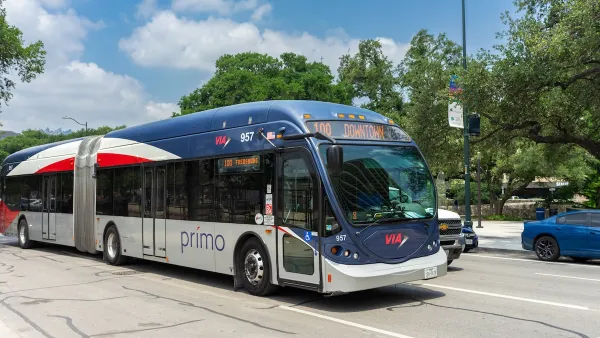
With no reauthorization bill in sight, Texas slashes $6.6 billion from transportation budget
An official said the program may receive additional funding when a federal reauthorization bill passes.
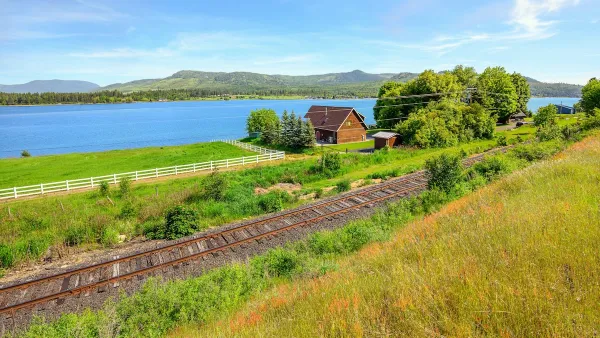
Idaho may see an 18% drop in federal surface transit funding — the largest estimated cut in the US
Transit systems in rural communities are much more reliant on federal funding to provide their services.
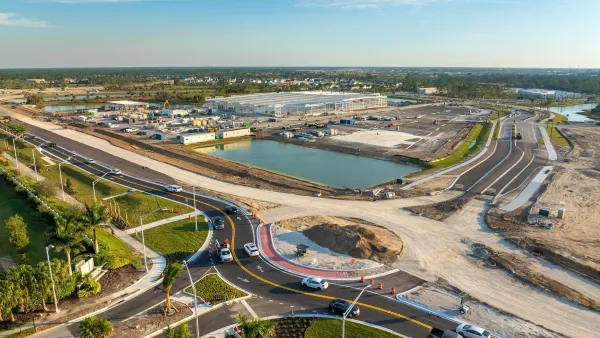
Analysis: What does America want from surface transportation reauthorization?
Over 13,000 comments were submitted in the federal Request for Information on surface transportation reauthorization. We analyzed all of them.

Planetizen Federal Action Tracker
A weekly monitor of how Trump’s orders and actions are impacting planners and planning in America.

California plans to bury El Niño’s downpour
If the state plays its cards right, it may be able to store a billion acre-feet of El Niño’s water in aquifers.

Desperate measures: Advocates weigh draining Lake Powell to fill Colorado River
Draining the reservoir could reduce evaporation losses by a couple hundred thousand acre-feet.

US buildings threatened, destroyed by fires set to triple by 2060
Researchers found a high fire risk for socioeconomically vulnerable neighborhoods in the American West.

LA residents may be allowed to paint their own crosswalks
Councilwoman Katy Yaroslavsky put out a motion instructing the Los Angeles Department of Public Transportation to study the feasibility of allowing volunteers to paint crosswalks.

Dallas moves to overhaul its zoning code
The city's zoning reform will allow more multi-family and mixed-use developments.

FREE Course: Walkable City 1: Why Walkability?
After describing his path towards focusing on walkability as the essence of good planning, Jeff Speck marches through his five principal reasons for making more walkable places.
Reinventing Malls: Planning Alchemy—Turning Gray Fields Into Gold
The course focuses on the opportunities and imperatives that shape reinvention of mall sites.

City of Rosemead
Rutgers University, Edward J. Bloustein School of Planning and Public Policy
One Hundred Miles
Hunter College, City University of New York (CUNY)
The Architects Foundation
University of Cincinnati Online
City of Cambridge
Montrose County
The Pocatello Development Authority