After a recent state ruling requiring Seattle and other Puget Sound cities to control polluted stormwater runoff, smaller cities and suburbs could be brought on board as well.


"A key concept is whether the government should require, or merely permit, "low-impact" development techniques to control stormwater, which is considered the biggest source of many of Puget Sound's worst pollutants."
"The smaller cities -- from Aberdeen to Yarrow Point, including Bellevue, Redmond, Edmonds, Everett and Federal Way -- merely have to take steps toward requiring the enviro-friendly construction methods."
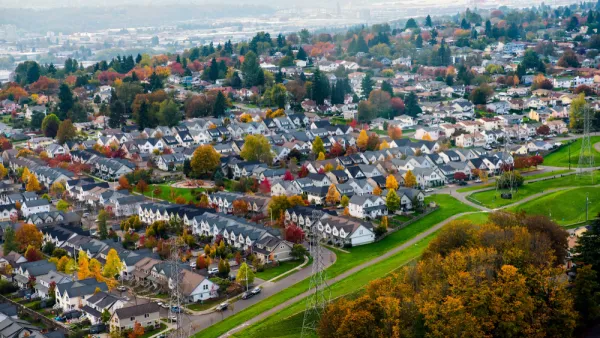
"Steps to minimize the polluted runoff focus on minimizing concrete and other hard surfaces that cause rain to flow away, carrying pollutants such as oil and copper residue from cars' brakes. Examples include vegetated roofs, special pavement that allows water to soak through, and "rain gardens" that slurp up runoff."
"The environmentalists were stopped short in their effort to convince the quasi-judicial hearings board that the 85 smaller cities and counties should have to take the same steps as Seattle, Tacoma and the counties of King, Pierce, Snohomish and Clark."
Read the full story: Stormwater isn't just a big-city problem

Seattle to Rely on Green Stormwater Infrastructure
Seattle Mayor Ed Murray has released a draft plan to overhaul the city's stormwater infrastructure to reduce the pollution levels in Puget Sound.

Seattle Builds Subway-Sized Tunnel — for Stormwater
The $700 million ‘stormwater subway’ is designed to handle overflows during storms, which contain toxic runoff from roadways and vehicles.
How Zoning Changes Could Boost Housing Supply in Seattle
The Puget Sound region could benefit from zoning tweaks that would encourage more transit-oriented development and ‘gentle’ density increases, new research finds.

Planetizen Federal Action Tracker
A weekly monitor of how Trump’s orders and actions are impacting planners and planning in America.

Amtrak, CN end decades-long dispute with eight-year agreement
The new operating agreement establishes an updated framework for the companies to work together, including processes to resolve disputes.

Judges permit Denver to divert 77,000 acre feet from the Colorado River for reservoir expansion
Overuse and climate change have caused the Colorado River’s water levels to plummet.

Idaho may see an 18% drop in federal surface transit funding — the largest estimated cut in the US
Transit systems in rural communities are much more reliant on federal funding to provide their services.

How ‘post-disaster gentrification’ alters neighborhoods after natural calamities
After hurricanes, fires or other calamities, the original residents of a community are often replaced by younger, wealthier residents.

Maryland local governments examine if they should have more power to raise property taxes
Maryland’s housing market is out of reach for the majority of moderate-income residents.

FREE Course: Walkable City 1: Why Walkability?
After describing his path towards focusing on walkability as the essence of good planning, Jeff Speck marches through his five principal reasons for making more walkable places.
Reinventing Malls: Planning Alchemy—Turning Gray Fields Into Gold
The course focuses on the opportunities and imperatives that shape reinvention of mall sites.

Harvard University Graduate School of Design
KFH Group Inc.
Greater Baltimore Committee
The Architects Foundation
University of Cincinnati Online
The Pocatello Development Authority
The Urban Renewal Agency of the City of Pocatello