Growth rates in Waco, Texas, have planners concerned that the region won't be able to afford the necessary roads and services the new sprawl will require.


"Local planners say that if current growth patterns continue over the next 25 years, it will cost $3 billion to build roads to new growth areas. And they can no longer depend on state and federal governments to do the heavy lifting."
"In recent years, Greater Waco has seen an unprecedented amount of scattered low-density development, known as urban sprawl. Between 1995 and 2005, 72 percent of development acreage in McLennan County was outside the recognized urban boundaries of Waco and its suburbs, according to the Waco Metropolitan Planning Organization."
"The county's population grew 11 percent during those 10 years, but developed acreage increased by 22 percent, suggesting a pattern of growth that is half as dense as the historic norm."
"A December 2007 study commissioned by the Waco MPO predicted that if current growth patterns continue, 45.7 square miles of land would be consumed by 2030, based on a population increase conservatively estimated at 45,319."
Read the full story: Waco leaders address issues dealing with urban sprawl

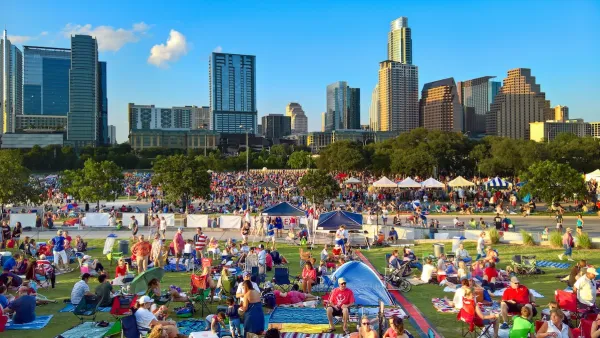
Texas Could Have the Nation’s 3 Largest Cities by 2100. Are They Ready to Embrace Density?
Houston, Dallas, and Austin are growing fast. The old sprawl model is no longer sustainable.
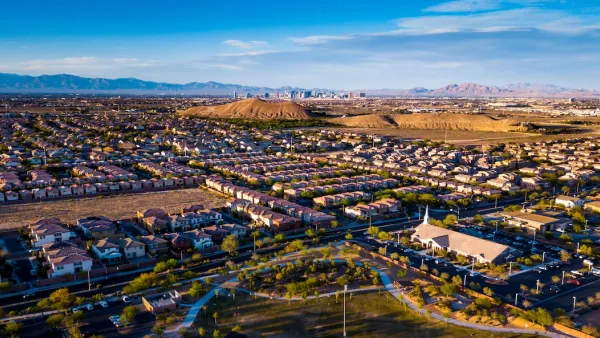
The Nation’s 40 Fastest-Growing Suburbs
Projected population growth will be concentrated in suburban communities around major metropolitan areas, with the Sunbelt experiencing the fastest growth.
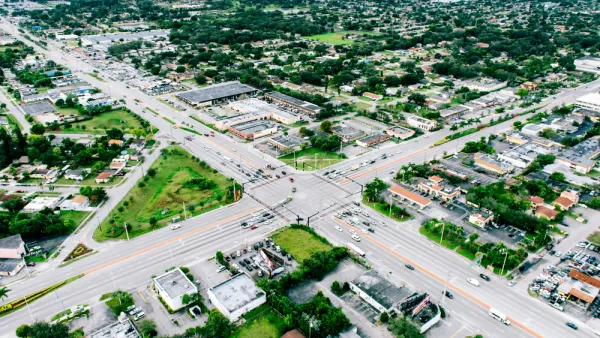
Florida Law Would Change the Definition of ‘Sprawl’
One quick way to build sprawl.

Planetizen Federal Action Tracker
A weekly monitor of how Trump’s orders and actions are impacting planners and planning in America.

The state-sanctioned urbicide of Austin
People don’t kill cities. Freeways do.

US to reduce Colorado River water deliveries to Mexico
A new Colorado Treaty amendment reduces Mexico’s Colorado River water allocation by 250,000 acre feet.

Nation's most wind-powered state turns to coal as data centers increase energy demand
For the first time in decades, Iowa has increased its generation of coal power.

NYC cools commuters with city's first rain garden above a bus stop
New York City officials say the plants in the rain garden can absorb 16 gallons of rainwater during heavy storms.

Brightline West’s future may rely on $6 billion federal loan
The company has until Nov. 2 to make a $400 million equity investment into its proposed high-speed rail line.

FREE Course: Walkable City 1: Why Walkability?
After describing his path towards focusing on walkability as the essence of good planning, Jeff Speck marches through his five principal reasons for making more walkable places.
Reinventing Malls: Planning Alchemy—Turning Gray Fields Into Gold
The course focuses on the opportunities and imperatives that shape reinvention of mall sites.

Eagle County Government
Harvard University Graduate School of Design
Nashville Planning Department
The Architects Foundation
University of Cincinnati Online
The Pocatello Development Authority
The Urban Renewal Agency of the City of Pocatello
Journal of the American Planning Association