A NY Times profile of Suffern, NY focuses on real estate, but in the process creates a miniature of the struggles of all small towns- keeping the historic downtown vibrant, offering varied housing options, and competing with neighboring cities.


"Suffern, a two-square-mile village in the town of Ramapo along the New Jersey border, has held fairly steady at about 11,000 people since 1990, census figures show. It was not always the kind of place that attracted young families, said Mayor John B. Keegan, a retired postal worker. "When I first moved here as a kid 46 years ago," Mr. Keegan said, "it was a real tough town, with people speeding all around in hot rods."
That was at least partly because of the difference in the legal drinking ages in New York and New Jersey until 1984. With not even a river to discourage New Jersey teenagers from driving into Rockland County, where the legal age was 18, Suffern's bars were a magnet for out-of-state youths, said Mr. Keegan, describing the village back then as 'a real gritty place.'
But the crowd from New Jersey has long since thinned out. In recent years, migration patterns across the state border have reversed; residents can drive less than five minutes to fuel up and make purchases in New Jersey - where gas prices are lower, there is no sales tax on clothing, and large stores abound. Today, the mayor said, the focus of the village's struggles is maintaining economic viability."
Read the full story: When the Town Line Is the State Line

Data center developer offers over $4M per acre to buy out homeowners
Data center builders are outbidding home builders for land, prompting concerns about competition with housing.
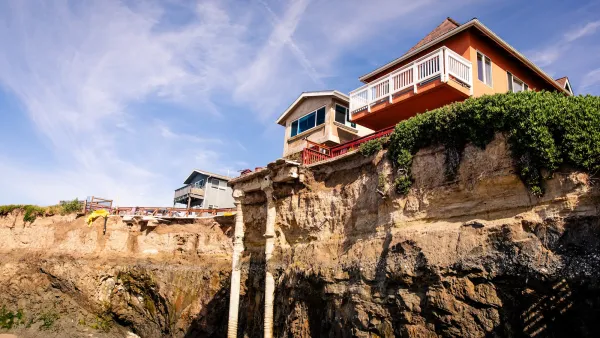
Zillow Deleted Climate Risk From California Listings. This Climate Expert Wants to Bring it Back.
While difficult to estimate for individual homes, experts argue that home buyers should have access to data about flood and wildfire risk, extreme heat, and other climate hazards in the area.
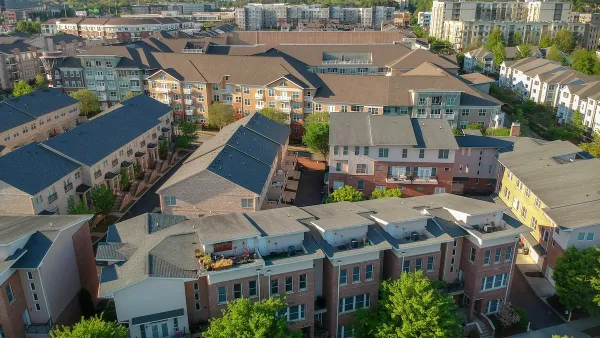
The Rise of Crowdfunded Real Estate
Enabled by provisions in the JOBS Act of 2012 that allow smaller scale investing, community members are becoming co-owners of local real estate projects.

Planetizen Federal Action Tracker
A weekly monitor of how Trump’s orders and actions are impacting planners and planning in America.

Eastern Nebraska is running out of electricity
Data centers and electrification are straining eastern Nebraska’s grid, throttling economic development.

Study reveals best places in the U.S. for cycling, walking
New research from Streetlight Data examines bicycle and pedestrian miles per capita in the 100 largest U.S. cities by population.

DSA members accuse Mamdani of 'abandoning values' over housing redevelopment
New York City's mayor plans to replace about 2,000 units of public housing with private, mixed-income housing.

All sides of BRT debate unhappy with CDOT’s most recent move
The Colorado Department of Transportation is no longer considering center-running bus lanes for Colorado Boulevard.

Massachusetts bogs generate both power, and cranberries
Putting solar panels above farmland is one way Massachusetts is advancing toward its goal of net-zero carbon emissions by 2050.

FREE Course: Walkable City 1: Why Walkability?
After describing his path towards focusing on walkability as the essence of good planning, Jeff Speck marches through his five principal reasons for making more walkable places.
Reinventing Malls: Planning Alchemy—Turning Gray Fields Into Gold
The course focuses on the opportunities and imperatives that shape reinvention of mall sites.

City of Rosemead
Rutgers University, Edward J. Bloustein School of Planning and Public Policy
One Hundred Miles
University of Michigan School for Environment and Sustainability (SEAS)
Hunter College, City University of New York (CUNY)
The Architects Foundation
City of Cambridge
The Pocatello Development Authority
The Urban Renewal Agency of the City of Pocatello