Public art installations around New Delhi highlights the challenges of preserving India's heritage amidst development. 'We ask people to think about constructing a modern city and the accompanying extinction and loss,' says artist Ravi Agrawal.


"About 25 artists spread their larger-than-life art installations across the city's 16th-century quarters, shopping arcades, parks, business districts and traffic roundabouts. The installations were along sites located on a grid created for the city's latest object of pride: the gleaming new Metro rail, which in the past five years has become a potent symbol of the choked capital's efforts to transform itself for the 21st century.
'Public space is shrinking in this city, and we are trying to reclaim and reengage with it through art,' said Pooja Sood, curator of the public art extravaganza, which ends Sunday. 'We broke through prevailing social, cultural and political barriers to bring contemporary art out of the elitist, white-cube galleries.'
In the past decade, New Delhi has witnessed an unprecedented boom in the construction of high-rises, overpasses, malls and multiplexes at the expense of countless trees and old buildings. Conspicuous consumption and changing lifestyles are depleting the city's underground water supply and slowly edging the once-sacred Yamuna River out of people's consciousness."
Read the full story: New Delhi Reclaims Public Space Via Art

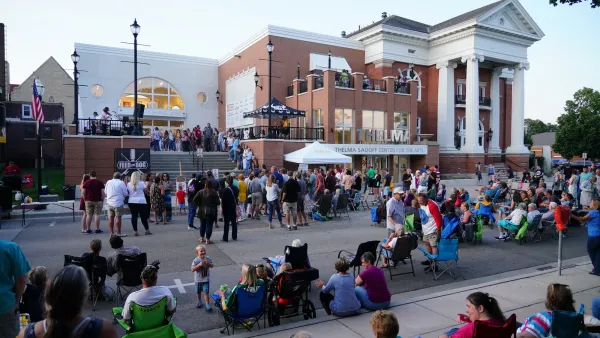
How Placemaking Lost its Way — And How it Can Get Back on Track
The term has often become diluted, getting attached to projects that don’t live up to its lofty aspirations.
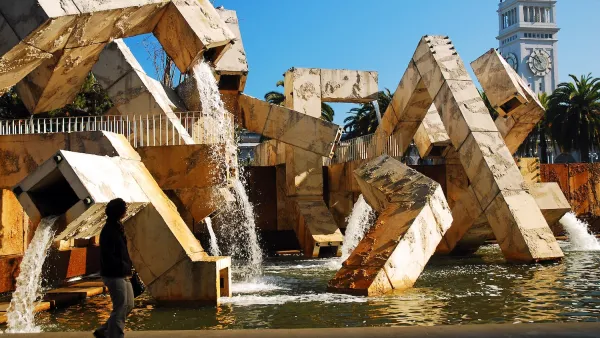
San Francisco to Dismantle its Polarizing Brutalist Fountain
The Vaillancourt Fountain stands as a symbol of the tension between the city’s past and future.
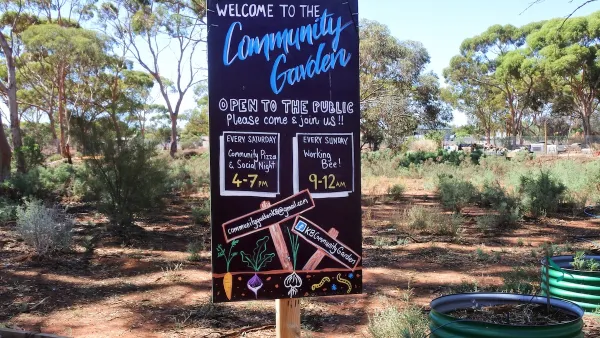
Community-Led Initiatives To Beautify and Reclaim Neglected Areas
Explore successful community-led initiatives that revitalize neglected urban spaces, fostering beauty and reclaiming areas for public benefit and enjoyment.

Planetizen Federal Action Tracker
A weekly monitor of how Trump’s orders and actions are impacting planners and planning in America.

California plans to bury El Niño’s downpour
If the state plays its cards right, it may be able to store a billion acre-feet of El Niño’s water in aquifers.

Chicago breaks ground on $3 billion megadevelopment
The new neighborhood, titled Foundry Park, will one day host 3,700 residences.

One of Denver’s busiest corridors to gain BRT
The project will span 18 miles and contain 74 bus rapid transit stations.

275,000 bus trips are at stake on Seattle's ballot
If passed, the Seattle Transit Measure would trigger a 0.3% sales tax and raise an average of $138 million per year to maintain and expand Seattle’s bus services.

Texas may pay Israeli company billions to ease water woes
Texas awarded IDE Technologies the contract for its Harbor Island project, which is slated to become the Western Hemisphere's largest desalination plant.

FREE Course: Walkable City 1: Why Walkability?
After describing his path towards focusing on walkability as the essence of good planning, Jeff Speck marches through his five principal reasons for making more walkable places.
Reinventing Malls: Planning Alchemy—Turning Gray Fields Into Gold
The course focuses on the opportunities and imperatives that shape reinvention of mall sites.

City of Rosemead
Rutgers University, Edward J. Bloustein School of Planning and Public Policy
One Hundred Miles
Hunter College, City University of New York (CUNY)
The Architects Foundation
University of Cincinnati Online
City of Cambridge
Montrose County
The Pocatello Development Authority