A Corona del Mar couple have been battling the Coastal Commission over the placement of their shower, tables, and barbecue, all right on the sand. Even though those and other items are within the property line, the Commission isn't having it.


"In the McNamees' case, the state says their recreational amenities involved unpermitted grading and damage to the bluff, and gives the perception of a private beach -- intimidating beachgoers into avoiding the public sand nearby.
After a tangle of lawsuits, commission hearings and environmental studies, the McNamees are pretty much back where they began: in apparent violation of the Coastal Act. Now newly represented by property rights group the Pacific Legal Foundation, they're crossing their fingers for their current appeal.
The Coastal Commission has several issues with what's on the sand. For instance, attached to the beige shed at the foot of the McNamees' bluff is a small white sign that reads 'George's Beach.'
'It looks very much like a private beach,' said Lisa Haage, the commission's chief of enforcement."
Read the full story: Orange County couple wonder: Whose beach is it, anyway?

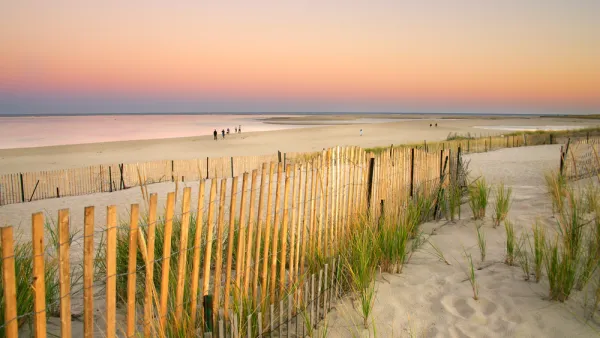
Proposed Law Would Open Beach Access in Massachusetts
It's harder to access the ocean in Massachusetts than any other coastal state in the country, but that could soon change.
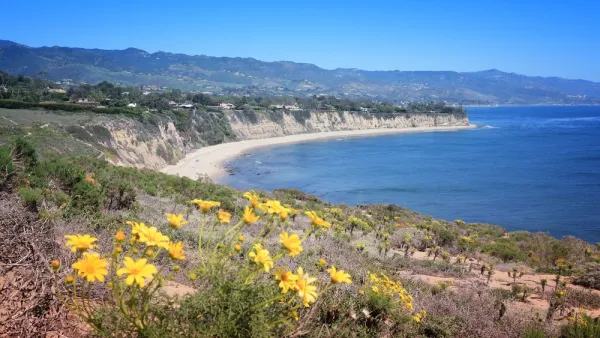
Landowners Restrict Access to California Beach
A homeowners group has successfully moved to severely limit public access to the beaches of Hollister Ranch, a 14,500-acre parcel to the west of Santa Barbara.
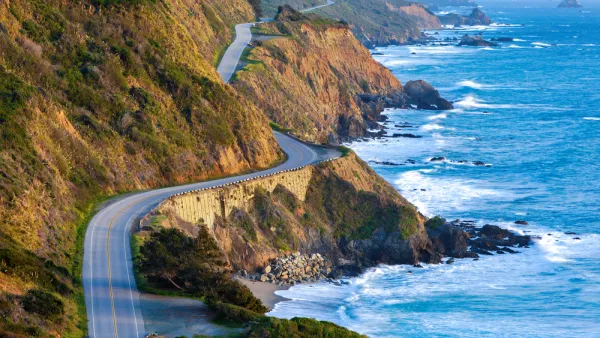
The New California Coastal Commission
The commission spent a significant part of last year in the spotlight. Now, its new director is moving ahead on climate adaptation and resilience efforts as a federal policy change looms.

Planetizen Federal Action Tracker
A weekly monitor of how Trump’s orders and actions are impacting planners and planning in America.

Chicago breaks ground on $3 billion megadevelopment
The new neighborhood, titled Foundry Park, will one day host 3,700 residences.

This MA town is drowning in its own sewage — and residents like it that way
Susan Murcott, a waste water expert, said if Carlisle didn't address their leaking sewage, the problem could turn “deadly.”

Feds to more closely scrutinize proposed Amtrak facility’s environmental impact
The Federal Railroad Administration had initially said the facility qualified for a less extensive environmental review.

Boston is hard to build housing in: its chief of planning wants to keep it that way
Chief of Planning Kairos Shen said she would not make changes to Boston’s affordability requirements for new housing, which critics say have slowed down development.

California plans to bury El Niño’s downpour
If the state plays its cards right, it may be able to store a billion acre-feet of El Niño’s water in aquifers.

FREE Course: Walkable City 1: Why Walkability?
After describing his path towards focusing on walkability as the essence of good planning, Jeff Speck marches through his five principal reasons for making more walkable places.
Reinventing Malls: Planning Alchemy—Turning Gray Fields Into Gold
The course focuses on the opportunities and imperatives that shape reinvention of mall sites.

City of Rosemead
Rutgers University, Edward J. Bloustein School of Planning and Public Policy
One Hundred Miles
Hunter College, City University of New York (CUNY)
The Architects Foundation
University of Cincinnati Online
Montrose County
The Pocatello Development Authority
The Urban Renewal Agency of the City of Pocatello