This article looks at some adaptive reuse projects that successfully preserve the beauty of Boston's late-nineteenth century infrastructure.


"We don't usually think of infrastructure as architecture. But in Brighton at the edge of the Chestnut Hill reservoir, back in the 1880s and '90s, our forbears created two of the city's remarkable buildings for the sole purpose of pumping water. They cared that much about the quality of the civic world."
"So there's good news and bad news. The bad news is that you can't imagine us building this kind of building so well today. The good news is that at least we've got enough sense to preserve what we have. Chestnut Hill is today returning to life and use after a commendable restoration."
"The two pumping stations - sometimes collectively known, as in the game of Monopoly, as the Water Works - have been converted into condo apartments. Architect Graham Gund, working with developer Edward Fish, has created spacious units, many of which look through the original great arched windows out over the reservoir park."
"The most dramatic of the interior spaces won't be condos, though. They have been saved to become a museum of the old Boston world of steam and water. A private group, calling itself Metropolitan WaterWorks Museum Inc., hopes to open the museum by the end of 2009."
Read the full story: Preserving the majesty of old works


New Jersey affordable housing requirements spur infill development across the state
A 50-year-old law continues to reshape development around housing goals.

Madison approves hundreds of affordable apartments as deadline for federal funding looms
A recently approved project will bring 163 affordable units to the north side.
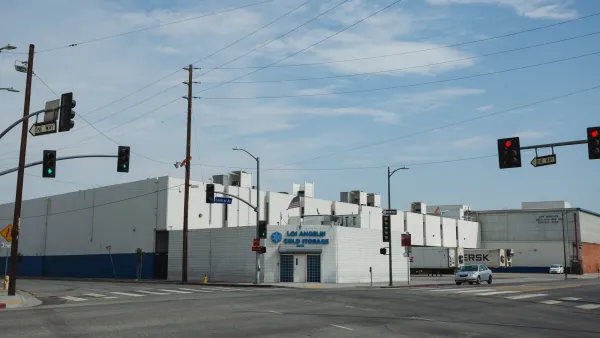
LA approves $2B 'urban village' plan for former cold storage facilities
The project promises an interconnected neighborhood with a focus on public space.

Planetizen Federal Action Tracker
A weekly monitor of how Trump’s orders and actions are impacting planners and planning in America.

Data reveals that NYC’s bet on congestion pricing has paid off
After almost two years of the program, reports show positive impacts on traffic and air quality and no disruptions to parking.

HUD modernizes 50-year-old manufactured housing framework
The Next Generation Manufactured Housing Action Plan establishes new energy-efficiency standards for manufactured homes, and new guidelines for anchoring them.

Small single-family homes are illegal in most of MA. Voters can change that
Most land zoned for single-family housing in Massachusetts requires at least 40,000 square feet of land per house.

Public steps inside U.S.’s first battery-powered train
Metra’s groundbreaking train feature modern seats and a futuristic battery car.

Companies show off AI technology, new innovation hubs at APTA Expo
Nearly 700 companies attended the American Public Transportation Association’s Expo last week, which happens once every three years.

FREE Course: Walkable City 1: Why Walkability?
After describing his path towards focusing on walkability as the essence of good planning, Jeff Speck marches through his five principal reasons for making more walkable places.
Reinventing Malls: Planning Alchemy—Turning Gray Fields Into Gold
The course focuses on the opportunities and imperatives that shape reinvention of mall sites.

One Hundred Miles
County of Mendocino
planning NEXT
The Architects Foundation
University of Cincinnati Online
Montrose County
Northern Illinois Transit Authority (NITA)
The Pocatello Development Authority