It's time for Seattle to take a few chances with its architecture, according to the author of this article.


"Prowl the Web sites of some of Seattle's better architecture firms, and one of the peculiar trends you might pick out is that the most innovative work is arising in the form of weekend cabins in the Methow Valley. Partly, this is understandable -- architects and their clients naturally feel less inhibited when they're away from home and the intense scrutiny of the city.
But it also illustrates an unhappy trend in that city. As Seattle grows larger, denser, wealthier and ever more conscious of itself as a city of real importance, it seems less willing to take chances, explore the fringes, invert expectations and celebrate weirdness. Too much at stake.
You can see the perfect illustration in the 2007 Seattle Art Museum expansion, where the shack-up arrangement with Washington Mutual gave birth to a building that wears the stiffest of gray business suits. Although it provides excellent exhibit space for art inside, its expressionless public face beams the wrong message outside: no imagination, no adventure, no fun to be had here."
Read the full story: On Architecture: Seattle architecture needs to have more fun

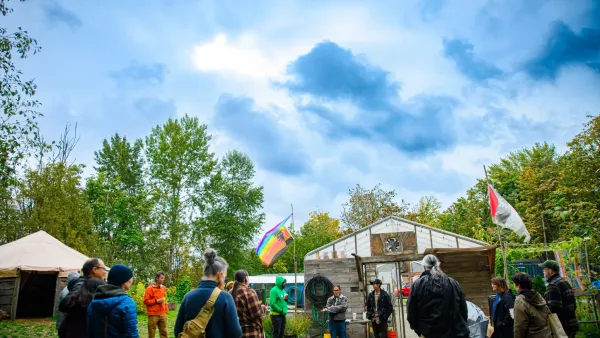
Seattle land ‘rematriated’ to Duwamish Tribe
Volunteer efforts transformed the space from a hazardous waste zone to a community gathering spot.
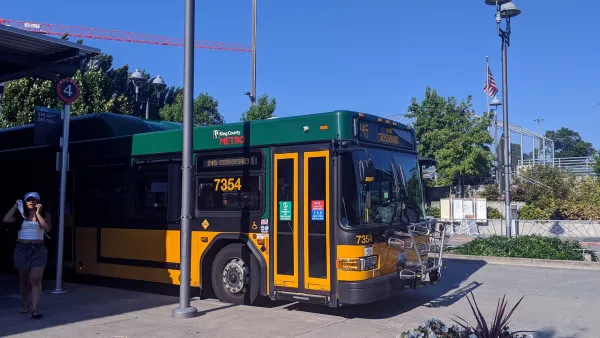
King County Metro adds 3,000 weekly bus trips, more connections to rail
King County Metro and Sound Transit are both making major adjustments to their bus networks to improve light rail connectivity across the region.
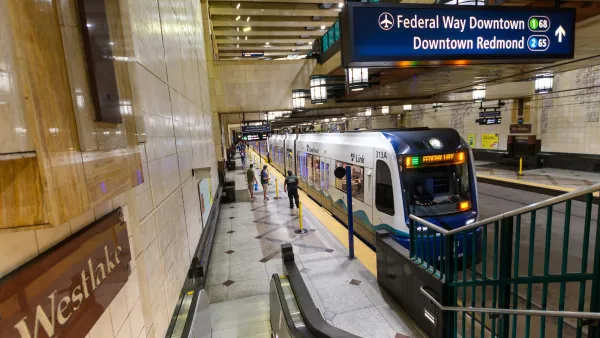
Commentary: Seattle's new transit wayfinding system is 'more confusing than clarifying'
Changes to Sound Transit signage could make it difficult to navigate the region's train system.

Planetizen Federal Action Tracker
A weekly monitor of how Trump’s orders and actions are impacting planners and planning in America.

Amtrak, CN end decades-long dispute with eight-year agreement
The new operating agreement establishes an updated framework for the companies to work together, including processes to resolve disputes.

Judges permit Denver to divert 77,000 acre feet from the Colorado River for reservoir expansion
Overuse and climate change have caused the Colorado River’s water levels to plummet.

NYC DOT wants faster, more permanent street upgrades
The city is examining ways to build more concrete infrastructure without getting entangled in 'decades-long' projects.

'Something we’ve never seen before:' rising utility rates could strain city finances nationwide
Data centers, climate change and other factors have caused utility rates in the United States to increase by 38% since 2020.

Trump to overrule local leaders, lease millions of acres of America’s Pacific Island territories’ seafloors to mining companies
International law says that the Indigenous people of America’s territories have a right to prior and informed consent regarding projects that impact their countries.

FREE Course: Walkable City 1: Why Walkability?
After describing his path towards focusing on walkability as the essence of good planning, Jeff Speck marches through his five principal reasons for making more walkable places.
Reinventing Malls: Planning Alchemy—Turning Gray Fields Into Gold
The course focuses on the opportunities and imperatives that shape reinvention of mall sites.

Harvard University Graduate School of Design
KFH Group Inc.
Greater Baltimore Committee
The Architects Foundation
University of Cincinnati Online
The Pocatello Development Authority
The Urban Renewal Agency of the City of Pocatello