With rising energy prices, lights are dimming in New York City. Legislation in the state seeks to reduce the city's glow even more.


"Gone are the days when cheap electricity, primitive lighting technology and landlords' desire to showcase their skyscrapers kept floor after floor of the city's highest towers glowing into the night. Now, rising energy costs, conservationism, stricter building codes and sophisticated lighting systems have conspired to slowly, often imperceptibly, transform Manhattan's venerable nightscape into one with a gentler glow."
"Instead of tower after tower shining at all hours - the World Trade Center stayed aglow long after its occupants went home - the skyline is becoming a patchwork of sparsely sparkling buildings decorated with ornamentally lighted tops."
"The State Assembly passed legislation in June requiring that new outdoor lighting have shields that reduce glare and waste; the bill's sponsor, Assemblywoman Linda B. Rosenthal, a Manhattan Democrat, said it would most likely be taken up by the State Senate if the Democrats manage to win a majority on Tuesday (Republicans currently hold a one-seat advantage)."
"City Councilman Alan J. Gerson has introduced a variety of similar measures - to require full streetlight shields and motion detectors in all commercial and government buildings, and to mandate more efficiently lighted billboards. The first of the proposals could be taken up as early as this month."
FULL STORY: Efficiency’s Mark: City Glitters a Little Less

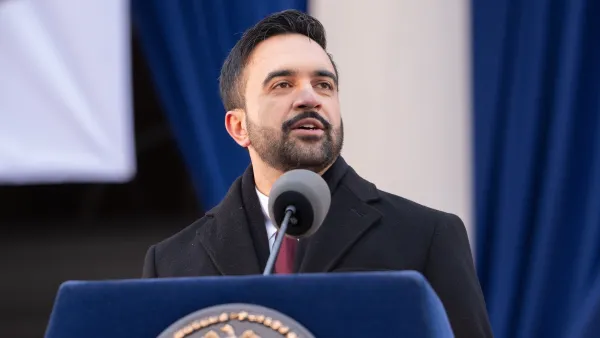
Mamdani overhauls NYC's Vision Zero plan with 100 new policy goals
The overhaul aims to reduce traffic deaths and make streets safer for pedestrians, cyclists and drivers through lower speed limits, new safety infrastructure and more.
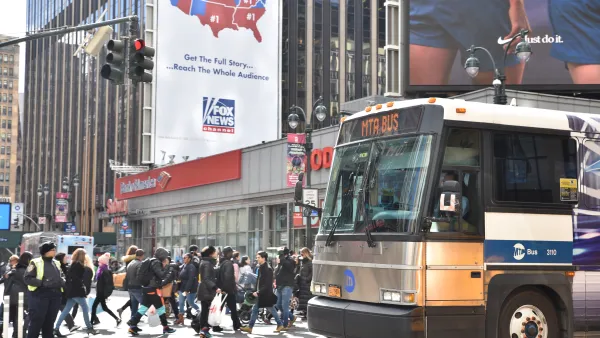
MTA to purchase biggest fleet upgrade in over a decade
The new buses will use a greener alternative to diesel fuel, and aim to improve fleet reliability and air quality.
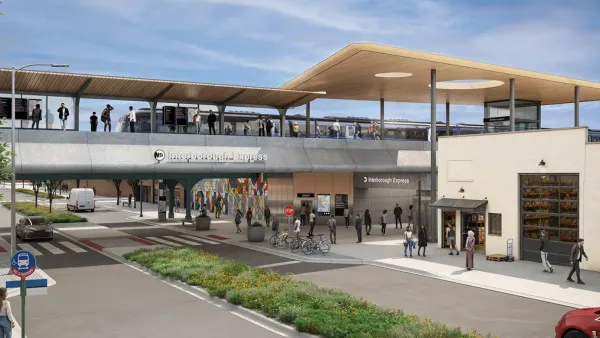
NYC releases new renderings for $5.5 billion Interborough Express
The slated stations will have a modern look, enhanced lighting and improved audio announcements.

Planetizen Federal Action Tracker
A weekly monitor of how Trump’s orders and actions are impacting planners and planning in America.

The state-sanctioned urbicide of Austin
People don’t kill cities. Freeways do.

US to reduce Colorado River water deliveries to Mexico
A new Colorado Treaty amendment reduces Mexico’s Colorado River water allocation by 250,000 acre feet.

5 New England states march closer to 800 megawatt wind energy project
Securing federal approval for the project may be complicated under the Trump administration, which has historically been hostile towards domestic wind power.

Baltimore to break ground on $50 million Transit Priority Project
The project will bring faster bus trips, safer streets and better bike connections to Baltimore.

Airbnb launches $250 million 'last-dollar financing' housing accelerator, makes first investment in Austin
The company will put $6.4 million towards affordable housing development in Texas’ capital.

FREE Course: Walkable City 1: Why Walkability?
After describing his path towards focusing on walkability as the essence of good planning, Jeff Speck marches through his five principal reasons for making more walkable places.
Reinventing Malls: Planning Alchemy—Turning Gray Fields Into Gold
The course focuses on the opportunities and imperatives that shape reinvention of mall sites.

Eagle County Government
Harvard University Graduate School of Design
Nashville Planning Department
The Architects Foundation
University of Cincinnati Online
The Pocatello Development Authority
The Urban Renewal Agency of the City of Pocatello
Journal of the American Planning Association