A new U of PA study, 'Guaranteed Parking, Guaranteed Driving' compares two NYC neighborhoods, showing decisively that providing off-street parking is a sure way to guarantee more driving.


"The study (by University of Pennsylvania planning professor Rachel Weinberger), "Guaranteed Parking, Guaranteed Driving", compares parking and commuting habits in Park Slope, Brooklyn and Jackson Heights, Queens. The study finds that despite having the same car ownership and very similar access to public transit to the Central Business District, Jackson Heights residents are 45% more likely to drive to work in the Central Business District and 28% more likely to drive to work in general.
The study concludes that Jackson Heights car owners are more likely to drive to work because of guaranteed, off-street parking spots to return to at the end of the day."
From Steetsblog: Study - City Residential Parking Requirements Lead to More Driving: "In August, Weinberger teamed with Transportation Alternatives and other groups concerned about parking reform to issue "Suburbanizing the City". [See related link] That study estimated that the city's parking requirement would generate a billion miles of new traffic a year by 2030. "Guaranteed Parking" substantiates that finding, and provides more evidence that New York City zoning regulations promote driving to work, even when viable transit options are available."
Thanks to John Holtzclaw
Read the full story: STUDY: New Yorkers Are More Likely to Drive Because of City Parking Requirement.
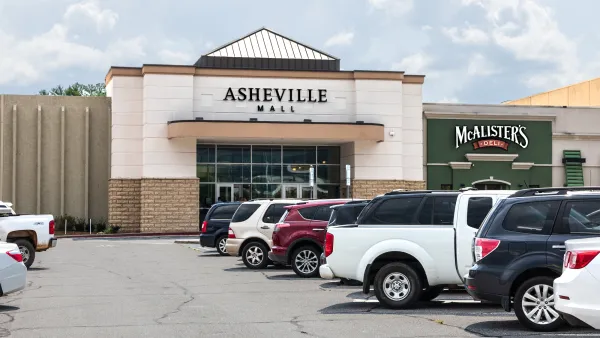
Asheville reconsiders parking minimums as surface parking eats up over a third of downtown real estate
Housing advocates say parking requirements are unnecessary and induce sprawl.
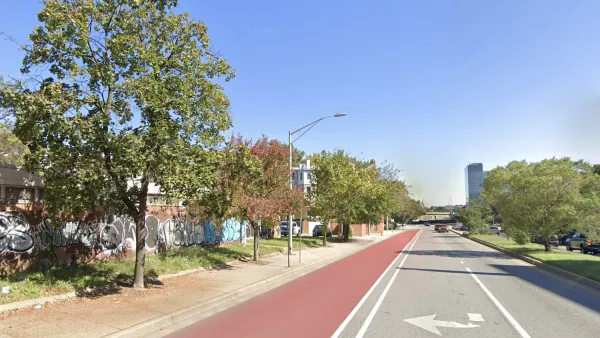
In a twist, Baltimore residents ask for less parking
A grocery store developer is asking to build more off-street parking than the city's new regulations allow, as well as 6 curbside spots that would replace an existing bus lane.
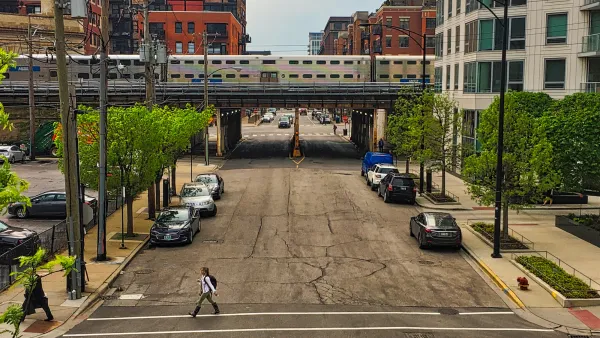
Chicago eliminates parking requirements near transit
In 2025, Illinois barred cities from mandating parking near train and bus stations.

Planetizen Federal Action Tracker
A weekly monitor of how Trump’s orders and actions are impacting planners and planning in America.

California plans to bury El Niño’s downpour
If the state plays its cards right, it may be able to store a billion acre-feet of El Niño’s water in aquifers.

Desperate measures: Advocates weigh draining Lake Powell to fill Colorado River
Draining the reservoir could reduce evaporation losses by a couple hundred thousand acre-feet.

Los Angeles just elected an urban planner as its mayor
Transportation analysts are optimistic that Raman will be more aggressive in addressing transit issues than Bass.

Mamdani’s pied-à-terre tax survives legal challenge
A panel of judges found that the plaintiffs failed to demonstrate injury as a result of New York City's implementation of the tax.

Eastern Nebraska is running out of electricity
Data centers and electrification are straining eastern Nebraska’s grid, throttling economic development.

FREE Course: Walkable City 1: Why Walkability?
After describing his path towards focusing on walkability as the essence of good planning, Jeff Speck marches through his five principal reasons for making more walkable places.
Reinventing Malls: Planning Alchemy—Turning Gray Fields Into Gold
The course focuses on the opportunities and imperatives that shape reinvention of mall sites.

City of Rosemead
Rutgers University, Edward J. Bloustein School of Planning and Public Policy
One Hundred Miles
University of Michigan School for Environment and Sustainability (SEAS)
Hunter College, City University of New York (CUNY)
The Architects Foundation
City of Cambridge
Montrose County
The Pocatello Development Authority