Spain's booming construction industry was fuelled by immigrant workers, who were encouraged to come to Spain. The economic crisis has now stalled many of those construction projects.


"In the continent's younger economies, notably Spain and Ireland, the worldwide financial downturn has predominantly been a crisis of the building industry. In Spain, a quarter of all working-age adults last year were employed in the booming construction sector.
The boom quickly ended: This summer, home sales in Spain were down 30 per cent over last year and new mortgages down almost 40 per cent -- and that was before credit markets collapsed. The downturn has left more than 2.6 million people out of work in this country of 45 million, with unemployment at 11.3 per cent, the highest in the 27 European Union countries.
And more than half of those workers were immigrants, hired from Romania, Morocco and especially from Latin America during the past 10 years by construction firms. [Prime Minister] Zapatero has spent the past four years making these immigrants, who now comprise one-tenth of Spain's population, feel at home.
This month, he began to offer another option: He would pay them a year's benefits, in cash, if they went back home for at least three years. Forty per cent would be payable in advance, the rest upon arrival. When they returned to Spain, they would get their old immigration status back."
FULL STORY: Madrid to pay surplus immigrant tradesman to go home, come back later

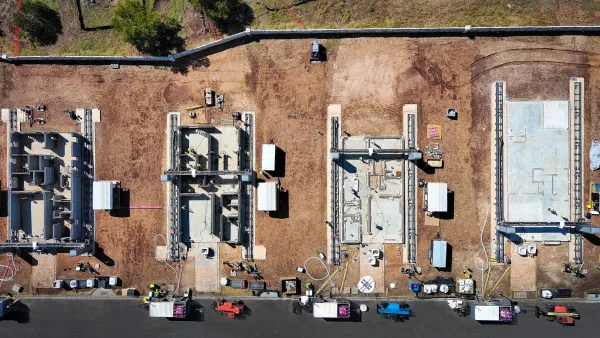
3D-Printed Community in Texas Nearly Complete
Upon completion, the 100-home Wolf Ranch Community north of Austin will be the largest 3D printed neighborhood in the world.
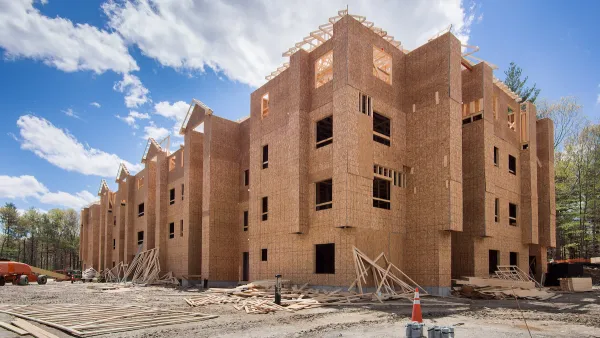
What Drives the High Cost of Affordable Housing
A combination of ineffective funding mechanisms, strict building regulations, and inflation are pushing per-unit construction costs higher.

Bus Rapid Transit Costs More Than Double in Indianapolis
IndyGo is planning changes to the Blue Line. The city’s third bus rapid transit route is turning out to be much more expensive than originally expected.

Planetizen Federal Action Tracker
A weekly monitor of how Trump’s orders and actions are impacting planners and planning in America.

The state-sanctioned urbicide of Austin
People don’t kill cities. Freeways do.

US to reduce Colorado River water deliveries to Mexico
A new Colorado Treaty amendment reduces Mexico’s Colorado River water allocation by 250,000 acre feet.

5 New England states march closer to 800 megawatt wind energy project
Securing federal approval for the project may be complicated under the Trump administration, which has historically been hostile towards domestic wind power.

Baltimore to break ground on $50 million Transit Priority Project
The project will bring faster bus trips, safer streets and better bike connections to Baltimore.

Airbnb launches $250 million 'last-dollar financing' housing accelerator, makes first investment in Austin
The company will put $6.4 million towards affordable housing development in Texas’ capital.

FREE Course: Walkable City 1: Why Walkability?
After describing his path towards focusing on walkability as the essence of good planning, Jeff Speck marches through his five principal reasons for making more walkable places.
Reinventing Malls: Planning Alchemy—Turning Gray Fields Into Gold
The course focuses on the opportunities and imperatives that shape reinvention of mall sites.

Eagle County Government
Harvard University Graduate School of Design
Nashville Planning Department
The Architects Foundation
University of Cincinnati Online
The Pocatello Development Authority
The Urban Renewal Agency of the City of Pocatello
Journal of the American Planning Association