Eduardo Porter traces the American preference for light trucks back to a tariff against frozen chicken back in 1961.


"the Ford F-Series pickup did not rule the roost as the nation's best-selling vehicle, on an annual basis, from 1981 to last year just because gas was cheap. Its ascent required a helping hand from Uncle Sam. As Washington scrambles for a policy to achieve the incompatible goals of making fuel cheaper and making Americans use less of it, it might consider the twisted tale of how four-wheel-drive gas hogs became Detroit's best sellers.
It started in 1961 with chicken. Trying to stop a surge of chicken imports into Germany, the European Common Market bowed to the European poultry lobby and almost tripled the tariff on frozen chicken from the United States. Washington, of course, struck back. In 1963, it raised tariffs on a range of European products: brandy to hit the French; dextrine, a food and glue component, to hit the Dutch.
To target Germany, the Johnson administration imposed a 25 percent tariff on light-truck imports, a barrier that fell on Volkswagen, which exported vans to the United States."
Read the full story: A Chicken in Every Garage


Ted Cruz Blames Safety Features for the Rising Cost of Cars; Senate Could Roll Back Regulations
A Senate committee will hear testimony by automakers in a hearing that could determine whether autonomous emergency braking and other safety features will be mandatory on new cars.
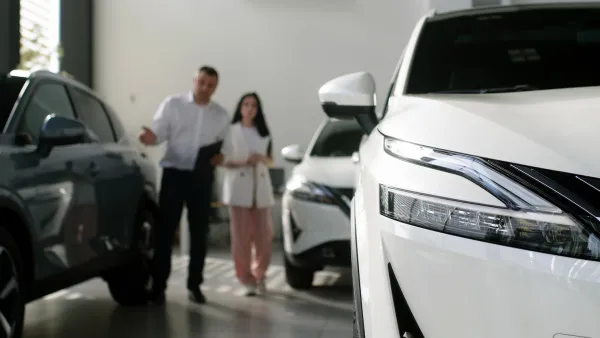
Trump’s Backlash to EVs Is Making All Cars More Expensive — Including Ones that use Gas
Uncertainty about vehicle standards and anti-renewable energy policies are raising the cost of both buying and maintaining a car.
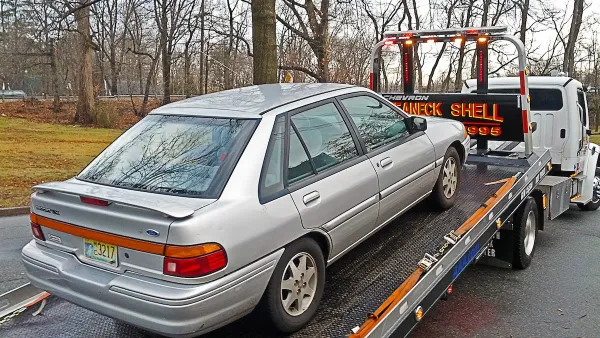
Car Loan Defaults Have Spiked 50%. With Repossession Rates Rising, How Will Americans Get to Work?
In 2024, 1.7 million cars were repossessed in the United States, the highest number since 2009.

Planetizen Federal Action Tracker
A weekly monitor of how Trump’s orders and actions are impacting planners and planning in America.

The state-sanctioned urbicide of Austin
People don’t kill cities. Freeways do.

US to reduce Colorado River water deliveries to Mexico
A new Colorado Treaty amendment reduces Mexico’s Colorado River water allocation by 250,000 acre feet.

Nation's most wind-powered state turns to coal as data centers increase energy demand
For the first time in decades, Iowa has increased its generation of coal power.

NYC cools commuters with city's first rain garden above a bus stop
New York City officials say the plants in the rain garden can absorb 16 gallons of rainwater during heavy storms.

Brightline West’s future may rely on $6 billion federal loan
The company has until Nov. 2 to make a $400 million equity investment into its proposed high-speed rail line.

FREE Course: Walkable City 1: Why Walkability?
After describing his path towards focusing on walkability as the essence of good planning, Jeff Speck marches through his five principal reasons for making more walkable places.
Reinventing Malls: Planning Alchemy—Turning Gray Fields Into Gold
The course focuses on the opportunities and imperatives that shape reinvention of mall sites.

Greater Baltimore Committee
Eagle County Government
Harvard University Graduate School of Design
The Architects Foundation
University of Cincinnati Online
The Pocatello Development Authority
The Urban Renewal Agency of the City of Pocatello
Journal of the American Planning Association