HBO's The Wire has wrapped its last season of urban criticism disguised as a cop show. Dan Hill, who creates simulations of cities in his day job, is fascinated by The Wire's simulation and deconstruction of Baltimore.


Among the many intriguing insights delivered in the interview, the following passage struck me as particularly interesting, in the context of a day job increasingly concerned with formulating simulations of cities, and particularly urban models which begin to layer in the more intangible aspects of city life, such as culture and creativity.
"The show would instead be about untethered capitalism run amok, about how power and money actually route themselves in a postmodern American city, and, ultimately, about why we as an urban people are no longer able to solve our problems or heal our wounds. Early in the conception of the drama, Ed Burns and I-as well as the late Bob Colesberry, a consummate filmmaker who served as the directorial producer and created the visual template for The Wire-conceived of a show that would, with each season, slice off another piece of the American city, so that by the end of the run, a simulated Baltimore would stand in for urban America, and the fundamental problems of urbanity would be fully addressed."
Read the full story: A simulated Baltimore

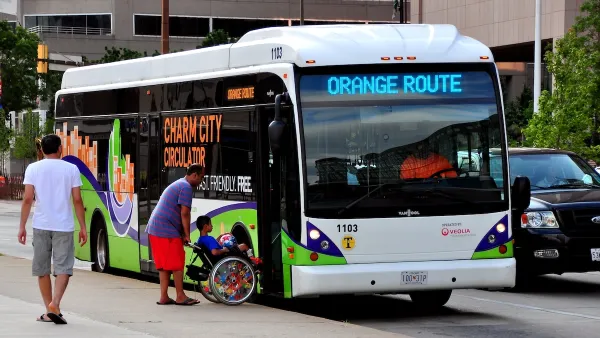
Baltimore to break ground on $50 million Transit Priority Project
The project will bring faster bus trips, safer streets and better bike connections to Baltimore.
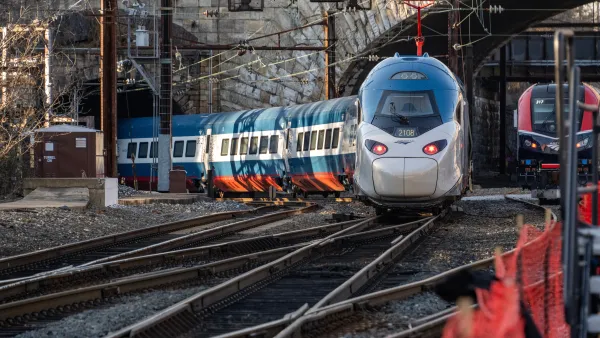
Amtrak’s $6 billion tunnel project moves closer to a faster Northeast Corridor
The Baltimore & Potomac Tunnel Replacement Program is Amtrak's largest-ever single infrastructure investment, and will pave the way for more reliable passenger rail service between Baltimore, Washington and Virginia.

Baltimore’s historically-Black communities receive upgraded pools after decades of neglect
Four pools have already been renovated, with a fifth set to open in 2028.

Planetizen Federal Action Tracker
A weekly monitor of how Trump’s orders and actions are impacting planners and planning in America.

Amtrak, CN end decades-long dispute with eight-year agreement
The new operating agreement establishes an updated framework for the companies to work together, including processes to resolve disputes.

Judges permit Denver to divert 77,000 acre feet from the Colorado River for reservoir expansion
Overuse and climate change have caused the Colorado River’s water levels to plummet.

Northwest rail fans eager for Sept. 30 debut of Amtrak’s Airo fleet
Get ready for that new train smell and more seats. But they won’t go faster or run more frequently on the Cascades route in Washington and Oregon.

NYC DOT wants faster, more permanent street upgrades
The city is examining ways to build more concrete infrastructure without getting entangled in 'decades-long' projects.

'Something we’ve never seen before:' rising utility rates could strain city finances nationwide
Data centers, climate change and other factors have caused utility rates in the United States to increase by 38% since 2020.

FREE Course: Walkable City 1: Why Walkability?
After describing his path towards focusing on walkability as the essence of good planning, Jeff Speck marches through his five principal reasons for making more walkable places.
Reinventing Malls: Planning Alchemy—Turning Gray Fields Into Gold
The course focuses on the opportunities and imperatives that shape reinvention of mall sites.

Harvard University Graduate School of Design
KFH Group Inc.
Greater Baltimore Committee
The Architects Foundation
University of Cincinnati Online
The Pocatello Development Authority
The Urban Renewal Agency of the City of Pocatello