Large shopping centers across the country have grown in quantity and size for years, but developers say that overbuilding may now be a problem.


"Shopping-mall owners have struggled this year with a darkening economy, slowing consumer spending and store closings by retailers. But they face another problem that may persist long after the economy bounces back: a decade of overbuilding.
Developers have built one billion square feet of retail space in the 54 largest U.S. markets since the start of 2000, 25% more than what they built during the same period of the 1990s, according to Property & Portfolio Research Inc. of Boston. U.S. retail space now amounts to 38 square feet for every person in those 54 markets, up from 29 square feet in 1983, the firm says."
"Of course, retail landlords struggle and store vacancies rise in every economic downturn. But this time, experts say, the overbuilding means that high occupancy rates at malls and strip centers may not return for years."
Read the full story: Mall Glut to Clog Market for Years


Phoenix Mall Sold for Mixed-Use Redevelopment
The former Paradise Valley Mall will undergo a conversion to a mixed-use community with homes, offices, and stores.
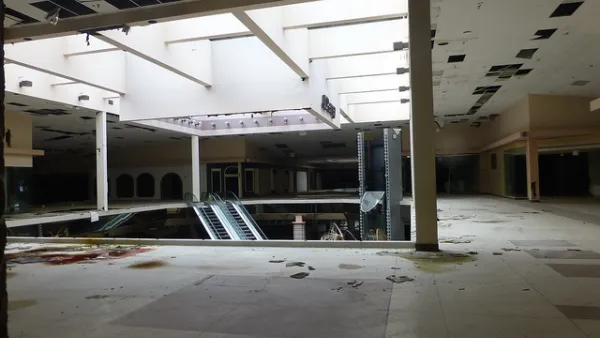
Can Mall Redevelopment 'Urbanize the Suburbs'?
Local leaders in Virginia are banking on mall redevelopment projects to revive their tax bases and create more mixed-use neighborhoods.
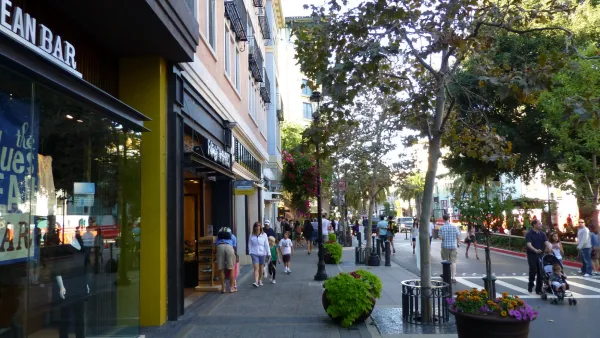
Innovative Approaches May Save Physical Retail
In places like San Jose, "new approaches to the storefront" are paying dividends for physical retailers willing to experiment.

Planetizen Federal Action Tracker
A weekly monitor of how Trump’s orders and actions are impacting planners and planning in America.

Chicago breaks ground on $3 billion megadevelopment
The new neighborhood, titled Foundry Park, will one day host 3,700 residences.

This MA town is drowning in its own sewage — and residents like it that way
Susan Murcott, a waste water expert, said if Carlisle didn't address their leaking sewage, the problem could turn “deadly.”

Feds to more closely scrutinize proposed Amtrak facility’s environmental impact
The Federal Railroad Administration had initially said the facility qualified for a less extensive environmental review.

Boston is hard to build housing in: its chief of planning wants to keep it that way
Chief of Planning Kairos Shen said she would not make changes to Boston’s affordability requirements for new housing, which critics say have slowed down development.

California plans to bury El Niño’s downpour
If the state plays its cards right, it may be able to store a billion acre-feet of El Niño’s water in aquifers.

FREE Course: Walkable City 1: Why Walkability?
After describing his path towards focusing on walkability as the essence of good planning, Jeff Speck marches through his five principal reasons for making more walkable places.
Reinventing Malls: Planning Alchemy—Turning Gray Fields Into Gold
The course focuses on the opportunities and imperatives that shape reinvention of mall sites.

City of Rosemead
Rutgers University, Edward J. Bloustein School of Planning and Public Policy
One Hundred Miles
Hunter College, City University of New York (CUNY)
The Architects Foundation
University of Cincinnati Online
Montrose County
The Pocatello Development Authority
The Urban Renewal Agency of the City of Pocatello