Neal Pierce looks at America's addiction to incarceration and drug prohibition and wonders what -- if anything -- the presidential candidates would do to change the country's course.


"We may have the world's highest rate of incarceration - with 5 percent of global population, 25 percent of prisoners worldwide. We may be throwing hundreds of thousands of nonviolent drug offenders, many barely of age, behind bars - one reason a stunning one out of every 100 Americans is now imprisoned. We may have created a huge 'prison-industrial complex' of prison builders, contractors and swollen criminal justice bureaucracies."
"A serious set of problems, a shadow over our national future? No doubt. But do our politicians talk much about alternatives? No way - they typically find it too risky to be attacked as 'soft on crime.'"
"But let's imagine - What if major party nominees Barack Obama or John McCain were pressed to state their positions on drugs and incarceration?"
Read the full story: Obama, McCain: Who’ll Lead On Drugs, Bloated Prisons?

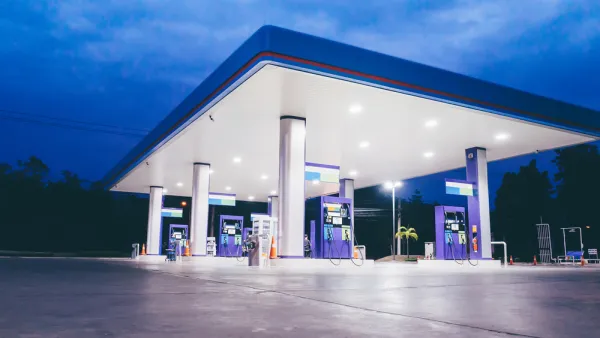
Biden Proposes Gas Tax Holiday to Reduce Gas Prices
President Biden asked Congress on June 22 to suspend federal fuel taxes, unchanged since 1993, for three months to provide motorists 'relief' at the pump. Additionally, he asked states to follow suit and for oil companies to increase refining.
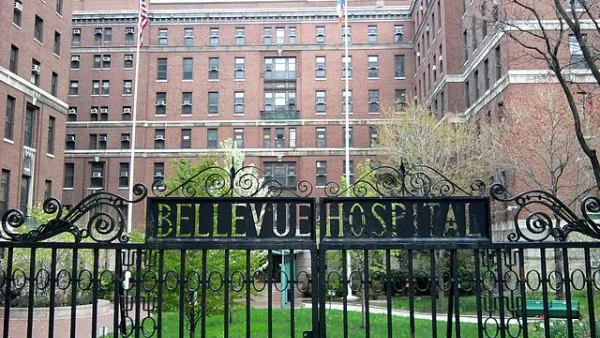
Where Care Meets Confinement
For doctors trying to provide mental health care to people who are incarcerated or detained by the New York City Department of Corrections, city jails pose a challenge — and provide an opportunity.
A $48 Million Bet on the 'L.A. Model' of Juvenile Justice
With Campus Kilpatrick, Los Angeles County has made a serious investment in progressive design to support progressive programming.

Planetizen Federal Action Tracker
A weekly monitor of how Trump’s orders and actions are impacting planners and planning in America.

Chicago breaks ground on $3 billion megadevelopment
The new neighborhood, titled Foundry Park, will one day host 3,700 residences.

This MA town is drowning in its own sewage — and residents like it that way
Susan Murcott, a waste water expert, said if Carlisle didn't address their leaking sewage, the problem could turn “deadly.”

Iowa taxpayers are paying thousands to clean manure out of their water
While the Clean Water Act makes states responsible for regulating factory farms that discharge pollutants, Iowa has turned a blind eye to the polluting farms.

Amtrak cuts ribbon on Seattle Airo maintenance facility
The $250 million, nearly 100,000-square-foot building can house an entire Cascades Airo trainset.

To power data centers, Google seeks autonomous control of thousands of homes’ electricity
The tech company has signed a deal to indirectly pay Mid-Atlantic residents to reduce their power demand when the grid is strained.

FREE Course: Walkable City 1: Why Walkability?
After describing his path towards focusing on walkability as the essence of good planning, Jeff Speck marches through his five principal reasons for making more walkable places.
Reinventing Malls: Planning Alchemy—Turning Gray Fields Into Gold
The course focuses on the opportunities and imperatives that shape reinvention of mall sites.

City of Rosemead
Rutgers University, Edward J. Bloustein School of Planning and Public Policy
One Hundred Miles
The Architects Foundation
University of Cincinnati Online
Montrose County
The Pocatello Development Authority
The Urban Renewal Agency of the City of Pocatello