One-sixth of the total land in New York has been rezoned under Mayor Michael Bloomberg, and some say it's fueling widespread gentrification. Community members affected by the changes are calling for more say in the future of their neighborhoods.


"All of these changes represent the new New York, one that has shifted from industrial and manufacturing to finance and services. To accommodate that shift and the population growth that has occurred with it, the Bloomberg administration has rezoned one sixth of the total land in the five boroughs -- more than the last six administrations combined, Bloomberg said during his State of the City address earlier this year. Of the more than 84 rezonings, the City Council has not rejected a single one."
"Such impressive numbers, though, conceal a growing unease in many parts of New York. Advocates in some neighborhoods fear the administration is fueling gentrification by giving developers a relatively free hand in working class neighborhoods, while simultaneously protecting more affluent areas from larger-scale development."
"Many people in affected communities claim they haven't been a part of the process -- their voices are left out on the policy fringe, teetering on the edge of irrelevance. In response, some planners and politicians hope to boost the community's role in the land use process."
Read the full story: Reshaping the City: Who's Being Heard -- and Why?
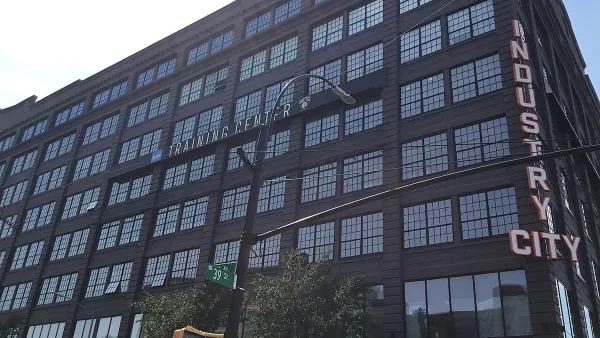
‘Emergent City’ Documentary Highlights Rare Anti-Gentrification Victory
The film charts the saga of a Brooklyn site called Industry City.
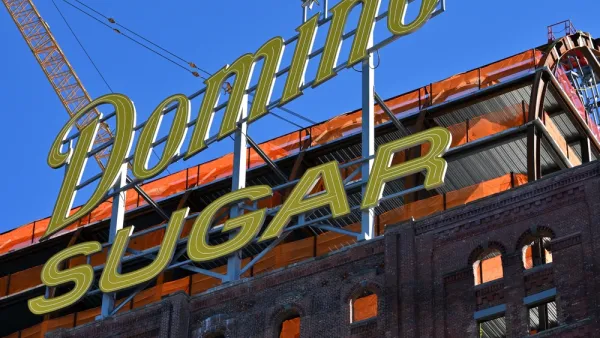
Bitter Irony Behind Brooklyn’s Sweet Domino Sugar Sign
A new feature on the Brooklyn waterfront is a reminder that Domino Sugar has made several unsavory appearances in the history of Puerto Rican communities.
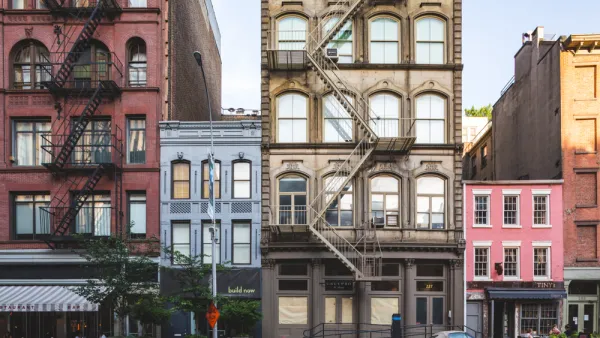
NoHo and SoHo Rezoning Controversies, Amplified
One of the big questions of planning is up for debate with a proposed rezoning in the SoHo and NoHo neighborhoods of New York City: Can upzoning be an effective tool for affordability?

Washington state to charge fee to drivers with fuel-efficient cars
Revenue from the fee will go towards supporting the state’s highways.

Illinois considers spending $1 billion in taxpayer money on data center
A quantum computing campus and data center are currently under construction in Chicago.

Trump to blast ‘hydrocarbon highway’ through ‘world’s longest art gallery’
Environmental and historic preservation groups are suing to stop the project.

NYC, state sue feds over mixed-immigration-status housing assistance rule
The state’s lawsuit argues that the rule change violates the Administrative Procedure Act.

Michigan to turn neighborhood into virtual power plant
Residents will soon be able to divert their excess energy to the grid in exchange for compensation.

Data center, mining project swarm to long-awaited Alaska railroad line
The state-owned railroad approved final plans for the spur line this week; the project is expected to cost $311 million, mostly funded by the federal government

FREE Course: Walkable City 1: Why Walkability?
After describing his path towards focusing on walkability as the essence of good planning, Jeff Speck marches through his five principal reasons for making more walkable places.
Reinventing Malls: Planning Alchemy—Turning Gray Fields Into Gold
The course focuses on the opportunities and imperatives that shape reinvention of mall sites.

City of Charlotte
City of Rosemead
Rutgers University, Edward J. Bloustein School of Planning and Public Policy
University of Michigan School for Environment and Sustainability (SEAS)
Hunter College, City University of New York (CUNY)
The Architects Foundation
University District Partnership