In an effort to tackle poverty, 15 states have set up commissions to explore the issues. Neal Peirce says they need to focus foremost on getting more money into the hands of the impoverished and reducing the burden of taxes on them.


"the nationwide poverty rate has stalled around 11 or 12 percent for years - and that's for a family of four with income under the federally-set line, now $21,200 a year. (Try living on that - a reasonable minimum for food, shelter and clothing needs would be closer to $30,000)."
"Poverty places a huge drag on the economic output and productivity of states and communities. Poor health, substandard housing, mental stress, employment crises, teenage pregnancy, low literacy and added likelihood of arrest and imprisonment all appear to be part of a misery package that hits poor populations far more heavily than the rest of us."
"So what's to be done? What should the 15 state commissions (and how about the other 35) recommend?"
"First and most obvious, get more money into the pockets of the poor. Even with full-time minimum wage employment, many of our poor subsist "on the edge." Often, rent costs more than half their income. A single illness, an unexpected car repair or rent increase can throw them into full-scale crisis."
"Tax relief for the poor is crucial. Nearly half the 42 states that levy income taxes have thresholds set below the federal poverty level. Then sales taxes take much bigger and more painful bites out of poor peoples' budgets. Alabama even has a sales tax on food. Any significant taxes hitting the poor are a bad idea - arguably counterproductive for states' long-term budgets."
Read the full story: States Fighting Poverty: Time To Get Serious

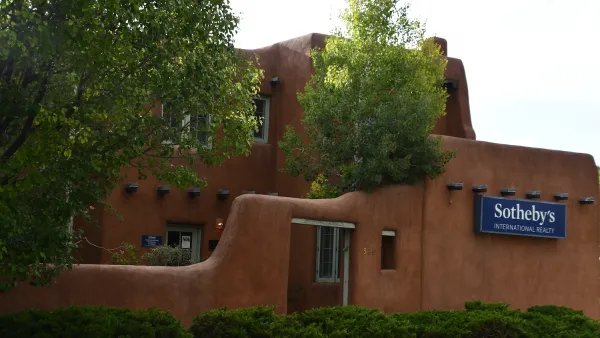
Santa Fe Collects First Payments From Tax on Million-Dollar Homes
The 3% tax on home sales of $1 million or more has elicited a lawsuit and backlash from local realty groups.
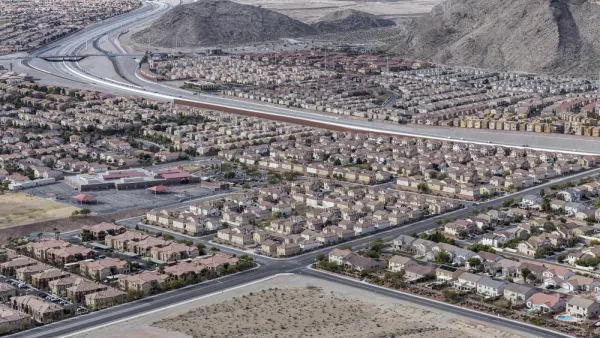
Research: Sprawl Linked to Poverty
Low-income families living in high-sprawl neighborhoods are limited in their access to education, jobs, and other amenities, often trapping them in a cycle of poverty.
Is Inequality Destroying American Cities?
A recent video claimed that high income inequality is the “Thing That Will Destroy Our Cities.” Is this true?

Planetizen Federal Action Tracker
A weekly monitor of how Trump’s orders and actions are impacting planners and planning in America.

The state-sanctioned urbicide of Austin
People don’t kill cities. Freeways do.

US to reduce Colorado River water deliveries to Mexico
A new Colorado Treaty amendment reduces Mexico’s Colorado River water allocation by 250,000 acre feet.

Nation's most wind-powered state turns to coal as data centers increase energy demand
For the first time in decades, Iowa has increased its generation of coal power.

NYC cools commuters with city's first rain garden above a bus stop
New York City officials say the plants in the rain garden can absorb 16 gallons of rainwater during heavy storms.

Brightline West’s future may rely on $6 billion federal loan
The company has until Nov. 2 to make a $400 million equity investment into its proposed high-speed rail line.

FREE Course: Walkable City 1: Why Walkability?
After describing his path towards focusing on walkability as the essence of good planning, Jeff Speck marches through his five principal reasons for making more walkable places.
Reinventing Malls: Planning Alchemy—Turning Gray Fields Into Gold
The course focuses on the opportunities and imperatives that shape reinvention of mall sites.

Greater Baltimore Committee
Eagle County Government
Harvard University Graduate School of Design
The Architects Foundation
University of Cincinnati Online
The Pocatello Development Authority
The Urban Renewal Agency of the City of Pocatello
Journal of the American Planning Association